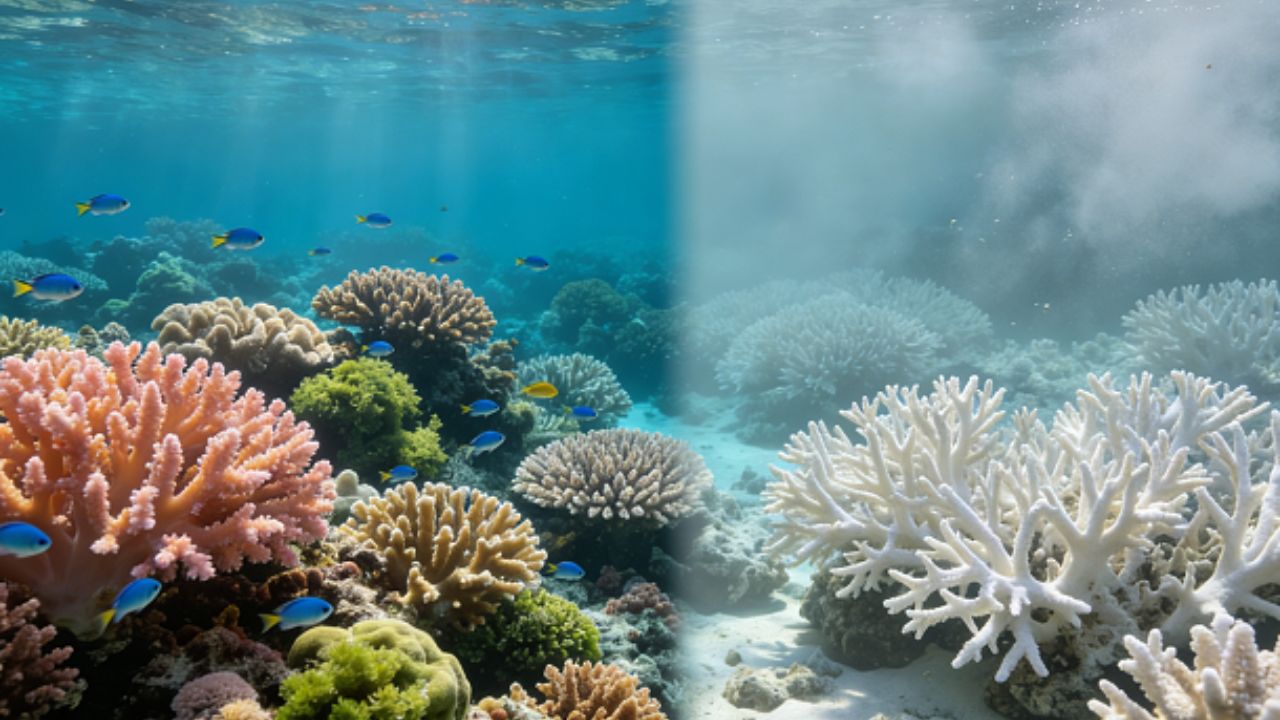
Many people have likely heard about the controversy surrounding Octocrylene in marine environments: Octocrylene acts like as a slow-acting poison for corals, gradually stripping algae of their photosynthetic ability and leading to a state of “invisible bleaching”.So why is it still irreplaceable? After reading this article, you will understand its importance in sunscreens and how to leverage this to help you build a more competitive market advantage.
What is Octocrylene?
Octocrylene, chemically known as 2-ethylhexyl 2-cyano-3,3-diphenylacrylate, is an oil-soluble UV filter.At room temperature, it appears as a clear, pale yellow oily liquid. As an oil-soluble ultraviolet absorber with good photostability and high compatibility in compound formulations, its outstanding compatibility with a broad range of cosmetic oils and oil-soluble raw materials has enabled its widespread use in sunscreens, fragrance,skincare, and makeup formulations.
At concentrations up to 10%, Octocrylene is considered safe for use as a sunscreen agent — provided that its potential endocrine-disrupting effects are excluded. This assessment, established by the EU SCCS, has been adopted by regulatory authorities in many countries and regions.
Function of Octocrylene
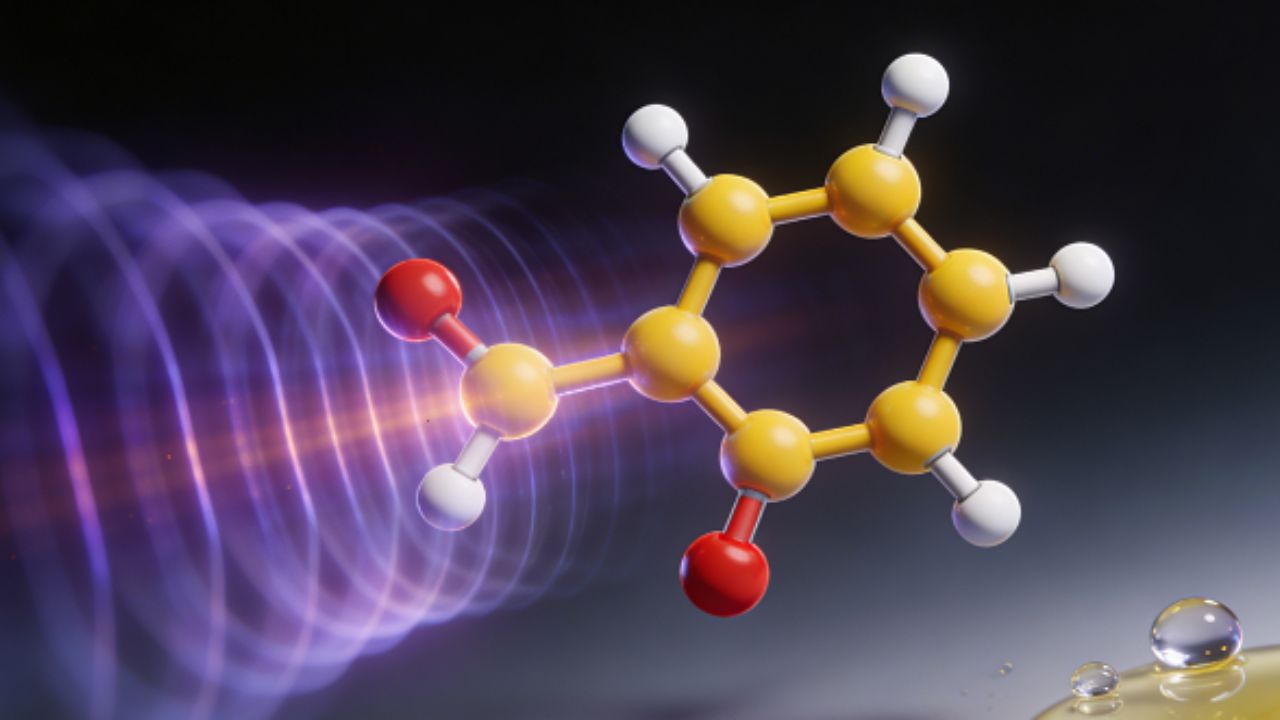
What makes Octocrylene indispensable is not simply its ability to absorb UVB, but the fact that it simultaneously serves four critical functions: providing UV protection, stabilizing the formula, improving skin feel, and dissolving crystalline UV filters.These four aspects are essential for a high-quality sunscreen.
High-efficiency UVB protection
Octocrylene primarily absorbs UVB and small amounts of UVA—specifically UVB rays peaking around 303 nanometers, which will cause sunburn, DNA damage, and skin cancer.Upon absorbing ultraviolet energy, Octocrylene absorbs UVB radiation and releases the energy as heat in a matter of picoseconds, providing rapid and effective skin protection.
We recommend that you use octocrylene as a base ingredient in your formulations, as it can help you control your production costs without sacrificing efficacy.
The “Gold-Standard Stabilizer” for Avobenzone
Octocrylene is a photostabilizer for avobenzone, a top-tier UVA filter. As is well known, avobenzone has excellent sun protection properties.But its photostability is extremely poor.As a formulator, incorporating octocrylene into your formula can significantly slow the degradation of avobenzone, helping to maintain SPF values and PA ratings over a longer period and thereby enhancing your product’s reputation.The combination of the two is considered one of the most effective UVA protection strategies available today.
A “universal solvent” for crystalline sunscreen agents
An excellent aid for formulators, Octocrylene demonstrates outstanding solubility for sunscreen ingredients that are normally in powder form; it prevents them from precipitating or settling out of the formula,ensure the product remains stable and effective throughout its shelf life.By incorporating octocrylene, you can reduce the need for additional heavy oils or synthetic solubilizers, resulting in a cleaner and simpler product formulation.
Enhanced skin feel and water resistance
Octocrylene is an oil-based liquid characterized by water insolubility, low viscosity, and a high spreading coefficient; By promoting even dispersion of other UV filters on the skin, it ensures consistent and complete protection.Helps you establish a distinctive selling point: “non-greasy and easy to spread.It also forms a continuous, hydrophobic protective film on the skin—a property that effectively withstands sweating, swimming, or contact with water.It is an ideal raw material for developing outdoor and waterproof products.
Applications of Octocrylene
Core Sunscreen Products
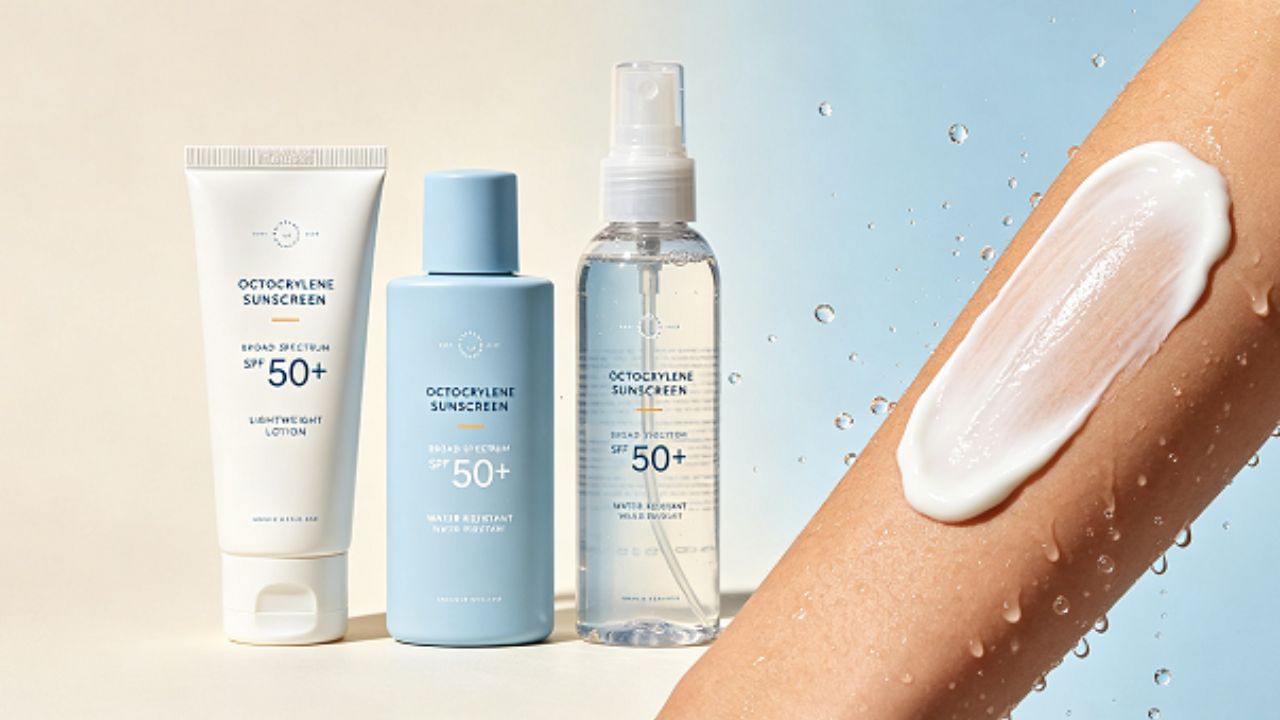
Sunscreens, sunscreens lotions, and sunscreen sprays represent the primary application areas of Octocrylene, suitable for daily and outdoor sun protection.In these formulations, Octocrylene functions as a UVB absorber, an avobenzone stabilizer, and a solvent for solid UV filters. These combined roles are exactly what make it irreplaceable.
Cosmetic Formulation Additive
When added to color cosmetics such as foundations and primers with sun protection properties, it improves spreadability and application feel, provides basic UVB protection, and safeguards the product itself against UV-induced degradation.
Octocrylene:Controversies and Challenges
Impact on the Human Body
The safety data on octocrylene indicates that its side effects in humans are generally mild and uncommon.It is safe for most adults when used in compliance with regulations. However, it does present objective issues such as potential photosensitization and acne-causing tendencies; it can be absorbed through the skin, and its degradation product, benzophenone, is a potential endocrine disruptor.
Environmental Impact
Once Octocrylene enters oceans and rivers, it does not readily decompose naturally and exhibits extreme persistence.It also exhibits broad-spectrum aquatic toxicity and disrupts the ecological chain, causing harm to marine organisms including corals, plankton, and shellfish.
Future Trends of Octocrylene
While Octocrylene does come with some downsides, we’re not standing still. Through smarter technologies like molecular modification, encapsulation, and reduced-dosage formulations, we can significantly cut down its impact on both our skin and the environment.These approaches strike a balance between sun protection efficacy and ecological safety, providing a transitional pathway and foundational support for high-SPF, broad-spectrum, and sustainable sunscreen solutions.
FAQ
Q:Is Octocrylene reef safe?
A:No, Octocrylene is toxic to corals and plankton. Its use is restricted in places like Hawaii and Palau.
Q:Octocrylene vs. Avobenzone: What’s the difference?
A:Avobenzone is a UVA absorber but has poor photostability. Octoccrylene itself is a UVB absorber and can stabilize avobenzone; the two are often used in combination.
Q:What is the maximum concentration of Octocrylene in sunscreen?
A:The EU, China, and Australia all have a maximum concentration of 10%, Canada has 12%, and the US has 10%.
Q:What are the degradation products of Octocrylene?
A:The main degradation product of Octocrylene under light and high temperatures is benzophenone, which has potential endocrine disrupting and carcinogenic properties.
Final Thought
Octocrylene is a multifunctional cosmetic ingredient with distinct advantages and disadvantages; it offers a compelling combination of cost-effectiveness, formulation compatibility, and broad-spectrum UV protection, making it difficult to fully replace in affordable broad-spectrum sunscreen systems at present.
For brands, octocrylene is a cost-effective ingredient; for formulators, mastering its proper use facilitates product development.
If you require high-purity, cosmetic-grade Octocrylene with consistent batch quality, please visit our product detail page “Organic UV Filters”to view the full specifications.