Avobenzone is an essential UVA sunscreen agent for high-SPF sun protection.However, it has a fatal weakness: poor photostability.Degraded Avobenzone suffers a significant loss in performance and can also compromise the safety of the overall formulation.
This article provides a comprehensive analysis of the causes of Avobenzone degradation and offers stabilization strategies and formulation recommendations to help you fully resolve formulation challenges.
What is Avobenzone?
Avobenzone, INCI name Butyl Methoxydibenzoylmethane (CAS No.: 70356-09-1), is widely recognized as one of the most effective and most widely used UVA sunscreen agents. It is an essential component in almost any high-protection sunscreen (PA+++ and above). Its protection covers the 320-400nm range, making it the only full-spectrum UVA chemical sunscreen approved by the FDA in the United States. If you aim to formulate a true broad-spectrum, high-SPF sunscreen that effectively defends against photoaging concerns such as wrinkles, sagging, and hyperpigmentation, avobenzone is virtually an indispensable core ingredient.
Ironically, the very molecular architecture that enables Avobenzone to deliver unmatched broad-spectrum UVA protection is also the source of its greatest weakness — a photostability problem that has frustrated formulators for 40 years.
Why does Avobenzone Degrade?
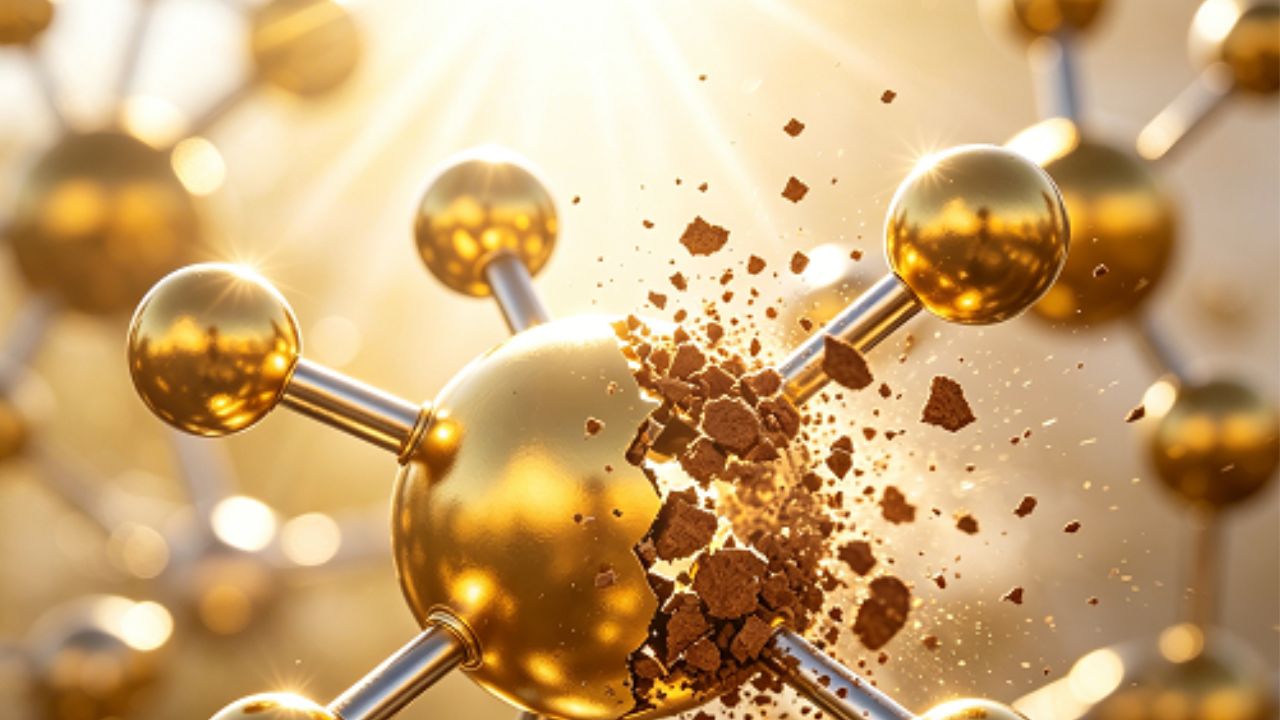
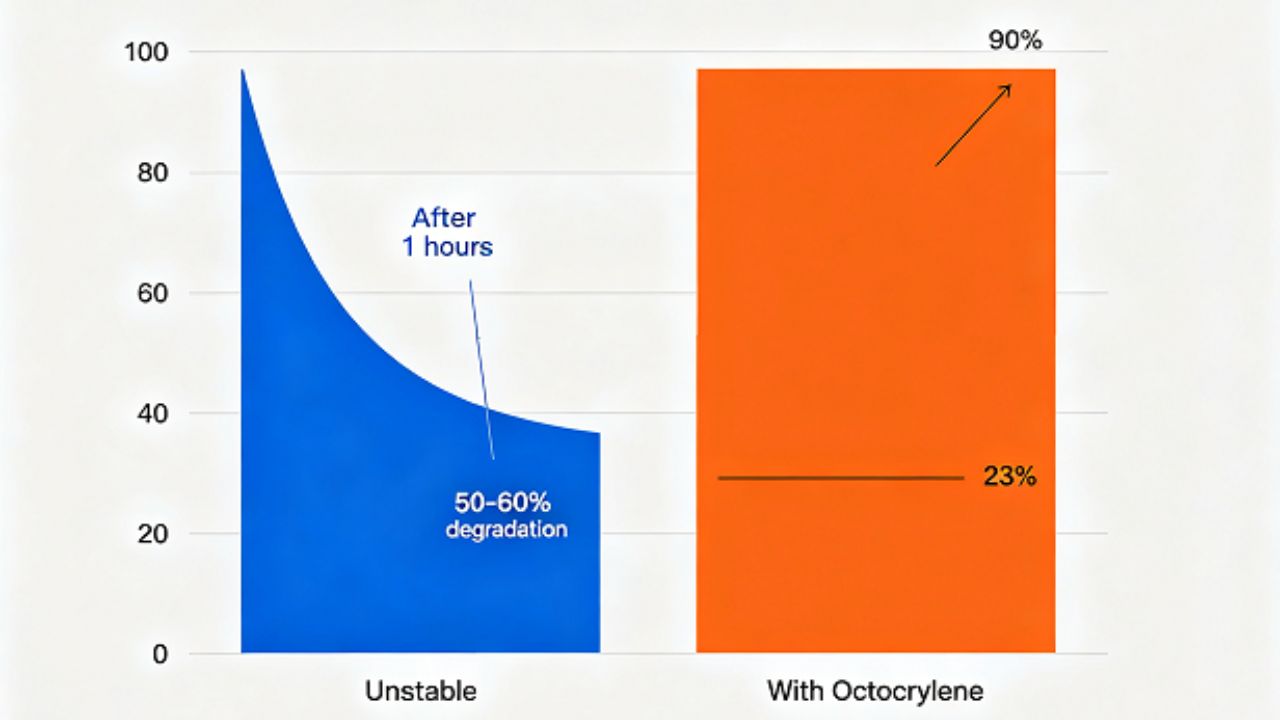
The photostability of Avobenzone stems from its own molecular structure.It exists in two tautomeric forms: the enol form, which offers sun protection, and the keto form, which provides significantly reduced protection.Under ultraviolet irradiation, the enol form converts to the keto form; unstabilized Avobenzone can degrade by 50–60% within one hour of UVA exposure, resulting in a precipitous drop in protective efficacy, while the keto structure undergoes further irreversible decomposition, ultimately leading to the degradation of the raw material.
What Consequences does Degraded Avobenzone have for your product?
Sharp Drop in Sun Protection Efficacy
After 8 hours of continuous UVA exposure, Avobenzone’s UV-absorbing capacity declines significantly, failing to meet the labeled PA rating; This will compromise your product’s sun protection performance and expose you to compliance issues.
Product Discoloration
The degradation process generates colored by-products, causing white sunscreen to gradually turn yellow or even brown; this severely impacts the product’s appearance and leads to a lower sales.
Formation of Irritating Impurities
The degradation products of avobenzone are 3 to 5 times more irritating than the compound itself.This makes skin more vulnerable to irritation, with higher chances of discomfort like stinging, burning, or inflammation, ultimately harming brand image.
How can the Photostability of Avobenzone be Stabilized?
Let’s first look at some data to get a sense of the difference between “stable” and “unstable”.
Indicator | Data |
| Unstabilized avobenzone | 50-60% degradation after 1 hour of UVA irradiation |
| Avobenzone with octocrylene added | Stability improved from 23% to over 90% |
| Microencapsulated avobenzone | 43% remaining after 7 hours of sunlight exposure, compared with only 12% for regular avobenzone |
To solve avobenzone’s photostability issue, formulators typically take one of two paths: adding complementary stabilizers to the formula, or using modified avobenzone raw materials. Each route has its trade-offs — the right choice depends on your product positioning, cost budget, and regulatory requirements.
Traditional approach: Use in combination with light stabilizers
Combining avobenzone with other sunscreen agents is the simplest and most effective approach among formulators.
Octocrylene
Octocrylene stands as one of the most effective stabilizers for Avobenzone, offering excellent compatibility at a moderate cost. At a 3:1 ratio (Octocrylene : Avobenzone), it absorbs UV energy, minimizes Avobenzone’s conversion to the inactive keto form.Combining octocrylene with avobenzone effectively extends protection duration and prevents product discoloration.
Considerations: The trade-off is a higher required usage level. Additionally, octocrylene itself has raised some photosensitivity concerns.Its safety is a subject of debate.
Triazine-based sunscreens
They are novel, high-efficiency sunscreen agents that offer superior photostabilizing performance compared to octocrylene; the combination ratio with avobenzone can be reduced to 2:1 or even 1:1.
Tinosorb S (Bis-Ethylhexyloxyphenol Methoxyphenyl Triazine): It possesses excellent UVA/UVB protection capabilities on its own, and blending it with avobenzone can simplify the overall formulation. But the raw material is relatively expensive, which increases product costs.
Ethylhexyl Triazone: Primarily provides UVB protection, maintains performance even under heat, and effectively helps stabilize avobenzone.
Antioxidants
Avobenzone generates free radicals during degradation; You can add antioxidants like Vitamin E or Coenzyme Q10 to scavenge them and interrupt the degradation chain reaction..Research indicates that Coenzyme Q10 delivers the best results — it stabilizes avobenzone while also boosting SPF value.
Recommended ratios: Vitamin E to Avobenzone = 2:1; Coenzyme Q10 to Avobenzone = 0.5:1.
Advanced Solution: Use of Modified, Stabilized Avobenzone Raw Material
Process modification of avobenzone is a more efficient way to solve the photostability problem at its root.
Crystallization-modified avobenzone
Without altering the chemical structure of avobenzone, a specialized recrystallization process is used to manipulate crystal arrangement—transforming the naturally unstable, loose crystal form into a stable one with tighter molecular packing—thereby mitigating the risks of degradation and yellowing at the source.
As the raw material composition remains unchanged, it can serve as a direct replacement without requiring significant formula adjustments.
Microencapsulated/cyclodextrin-encapsulated avobenzone
Encapsulating avobenzone molecules within a carrier isolates them from UV radiation and other formula ingredients, thereby blocking photodegradation at the source and delivering exceptional stability.
However, this technology involves a complex, high-cost process and affects raw material solubility—requiring formula reformulation—making it better suited for high-end sunscreen products.
Overview of Stabilization Measures
| Stabilization Solution | Stabilizing Effect | Cost | Formula Adjustment | Application Scenarios |
| Avobenzone + Octocrylene Combination | Moderate | Low | Minor, easy to apply with mature formulas | Budget-friendly sunscreens, mass-produced regular products |
| Avobenzone + Triazine UV Filters Combination | Good | Medium to High | Minor | Mid-to-high-end broad-spectrum sunscreens, formulas for simplification |
| Combined with Vitamin E / Coenzyme Q10 | Moderate (auxiliary stabilization) | Medium | Minor | All types of sun care products, with additional antioxidant benefits |
| Crystallization-modified Avobenzone | Excellent | Medium | Almost no adjustment, direct replacement | All categories of sunscreens; for fundamental photostability improvement and fewer compound ingredients |
| Microencapsulated / Cyclodextrin-encapsulated Avobenzone | Outstanding | High | Major adjustment, formula reworking required | Premium salon and luxury sun care products |
A rapid method for determining whether avobenzone has degraded
| Detection Method | Normal Status | Degraded Status |
| Appearance & Color | Colorless to pale yellow clear liquid | Noticeably yellow or even brown |
| Odor | Odorless or with slight characteristic smell | Pungent off-odor |
| UVA Absorbance Test | Stable value | Significant drop after irradiation (>20%) |
FAQ
Q:Is avobenzone safe?
A:Yes, avobenzone is safe at regulated dosages. Its primary risk stems from photodegradation products rather than the original ingredient. A well-stabilized formula can effectively reduce skin irritation risks.
Q:Does avobenzone cause cancer?
A:No. According to current toxicological evidence, avobenzone has no genotoxicity and no carcinogenic potential. It is not classified as a carcinogen by IARC and is safe for normal use。
Q:What ingredients are incompatible with avobenzone?
A:Avoid uncoated zinc oxide, titanium dioxide, metal ions, ethylhexyl methoxycinnamate, benzophenones, formaldehyde-releasing preservatives, high-concentration vitamin C, benzoyl peroxide and retinol in low pH formulas, which will accelerate degradation and reduce efficacy.
Q:What are the permitted concentration levels for Avobenzone?
A:3% in the US; 5% in the EU and Brazil; 10% in Japan.
Q:Can Avobenzone be used in various product formats, such as sunscreen sprays and color cosmetics?
A:While standard Avobenzone is compatible with most formulations, spray and lightweight color cosmetic systems—which often contain high levels of solvents and possess high light transmittance—can accelerate degradation. In these cases, using crystal-modified or encapsulated Avobenzone is preferable to ensure greater product stability.
Q:How can one distinguish between standard Avobenzone and the crystal-modified version during procurement?
A:They are identical in appearance, chemical specifications, and CAS number, making them indistinguishable to the naked eye. You can request a photostability test report from the supplier; under identical irradiation conditions, the product exhibiting less absorbance decay is the crystal-modified version.
Q:Can Avobenzone be used in sunscreen products for children?
A:It may be used provided the concentration complies with the regulatory limits of the respective country. Given the delicate nature of children’s skin, it is recommended to prioritize the use of more stable, modified Avobenzone to minimize irritating degradation by-products and enhance product safety.
Final Thoughts
The photostability issue of avobenzone, which has troubled formulators for nearly 40 years, can now be solved with mature solutions. Premium raw materials and supporting technical resources will facilitate your formulation development.
- Crystallization-modified avobenzone (direct replacement, no formula adjustment required)
- Pre-blended stable combinations (Avobenzone + Octocrylene / Tinosorb S)
- Professional technical consultation and formula optimization
- Photostability test reports and regulatory compliance guidance
Feel free to contact us if you need samples or technical documents.