Have you ever noticed that some moringa powder is bright green and vibrant, while others are yellowish, brownish, or even dark brown?Actually,behind the differences in color lie the true standards of the raw materials, processing techniques, and nutritional value.After reading this article, you will discover what really causes the color differences in Moringa powder, learn how to use color to assess its quality, and gain valuable insights into sourcing this ingredient.
Explaining Color Differences: Why Are Some Green and Others Brown?
If you are purchasing food-grade moringa powder, moringa powder for health supplements, or export-grade moringa powder, color is the quickest way to judge quality.
The Source of Green: Chlorophyll
The reason plants appear green is that they are rich in chlorophyll.And moringa is no different.Firstly,once fresh, vibrant green Moringa leaves have been harvested, preserving their chlorophyll becomes the key factor in determining the color of the Moringa powder.Secondly, the color of Moringa powder varies depending on the specific part of the plant from which the raw material is sourced.Finally, different production processes are also one of the determining factors for color.
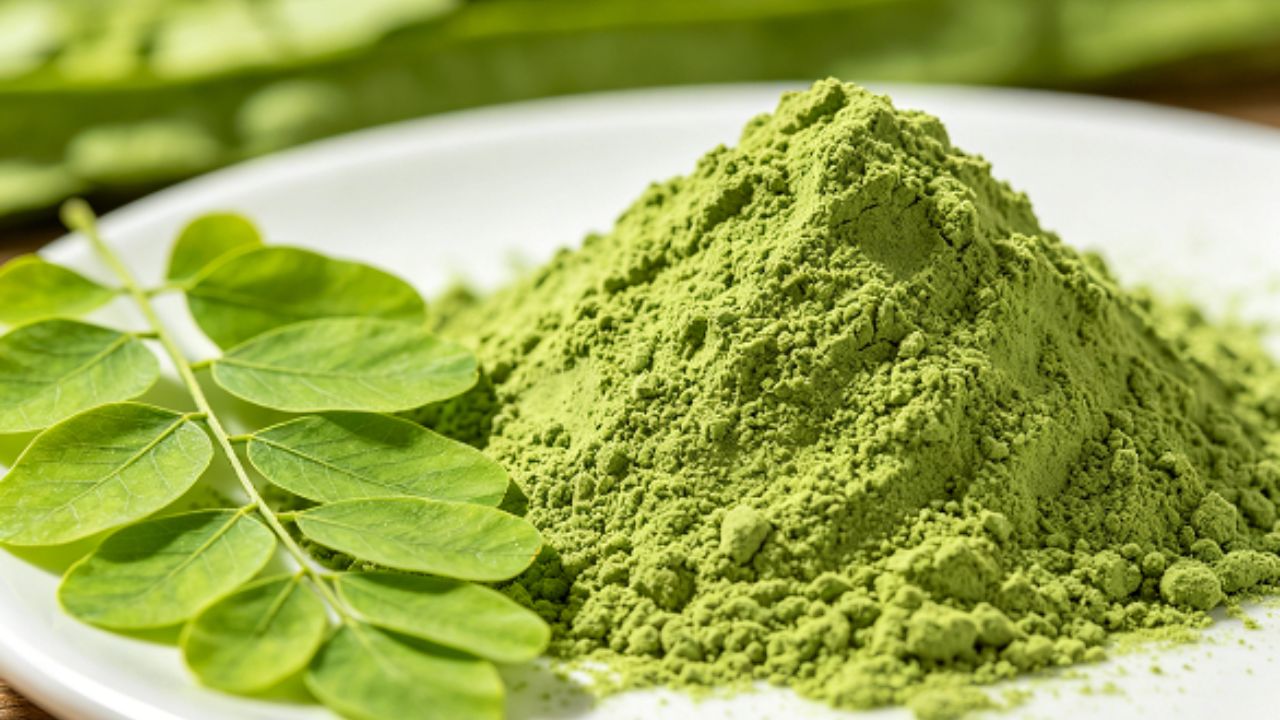
Why is high-quality Moringa powder green?
It is worth noting that high-quality, highly active Moringa powder is invariably green.To prepare green Moringa powder, the following requirements must be met:
- Raw material: Only fresh, tender moringa leaves are used—young leaves have the highest chlorophyll content.
- Drying: Shade-dried or low-temperature dried (<45°C).Because high temperatures will destroy chlorophyll.
- Grinding: Employing cold grinding or low-temperature ultrafine pulverization processes to ensure that no heat is generated during the grinding process.
- Storage: Vacuum-sealed or nitrogen-flushed in light-proof packaging.Preventing Moringa powder from oxidizing and discoloring.
Research shows that blanching followed by low-temperature drying at 35°C best preserves chlorophyll and vitamin C in moringa leaves.
Why is some Moringa powder brown or yellowish-brown?
Brown or yellowish-brown Moringa powder is generally caused by the following factors:
- High-Temperature Drying (Most Common)
Leaves quickly oxidize and brown due to direct sunlight, high heat drying, and long-term outdoor stacking.
- Low-Quality Raw Material
The raw material may include old leaves, twigs, stems, or even fallen leaves—resulting in coarser fiber, depleted chlorophyll, and greatly reduced nutritional value.
- Improper Storage
Moringa powder is highly susceptible to moisture absorption and oxidation. Exposure to light and high temperatures, as well as prolonged exposure to air after opening, will cause its chlorophyll to gradually degrade, causing its color to slowly shift to a yellowish-brown hue.
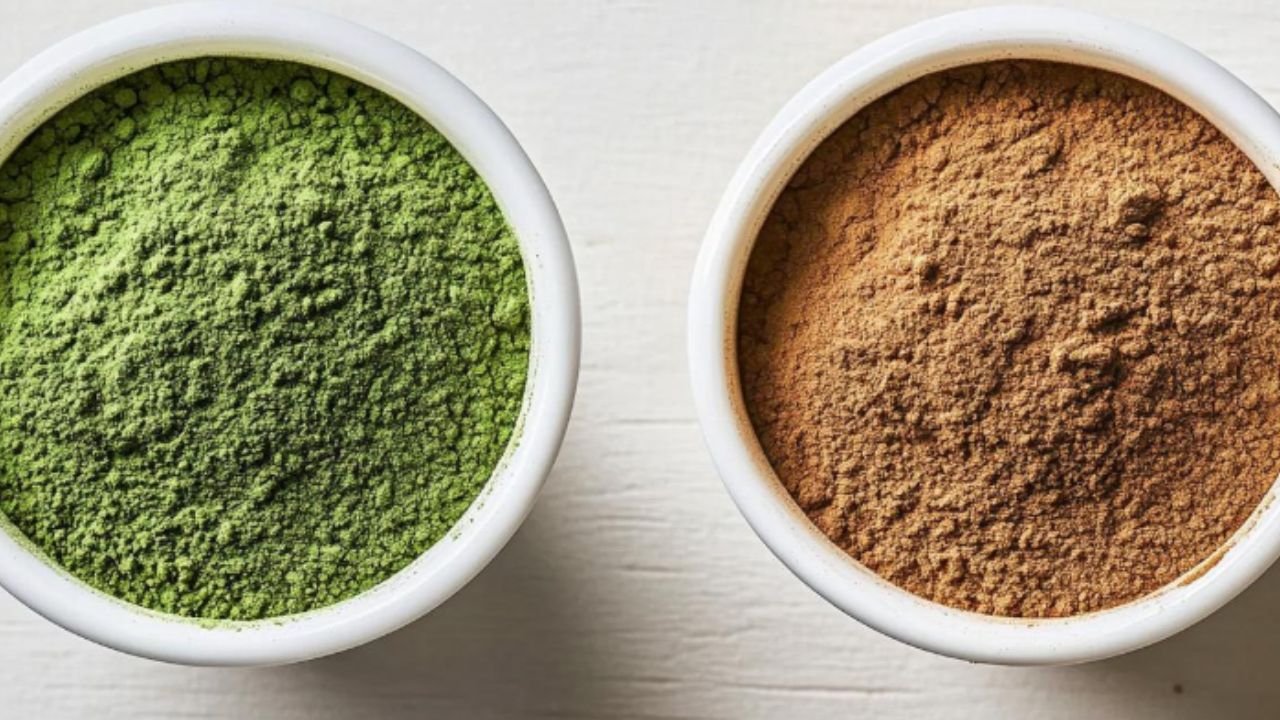
Green Moringa Powder vs. Brown Moringa Powder: A Core Comparison
Comparison Items | Green Moringa Powder | Brown / Tan Moringa Powder |
| Raw Material | Fresh young leaves | Old leaves / stems / seeds / oxidized leaves |
| Drying Method | Shade drying / Low-temperature drying (<45°C) | High-temperature fast drying (>80°C) |
| Milling Process | Cold milling / Low-temperature ultrafine grinding | Ordinary grinding, heat generated by friction |
| Chlorophyll Status | Fully retained | Degraded to pheophytin (brown) |
| Vitamin C | High retention | Heavily lost under high temperature |
| Polyphenols / Flavonoids | Fully preserved | Partially destroyed |
| Odor | Fresh grassy / green tea scent | Cooked odor / beany smell / burnt odor |
| Taste | Mild, slightly bitter but not astringent | More bitter and astringent |
| Key Components | Full nutrition (chlorophyll + fiber + all nutrients) | High-concentration polyphenols / flavonoids (no chlorophyll / low fiber) |
| Suitable Applications | Daily nutritional supplements, food additives | Lower quality (or extract form) |
| Quality Indicator | Bright green, fresh scent, complete nutrition | Brownish, dull / burnt odor, nutrient loss |
| Sourcing Suggestion | Preferred choice | Use with caution, request COA and test reports |
How to Quickly Identify High-Quality Moringa Powder?
We can assess the quality of Moringa powder based on its color, scent, texture, and solubility.
Identification Item | Premium Moringa Powder | Medium Moringa Powder | Low-Grade Moringa Powder |
| Visual Check | Bright emerald green, uniform and translucent like matcha | Dark green or yellowish green, lackluster | Yellowish brown, brown, grayish-green & dull |
| Odor Check | Fresh grassy scent, no off-odors | Faint aroma, slight stale smell | Musty, burnt, fishy or rancid odor |
| Texture Check | Fine and smooth, no grains or impurities | Relatively fine, with tiny particles | Coarse with fibers, sandy, easy to clump |
| Solubility Test | Disperses easily, dissolves with gentle stir | Requires thorough stirring, slight clumping | Poor dispersion, floats on water, severe clumping |
Comprehensive Assessment: Only Moringa powder that meets the “Premium” standard across all four criteria constitutes a truly high-quality product worthy of procurement and consumption.
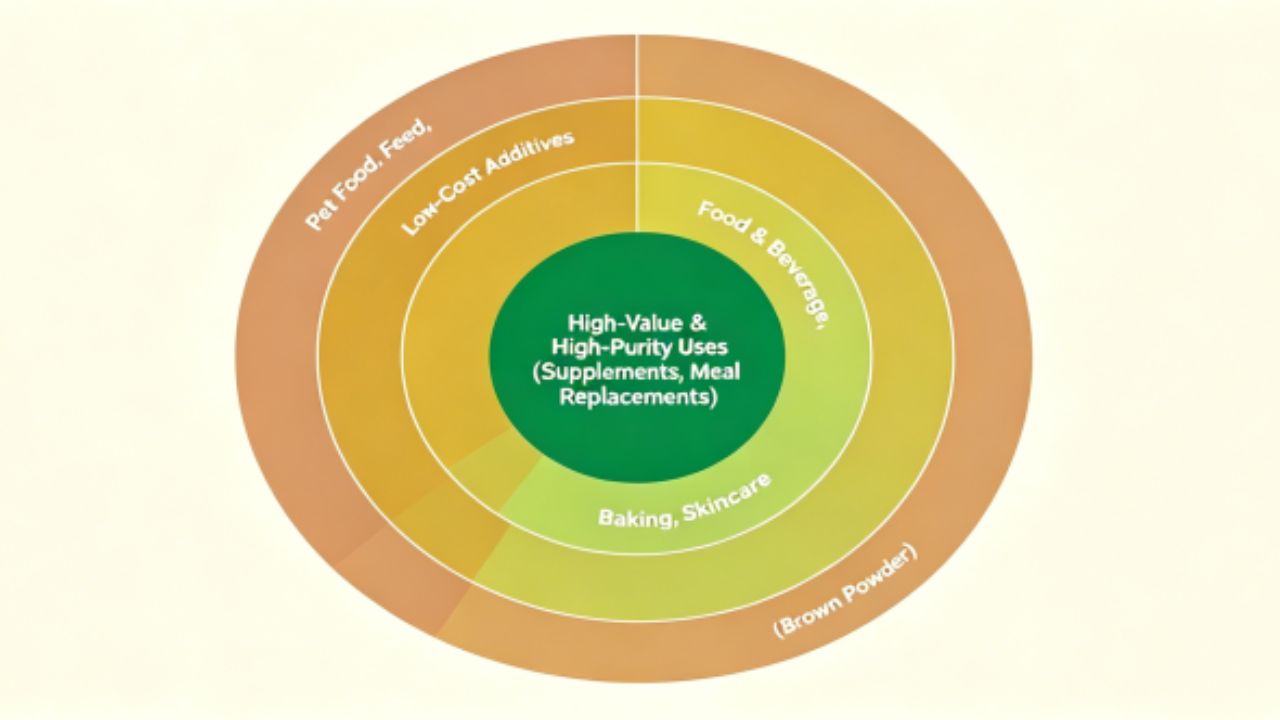
Overview of Industries for Moringa Powder
- Food & Beverage Additives
- Dietary Supplements / Superfoods
- Natural Skincare Products & Face Mask Raw Material
- Pet Food & Animal Feed Additives
- Baked Goods, Meal Replacement Powders, & Instant Beverages
Final Procurement Recommendations for Moringa Powder:
- For Edible/Premium Applications — We recommend selecting Green Moringa Powder.
- For Low-Cost/Low-End Additive Use — Brown Moringa Powder is an option, though quality inspection is recommended.
Common Misconceptions
Myth #1: The greener the moringa powder, the better the quality?
The Truth: Generally correct, but not always.
A bright green color is an important indicator of high-quality moringa powder, but it is not the only standard. However, it cannot be ruled out that a small number of unscrupulous merchants may add artificial coloring.
Myth #2: Brown moringa powder is toxic and not edible.
The Truth: Brown moringa powder is not toxic.
Although brown moringa powder is non-toxic, its quality is significantly compromised compared to green moringa powder.
FAQ
Q:Which is more expensive: green Moringa powder or brown Moringa powder?
A:Green Moringa powder.Green Moringa powder uses young leaves and a low-temperature processing method, resulting in higher production costs.Brownish powder typically consists of a mixture of old leaves and stems, or has undergone rapid, high-temperature processing; consequently, its production costs are lower, and it is sold at a cheaper price.
Q:Does Moringa powder darken over time?
A:Yes. Moringa powder is rich in active compounds; prolonged exposure to air and light causes it to undergo natural oxidation, gradually shifting in color from green to yellowish-brown. This change in color also serves as an indicator of its freshness.
Q:Which indicators should be prioritized when purchasing Moringa powder wholesale?
A:In addition to color, odor, and texture, attention should also be paid to analytical parameters such as moisture content, ash content, microbial levels, heavy metals, and pesticide residues; furthermore, consistency in color and supply across batches should be required to prevent quality fluctuations.
Final Thought
For professional suppliers of raw ingredients, green color, low-temperature drying, and the use of tender leaves are the benchmarks for high-quality moringa powder.
Our Moringa powder is made from fresh, tender leaves using a low-temperature preservation process throughout the entire process.Prevents high-temperature browning and nutrient loss; Consistent color across batches, stable powder quality, and good solubility, ensuring long-term stable supply.Suitable for procurement in high-end sectors such as cross-border exports, health supplements, meal replacements, and cosmetic raw materials.