To the average consumer, Azelaic Acid and Salicylic Acid are both ingredients commonly used to treat acne and improve skin texture. However, for professionals such as cosmetic formulators and R&D specialists, there are distinct differences between the two regarding their mechanisms of action, core benefits, and usage scenarios. This article approaches the subject from the perspective of professional skincare formulation to help you make the right choice of ingredients.
Comparison of Salicylic Acid and Azelaic Acid
Mechanism of Action
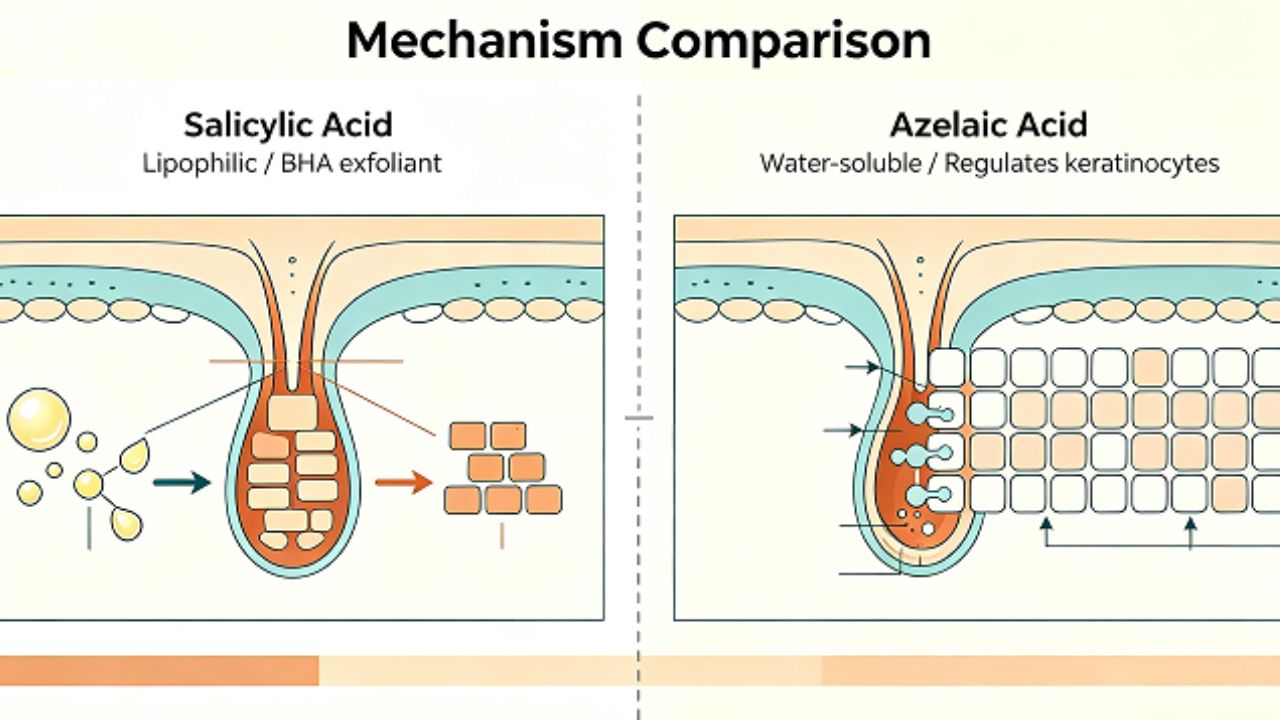
Thanks to its lipophilic nature, Salicylic Acid penetrates deep into the pores to dissolve the keratin and sebum that cause blockages, allowing accumulated dead skin cells to slough off. It is a classic BHA exfoliant.
Azelaic Acid is a water-soluble active ingredient; rather than relying on aggressive exfoliation, it regulates the proliferation and differentiation of keratinocytes to reduce the abnormal accumulation of keratin within pores at the source.
Irritating Nature
The difference in irritancy between the two is primarily due to their differing mechanisms of action. Formulation conditions are also a contributing factor.
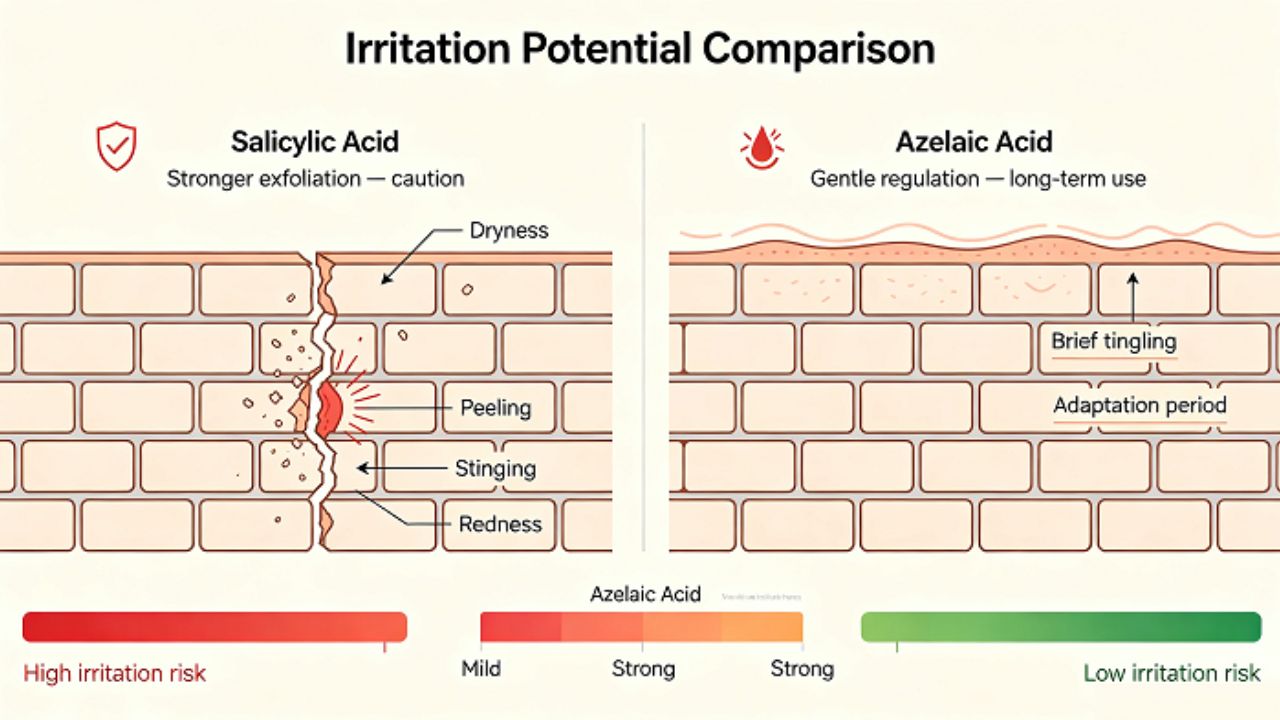
The irritation caused by Salicylic Acid stems from the dissolution of intercellular junctions between keratinocytes, a process that accelerates the shedding of dead skin cells from the surface. Improper use—such as applying excessively high concentrations or layering products too frequently—increases the risk of compromising the skin barrier, potentially leading to symptoms like dryness, peeling, stinging, and redness.
Azelaic Acid does not cause the harsh exfoliation associated with strong acids and has a relatively minimal impact on the skin’s stratum corneum. Among common anti-acne active ingredients, it is generally quite gentle, making it well-suited for formulations intended for long-term use. The only minor discomfort is a brief stinging or itching sensation experienced by first-time users, which is a normal reaction as the skin adapts to the product.
Efficacy
Salicylic Acid products are more directly effective against blackheads, whiteheads, and clogged pores caused by excessive sebum secretion; they dissolve keratin plugs and clear out the pores.
Azelaic Acid products are particularly effective against red, swollen (inflammatory) acne and the pigmentation that remains after the acne clears. They work by regulating keratin plugs and providing anti-inflammatory and antibacterial benefits, leading to noticeable improvements in inflammatory acne and post-acne marks.
Formulation Selection Guide
When to choose Salicylic Acid
If your product is positioned to target blackheads, whiteheads/closed comedones, pore unclogging, and oil control, and is intended for healthy oily skin, it is not suitable for severely sensitive skin.
You are undoubtedly aware that Cosmetic-grade Salicylic Acid raw material exhibits optimal stability and active ingredient efficacy within the pH range of 3 to 4.
Typical product directions: oil-control and pore-clearing Salicylic Acid serum; gel for treating closed comedones.
When to choose Azelaic Acid
When your product focuses on improving inflammatory acne and red acne marks while soothing redness—prioritizing low irritation and suitability for sensitive skin—and is intended for long-term use, it aims to minimize the risk of skin barrier damage caused by aggressive exfoliation.
Cosmetic-grade Azelaic Acid raw material has limited solubility in formulations, often requiring solubilization or a suspension system.
Typical product directions: soothing anti-acne Azelaic Acid serums, reparative anti-acne lotions, and skincare products targeting acne-prone skin with redness.
Note: When referring to indications such as rosacea, ensure that cosmetic claims are compliant and avoid claims of medical efficacy.
FAQ
Q:What concentration works for acne formulations?
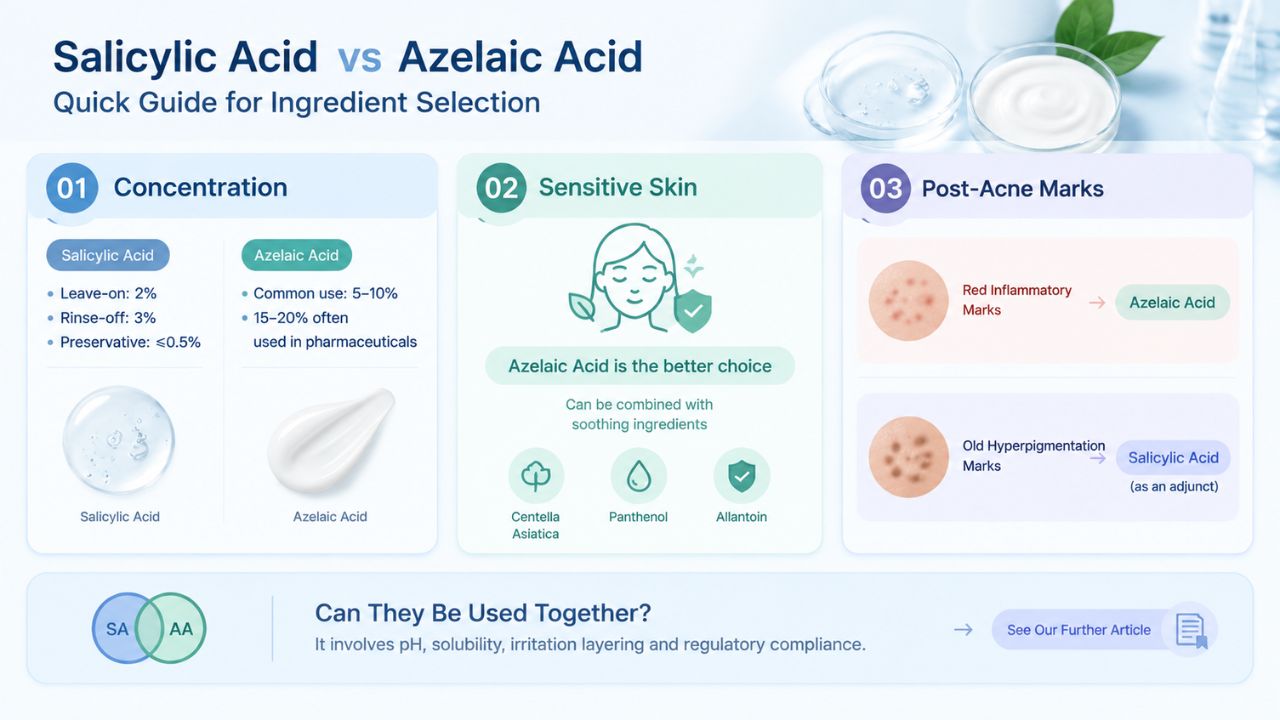
A:Taking Chinese regulations as an example, the maximum concentration is 2% for leave-on cosmetics and 3% for rinse-off products; typical formulation levels range from 0.5% to 2%. Azelaic acid: concentrations of 5%–10% are common in cosmetics, while higher concentrations (15%–20%) are typically found in pharmaceutical or clinical products; specific limits must be verified against the regulations of the target market.
Q:Is Azelaic Acid suitable for sensitive skin?
A:Yes. Azelaic acid does not have a strong exfoliating effect and is generally less irritating than Salicylic Acid, making it a top choice for formulations targeting sensitive, acne-prone skin; while a small number of users may experience brief stinging or itching, the formula can incorporate soothing ingredients to further enhance tolerability.
Q:Which is better for post-acne marks?
A:Azelaic acid is better suited for red, inflammatory acne marks; Salicylic acid primarily works to unclog pores and offers only a supplementary effect in accelerating keratin turnover for older, pigmented acne marks.
Final Thought
This article focuses on comparing the raw material properties of Salicylic Acid and Azelaic Acid to provide guidance on formulation selection. If you plan to incorporate both active ingredients into a single formula—which entails considerations regarding pH compatibility, solubility, potential additive irritation, and regulatory compliance—we will address these topics separately in a future article.
Further Reading:Azelaic Acid and Salicylic Acid: Can They Be Combined in One Formula?