When it comes to unclogging pores and addressing blackheads and mild acne, Salicylic Acid is a highly recognized active ingredient backed by scientific research. But do you understand how it works on the skin? Do you know how to incorporate it scientifically into your product formulations? This article provides a systematic overview of Salicylic Acid in cosmetics, helping you gain a comprehensive understanding of this exfoliating ingredient and utilize it appropriately.
What is Salicylic Acid & How It Works
Definition of Salicylic Acid
Salicylic acid is a lipid-soluble substance and a common active ingredient in skincare formulations. It is widely used in products designed for oil control, acne treatment, and cleansing, as well as in brightening formulas that improve dull complexions by accelerating the turnover of dead skin cells.
Salicylic acid unclogs pores through chemical exfoliation and the regulation of keratin turnover; it also directly inhibits the growth of various bacteria and fungi, effectively addressing skincare concerns such as seborrheic dermatitis and acne.
Salicylic Acid’s Mechanism of Action
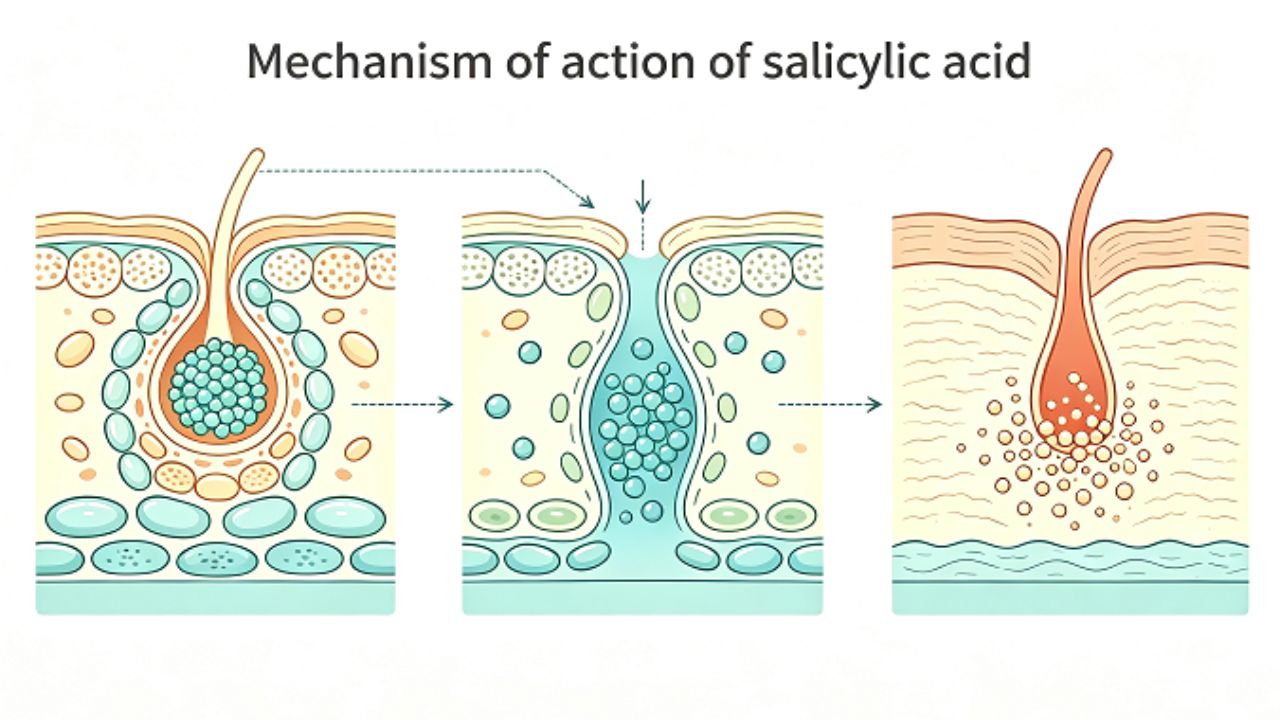
You might wonder why Salicylic Acid is effective against comedones and papules ,but ineffective against acne scars. The reason lies in its mechanism of action: it targets the stratum corneum, sebaceous glands, and inflammatory signaling pathways, yet it cannot reverse structural damage that has already formed in the dermis.
Salicylic acid promotes the natural shedding of dead skin cells by reducing adhesion between keratinocytes. It also inhibits the AMPK/SREBP1 signaling pathway in sebaceous gland cells—thereby reducing sebum synthesis—while simultaneously suppressing the production of inflammatory factors. By acting through multiple pathways, it addresses issues related to abnormal keratin turnover, clogged pores, and inflammation.
Skin Benefits of Cosmetic-Grade Salicylic Acid
- Unclogs pores and dissolves keratin plugs:Salicylic acid does not melt sebum itself; instead, it loosens keratin, making it easier for sebum plugs clogging the pores to be expelled.
- Exfoliates dead skin cells:Accelerates the turnover of surface skin cells, improving roughness, closed comedones, and the appearance of enlarged pores for a smoother skin texture.
- Anti-inflammatory and soothing:Offers natural anti-inflammatory benefits, alleviating redness and discomfort caused by acne, inhibiting acne-related microorganisms on the skin’s surface, and reducing inflammation.
- Helps fade acne marks: Accelerates skin cell renewal, helping to improve brown acne marks; however, it is ineffective against pitted acne scars.
Does Salicylic Acid Work for Acne, Blackheads, Pimples, and Razor Bumps?
For Acne / Blackheads / Pimples
Thanks to its oil-soluble nature, Salicylic Acid penetrates deep into pores; it clears blockages by loosening keratin, thereby addressing skin issues at the source. Dermatological literature indicates that 2% Cosmetic-grade Salicylic Acid is suitable for treating mild acne (blackheads and whiteheads) and preventing new breakouts. Consistent use leads to a clearer complexion and reduces pore congestion.
For Razor Bumps
This is an extended application of Salicylic Acid. Razor bumps are essentially a form of pseudofolliculitis—inflammatory papules caused by ingrown hairs curling back into the skin after shaving. Salicylic acid works through chemical exfoliation to dissolve dead skin cells and sebum at the hair follicle opening, allowing hair to grow out normally. It effectively prevents and improves red razor bumps.
Formulator’s Guide: Selecting the Right Salicylic Acid Raw Material
For skincare manufacturers and formulators looking to incorporate Salicylic Acid into their products, the choice of raw material is critical; it directly determines the final product’s efficacy and its suitability for the target consumer demographic.
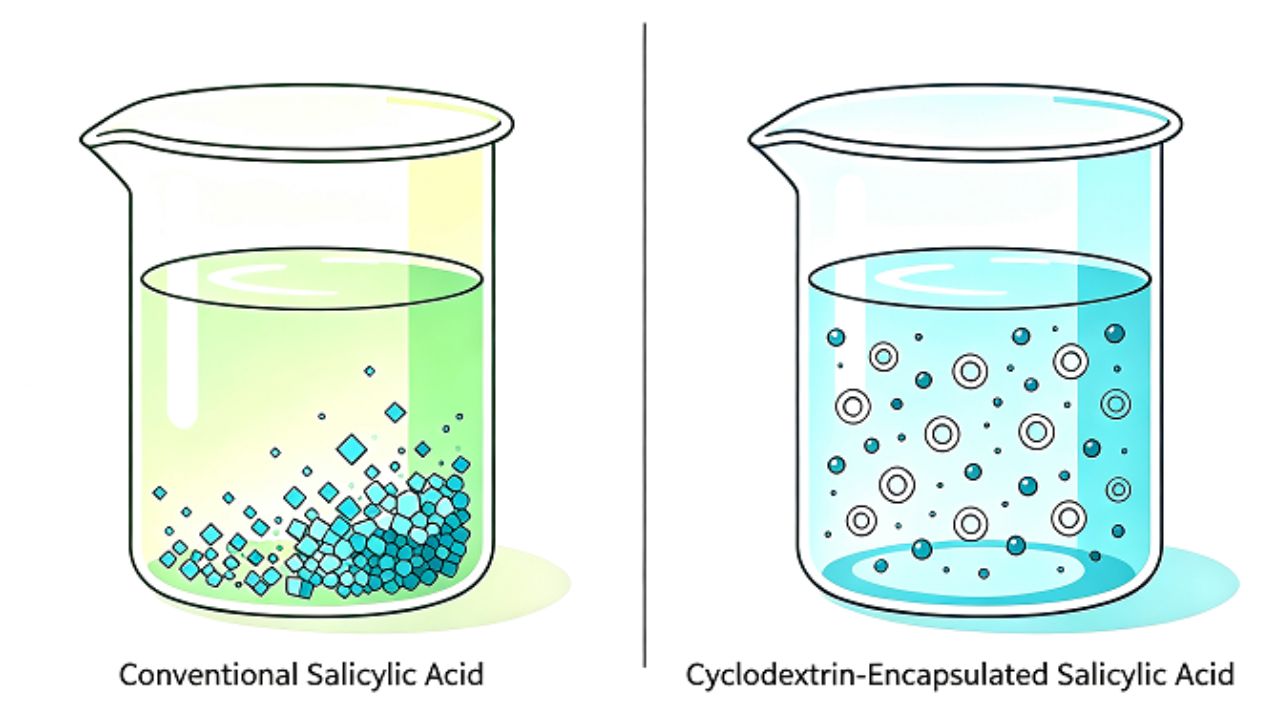
- If your formula focuses on gentleness and low irritation, the sustained-releaseproperties of Cyclodextrin-encapsulated Salicylic Acid can help achieve this, making it particularly ideal for leave-on products.
- If you are working with a limited budget, formulating rinse-off products, or prioritizing rapid onset of action, standard Cosmetic-grade Salicylic Acid is a suitable choice.
Highassay supplies standard, cost-effective Cosmetic-grade Salicylic Acid and specializes in the R&D of 40% Salicylic Acid Solutions, continuously enhancing stability within cosmetic systems. We utilize unique supramolecular technology to overcome the challenge of poor water solubility, enabling stable incorporation into various cosmetic formulations—including cleansers, lotions, creams, and toners.
FAQ
Q:What types of formulations are suitable for Cosmetic-grade Salicylic Acid?
A:Toners, serums, face masks, acne treatment creams, hair and body care products, etc.
Q:Can Salicylic Acid cause peeling?
A:It is possible; mild peeling is a normal sign of skin cell turnover and not necessarily an adverse reaction. The extent of peeling depends on the concentration, method of use, and individual skin tolerance. Proper usage can prevent severe peeling.
Q:What are the common usage concentrations for Cosmetic-grade Salicylic Acid?
A:0.5%–2%.
Q:Why is sun protection necessary after using products containing Salicylic Acid?
A:Using these ingredients accelerates the shedding of dead skin cells and thins the stratum corneum. This reduces the skin barrier’s ability to block UV rays, making the skin more susceptible to UV damage.
Q:Can AHA and BHA be formulated together in one skincare product?
A:Yes, AHA and BHA can be co-formulated, but formulators must carefully control total acid concentration, final pH and irritation risk.
Final Thought
To this day, Cosmetic-grade Salicylic Acid remains one of the most important and cost-effective active ingredients for exfoliation and skin-surface conditioning in the cosmetics industry. A comprehensive understanding of its mechanism of action, skincare benefits, safe concentration ranges, and application scenarios enables both everyday consumers and cosmetic formulation researchers to utilize this ingredient more scientifically and safely.