In our previous blog post, we conducted a detailed comparison of Cosmetic-grade Salicylic Acid and Azelaic Acid. Given that each ingredient offers distinct benefits in cosmetic formulations, the question arises: can combining them maximize their efficacy? In this article, we examine the feasibility of combining these two ingredients and the challenges involved in their practical formulation from a formulator’s perspective.
Key conclusion: It can be used in combination, but the formulation requirements are extremely high.
Why Can They Be Combined?
Azelaic Acid and Salicylic Acid target different issues.
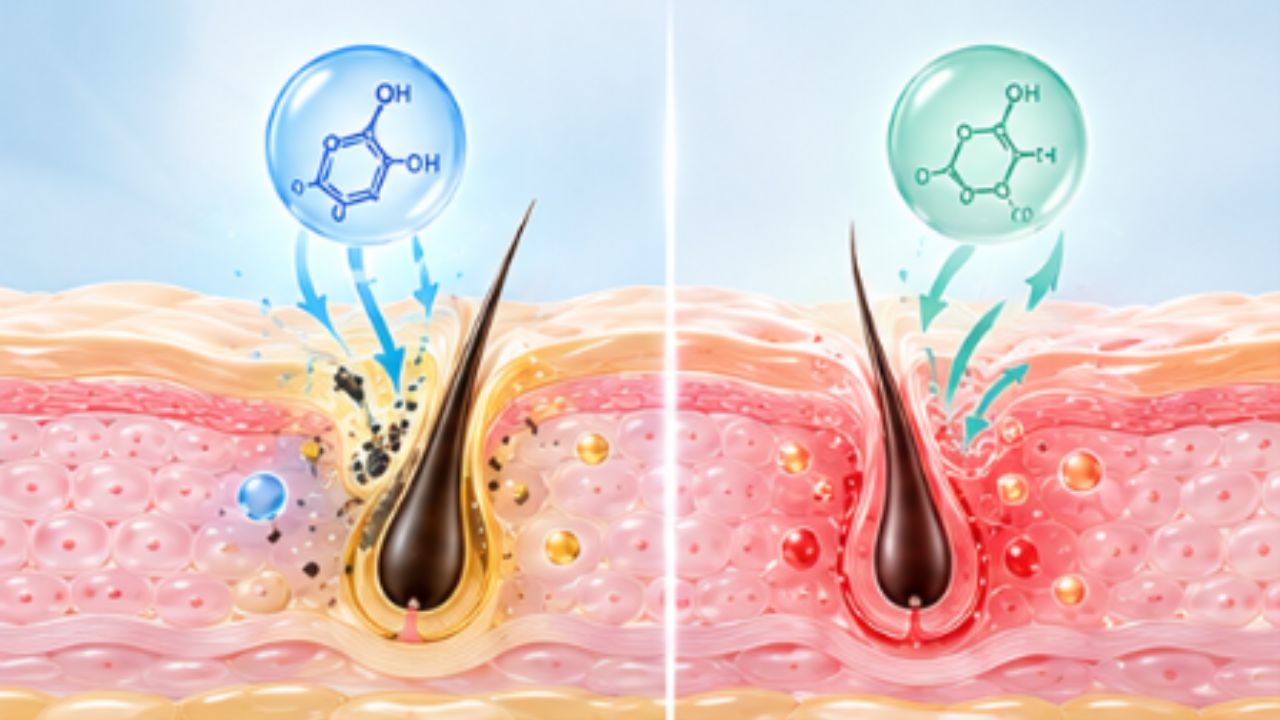
- Lipid-soluble Salicylic Acid penetrates sebum to reach deep into hair follicles and unclog pores; it focuses on addressing blackheads and whiteheads.
- Azelaic Acid offers antibacterial and anti-inflammatory properties while inhibiting melanin transport; it focuses on red, inflamed acne and red acne marks.
Their mechanisms of action do not conflict, which is the fundamental reason they can be combined.
Furthermore, both are organic acids and are fully compatible from a physicochemical standpoint. The raw materials do not undergo neutralization, decomposition, or precipitation reactions when mixed, meaning the activity of each ingredient remains intact.
Why Is Combining Them So Challenging?
Cosmetic-grade Salicylic Acid and Azelaic Acid are subject to strict limitations regarding concentration, pH, formulation systems, and usage scenarios in skincare products.
They cannot simply be layered together; while they can be combined within a properly designed formula, the resulting product typically causes more irritation than either ingredient used alone, making it unsuitable for all skin types.
Formulation challenges
pH Conflict
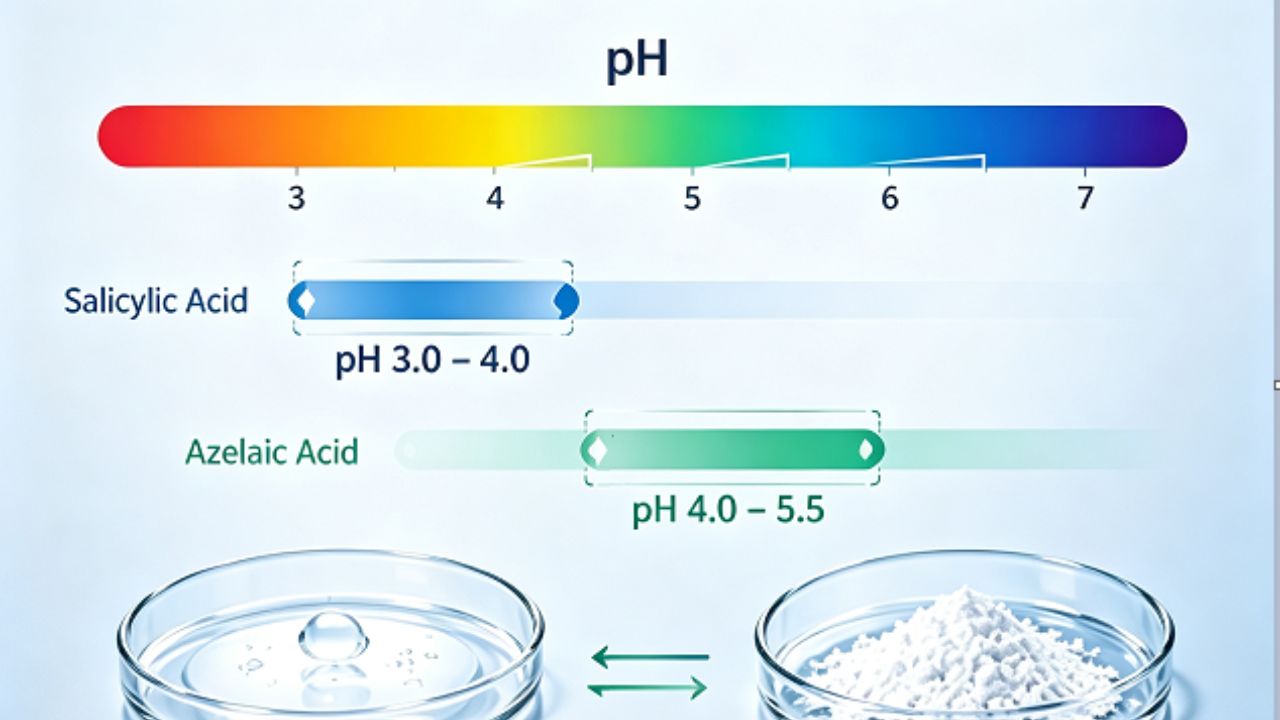
- Salicylic Acid requires a mildly acidic environment (pH 3.0–4.0) to remain in its free acid form, thereby maintaining its ability to penetrate the skin effectively and dissolve keratin plugs. As the pH rises, the carboxyl group dissociates and the proportion of free Salicylic Acid decreases; this is accompanied by reduced lipophilicity, which significantly compromises its efficacy in dissolving keratin plugs.
- Azelaic Acid is compatible with a broader pH range (pH 4.0–5.5); however, at a pH below 3.5, its solubility drops sharply, making it highly prone to crystallization and precipitation. A lower pH increases the proportion of free Azelaic Acid—which has extremely poor water solubility—thereby significantly raising the risk of crystallization.
The conflict lies in the fact that while a low pH favors Salicylic Acid, it tends to cause Azelaic Acid to crystallize; conversely, raising the pH reduces Azelaic Acid crystallization but diminishes the activity of Salicylic Acid. The lack of overlap between their optimal pH ranges for activity presents the greatest challenge in formulating a combination product.
Differences in solubility
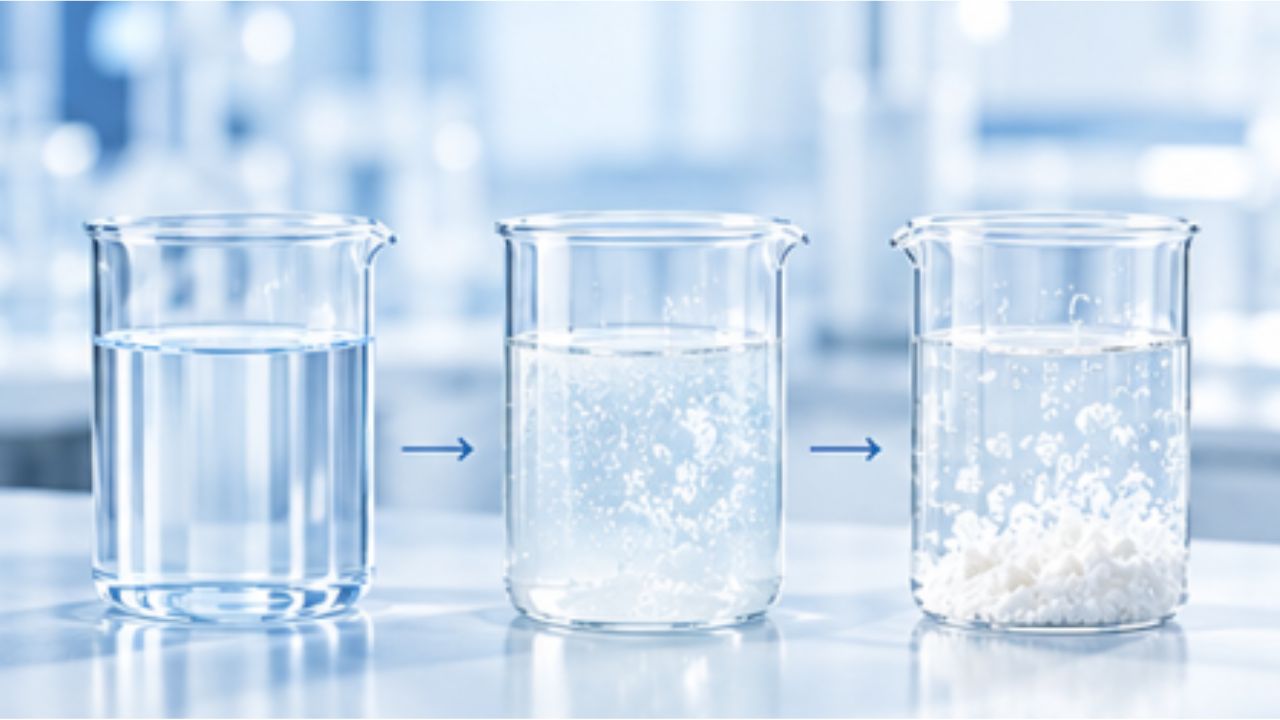
- Azelaic Acid has extremely low solubility in water at room temperature and is insoluble in oils; it requires large amounts of alcohol or diol solvents to remain in solution. If the water content in the system increases, Azelaic Acid immediately precipitates out as a solid.
- Salicylic Acid behaves differently; although its water solubility is also low, it dissolves readily in alcohols and can remain stable in water-based systems through the use of solubilizers, pH adjustment, or moderate heating.
When combining the two, a single solvent is often insufficient to accommodate both ingredients simultaneously. If the solvent quantity is inadequate or the water content is too high, Azelaic Acid precipitates first, followed by Salicylic Acid as it loses the necessary solvent support.
Additionally, while high concentrations of ethanol aid solubility, they also intensify the irritating nature of both ingredients; furthermore, as the ethanol evaporates, the solubility of Azelaic Acid decreases, making crystallization likely during long-term storage.
Cumulative acidity and uncontrollable irritation
Both Salicylic Acid and Azelaic Acid compromise the intercellular lipids of the stratum corneum; while irritation from 2% Salicylic Acid or 10% Azelaic Acid alone is manageable, combining them in the same formula amplifies the irritating effects (disrupting the skin barrier and placing undue stress on the skin), making symptoms such as dryness, redness, sensitivity, and stinging highly likely. From a formulation perspective, the product should not be used directly unless additional soothing ingredients are included.
Recommended Formulation Ranges
Regulatory Limits
- Salicylic Acid: Maximum permitted concentration in cosmetics is 2%.
- Azelaic Acid: No statutory upper limit; the industry-standard usage range is 10%–15%.
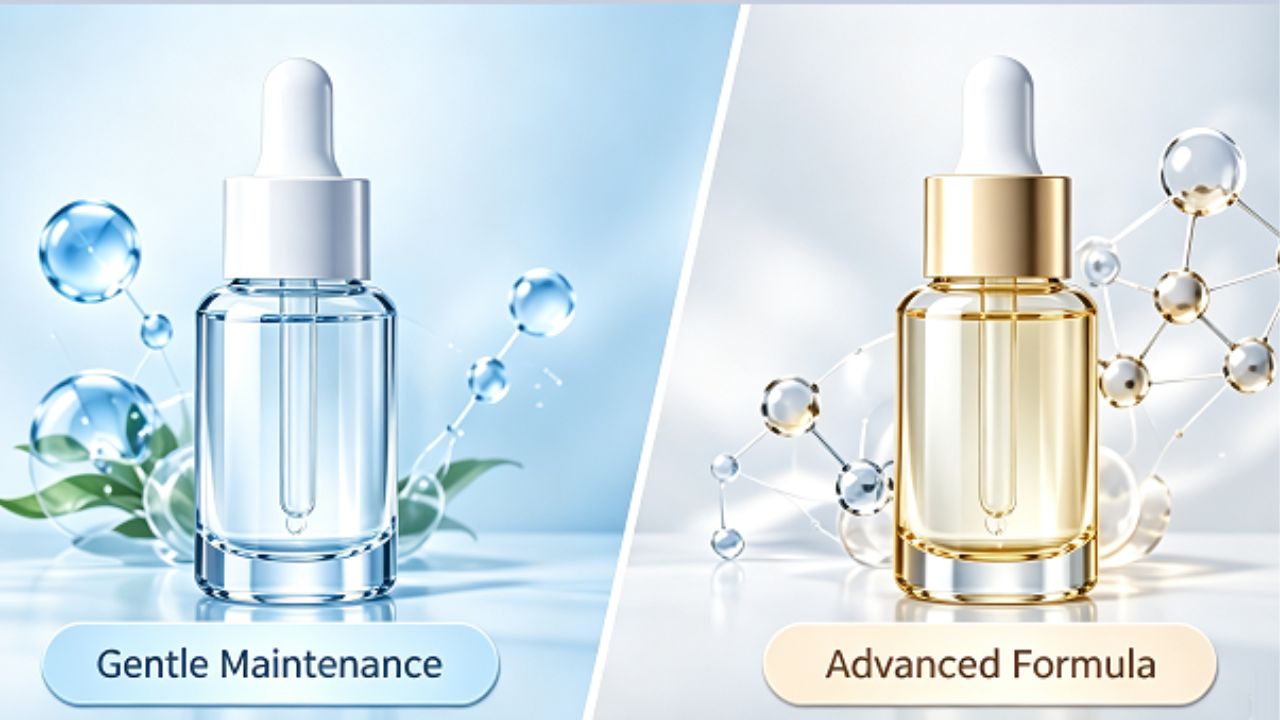
Gentle Maintenance Type
- Concentration Ratio: 0.5%–1% Salicylic Acid + 5%–10% Azelaic Acid
- Product Positioning: A gentle, daily-use formula suitable for mild acne, closed comedones, and blackheads.
- Product Advantages: This combination helps prevent comedones with manageable irritation levels, making it suitable for long-term maintenance.
High-Efficacy Advanced Type
- Concentration Ratio: 1%–1.5% Salicylic Acid + 10%–15% Azelaic Acid
- Product Positioning: An efficacy-focused formula for oily, acne-prone skin (targeting blackheads and some red acne lesions) that requires a soothing system.
- Precautions: The concentrations in this combination are relatively high; it is not suitable for long-term daily preventive use and is contraindicated for sensitive skin or skin with a compromised barrier.
Formulation Recommendations
- Consider using microemulsions, cyclodextrin encapsulation, or dispersion systems for Azelaic Acid to balance solubility and activity within an appropriate pH range.
- When combining these ingredients in a single skincare formula, include soothing and repairing agents—such as panthenol, bisabolol, ceramides, glycerin, or madecassoside—to mitigate the irritation caused by the acids.
- Preferred systems: microemulsions or encapsulated actives (e.g., encapsulated Salicylic Acid combined with dispersed Azelaic Acid). Avoid: simple aqueous formulas based on water and glycerin, as these are prone to crystallization and phase separation.
- Finished products must undergo low-temperature cycling tests; even if no crystallization is observed upon release, low-temperature environments can still cause Azelaic Acid to precipitate.
FAQ
Q:Who is the combination formula suitable for?
A:Individuals with oily or combination skin who have blackheads/whiteheads alongside a small number of inflammatory papules and red acne marks.
Q:What product formats are suitable for this combination formula?
A:Lightweight formats such as serums and gels are ideal; heavy creams are not recommended, as they can feel suffocating on the skin.
Q:What are the advantages of combination products?
A:Combining Salicylic Acid and Azelaic Acid in a single formula allows for simultaneous unclogging of pores and anti-inflammatory/redness-reducing effects. It also offers convenience for the user, addressing multiple skin concerns with just one product.
Q:Is a combination formula necessarily more effective than using a single ingredient?
A:Not necessarily. For individuals with sensitive, acne-prone skin, using Azelaic Acid alone may be a safer choice. Combination formulas are better suited for products positioned for oily skin that presents with both comedones (blackheads/whiteheads) and a limited number of inflammatory acne lesions.
Q:What precautions should be taken with combination formulas?
A:Strictly avoid pH < 3.5;
Strictly avoid high-concentration ethanol systems;
Do not combine with strong alkalis or soap-based systems;
Exercise caution when using high-viscosity Carbomer systems for thickening.
Final Thought
The combination of Azelaic Acid and Salicylic Acid is not merely a question of whether they can be mixed together, but rather whether they can stably coexist in their respective active forms.
Therefore, when developing a product containing both Salicylic Acid and Azelaic Acid, your primary consideration is striking a balance among solubility, pH, and irritation; this is crucial for maximizing efficacy.
If you have any formulation-related questions regarding Cosmetic-grade Azelaic Acid or Salicylic Acid, please feel free to reach out.
For a comparison of the ingredients Azelaic Acid and Salicylic Acid, please refer to:
Azelaic Acid vs Salicylic Acid:A Formulator’s Guide to Active Ingredient Selection.