Disodium inosinate (IMP, E631) is a purine-based compound widely used in the food industry as an umami-enhancing ingredient. This article focuses on the properties, flavor-enhancing effects, and applications of disodium inosinate. It also discusses 5′-inosinic acid—an intermediate in its synthesis—as well as inosine, an essential starting material for its industrial enzymatic production.
Differences in Chemical Structure
Disodium Inosinate (CAS: 4691-65-0)
Commercially available industrial form (Disodium 5′-inosinate)
- Chemical Structure: The sodium salt form of Inosinic Acid; this is the commercial version of IMP used in the food industry.
- Characteristics: Disodium Inosinate exhibits excellent water solubility and stability. It is an EU-approved food additive, designated as E631.
Inosinic Acid (CAS: 131-99-7)
A phosphate ester of Inosine
- Chemical Structure: An Inosine molecule with an additional phosphate group; also known as Inosine monophosphate (free IMP). It is the parent acid form of Disodium Inosinate.
- Characteristics: Inosinate is a “free acid.” It possesses an umami (savory) taste and is odorless; however, it has poor stability and is prone to hydrolysis under conditions of high temperature or strong acidity. It serves as an intermediate in the production of Disodium Inosinate.
Inosine (CAS: 58-63-9)
A basic nucleoside
- Chemical Structure: Composed of Hypoxanthine linked to Ribose; it lacks a phosphate group.
- Characteristics: Inosine is soluble in water—though less so than its disodium salt—and is odorless with a bitter taste. It acts as a crucial precursor in cellular metabolism and is currently the primary starting material used for the enzymatic production of IMP.
IMP production conversion pathway
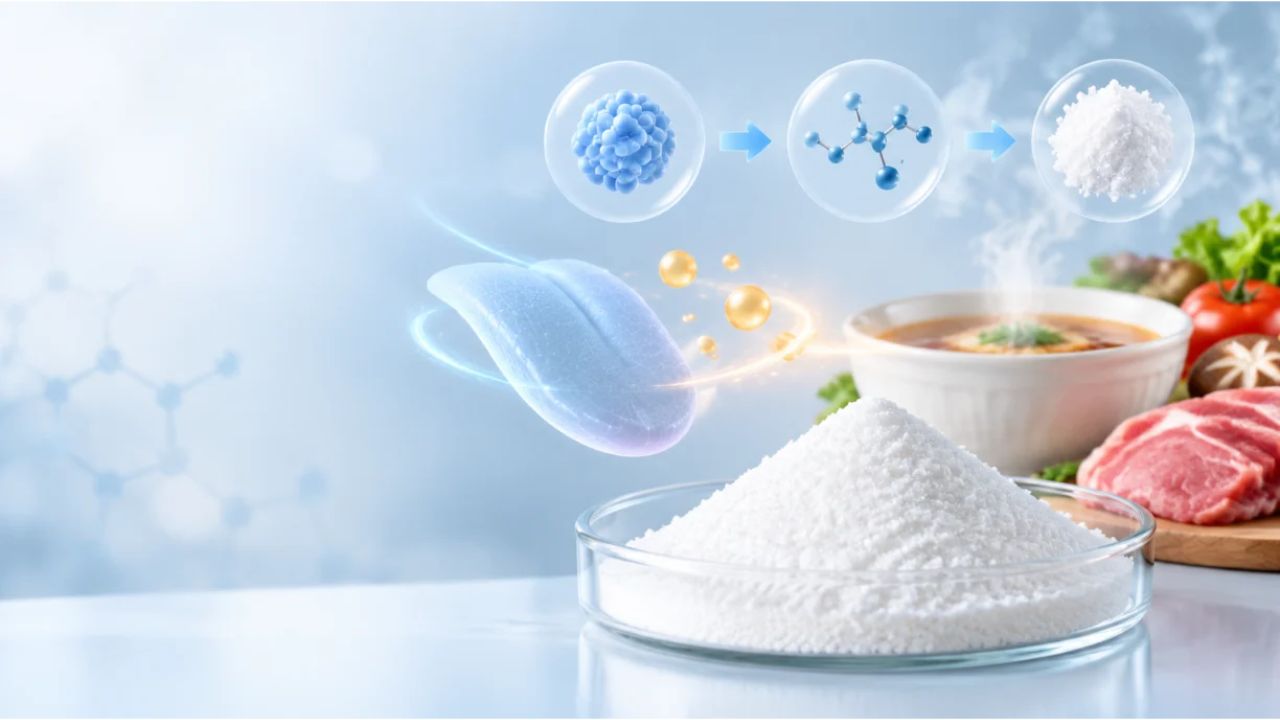
Inosine → enzymatic phosphorylation → 5′-inosinic acid (free acid) → neutralization with alkali to form salt → Disodium 5′-inosinate

Comparison Table At a Glance
Below is a clear comparison of Disodium 5′-inosinate, Free 5′-inosinic acid and Inosine, helping you distinguish their properties and application boundaries:
Item | Disodium 5′-Inosinate (Commercial IMP) | 5′-Inosinic Acid (Free IMP) | Inosine |
| CAS No. | 4691-65-0 (anhydrous) | 131-99-7 | 58-63-9 |
| Chemical Type | Nucleotide disodium salt | Free nucleotide | Nucleoside |
| Structure Feature | Inosinic acid neutralized with sodium | Inosine + one phosphate group | Hypoxanthine + ribose, no phosphate |
| Water Solubility | Excellent, highly soluble in water | Moderately soluble | Soluble in water, lower solubility than disodium salt |
| Commercial Status | Main bulk commercial product for food | Rarely traded in large volume, mainly lab / synthesis use | Bulk raw material, starting substrate for IMP production |
| Core Characteristic | Stable, strong umami taste, E631 food additive | Umami taste, easy to hydrolyze under strong acid / high heat | Bitter taste, no umami; natural metabolic precursor |
| Typical End Use | Food seasoning, I+G blend, pet food | Biochemical research, synthetic intermediate | Starting material for IMP fermentation, API & feed grade available |
| Stability | Good under normal storage | Poor, prone to dephosphorylation | Stable under recommended storage |
Inosine is the key starting material for the mainstream enzymatic production of Disodium 5′-Inosinate. Consequently, the quality of Disodium Inosinate is closely linked to the purity of the Inosine used.
Disodium Inosinate Uses
Primary application: Food industry
Disodium inosinate is a highly effective and safe food additive. Possessing a distinct savory taste of its own and an exceptional ability to enhance umami, it is widely used across the food industry and serves as a key ingredient for improving the flavor quality of products.
Synergistic Effect
When used alone, disodium inosinate (IMP) offers only a limited umami impact. However, when combined with monosodium glutamate (MSG) or disodium guanylate (GMP), the enhancement of umami is not merely additive but multiplicative—amplifying the savory taste by several orders of magnitude, even at extremely low inclusion levels.
Classic Combinations
- IMP + MSG: The most common pairing. A small amount of IMP allows for a significant reduction in the required dosage of MSG—a major advantage in salt-reduction formulations. Furthermore, it addresses the “thin” and fleeting sensory profile of MSG alone, resulting in a more rounded and full-bodied flavor.
- IMP + GMP (1:1 ratio, known as “I+G”): A 1:1 blend of these two compounds yields a synergistic effect greater than that of either IMP or GMP used individually. This serves as the core formulation for standardized commercial nucleotide-based flavor enhancers.
- I+G + MSG: A mainstream seasoning solution in the food industry. This three-component combination achieves a peak synergistic effect and is widely utilized in prepared meals, stocks and broths, meat products, chicken bouillon, seafood seasonings, and pet food.
Flavor-Modifying Effects
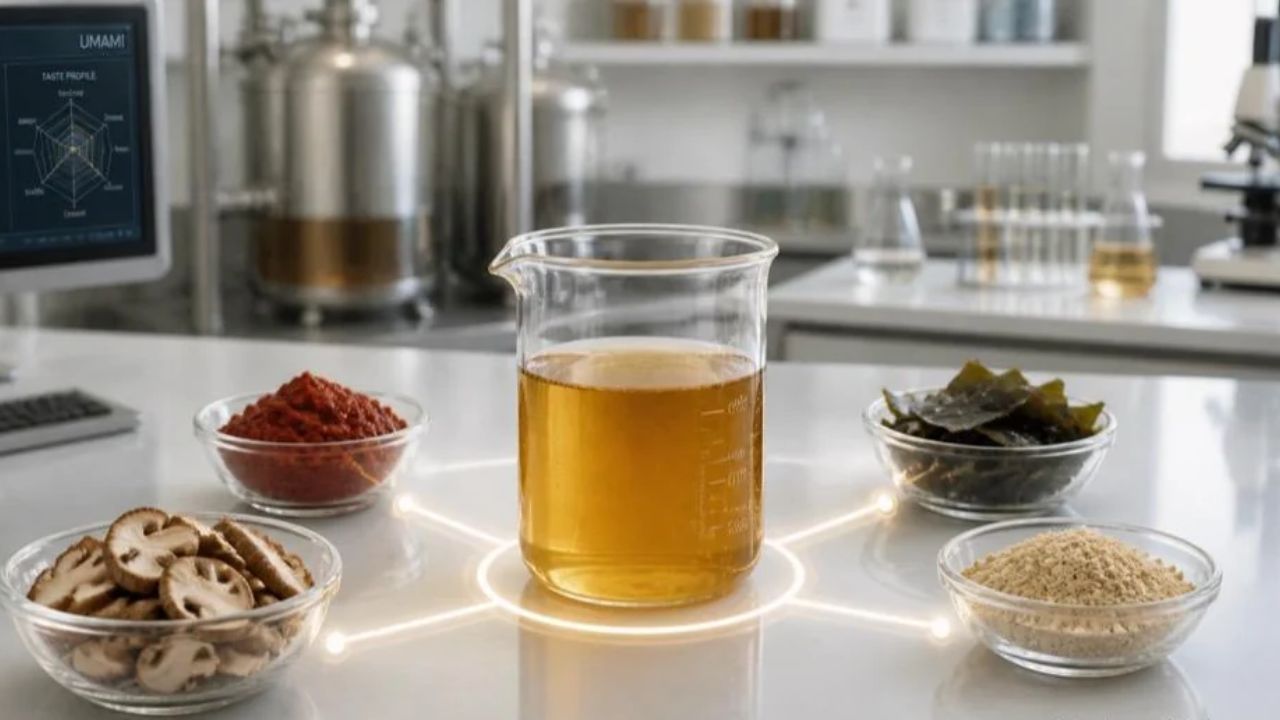
In terms of receptor mechanisms, disodium inosinate (IMP) binds to the T1R1/T1R3 umami receptors on the human tongue, acting as an allosteric activator for glutamate. In a blended system, monosodium glutamate (MSG) provides the initial, foundational umami, while IMP contributes a distinct meaty or seafood-like umami base; together, they create a fuller, longer-lasting umami profile. This is particularly well-suited for the flavor requirements of meat products and broths.
Furthermore, through the principle of taste suppression (or “counteraction”), disodium inosinate can effectively inhibit or mask undesirable sensory notes—such as excessive saltiness, bitterness, starchy off-flavors, or metallic/iron-like tastes—resulting in a more mellow and harmonious overall flavor profile.
Other Minor Uses
Beyond its primary function as a food flavor enhancer, disodium inosinate is used in several other sectors—though on a much smaller scale—where it plays an indispensable role.
- Pharmaceutical and Biochemical Fields: It serves as a biochemical reagent, an intermediate for nucleotide-based pharmaceuticals, or an ingredient in microbial culture media.
- Feed Industry: It is used as a feed additive to enhance the palatability of pet food and aquaculture feed.
- Other Areas: It is also utilized in health supplements and biological research and development.
Conclusion
As discussed, the ultimate quality of Disodium Inosinate heavily relies on the purity of upstream Inosine and the manufacturing process.
We are committed to supplying high-purity, internationally compliant Disodium Inosinate (E631) and Inosine, ensuring that every batch delivers stable and exceptional umami performance for your formulations. If you would like to request a Certificate of Analysis (COA) or learn more about our supply capabilities, please do not hesitate to contact us.