Nowadays,Androgenetic alopecia (pattern hair loss) has become a matter of increasing concern for both men and women, and Dutasteride and Finasteride are currently common, effective medications available on the market. Do you know how to choose between them? Below, I will provide a detailed comparison of the two regarding their efficacy, side effects, onset of action, safety profiles, pricing, and target patient groups.
What is Androgenetic alopecia?
Androgenetic alopecia is a relatively common and complex form of hair loss. In addition to genetic factors, abnormal androgen levels are a primary cause. Dihydrotestosterone (DHT)—a derivative of testosterone—significantly affects scalp hair follicles; elevated levels cause the follicles to shrink, leading to hair loss.
If you are experiencing severe hair loss, it is important to identify the cause and seek treatment as soon as possible; although a complete cure may not currently be possible, controlling the progression of hair loss can help improve your quality of life and overall well-being.
Specific Manifestations of Androgenetic alopecia
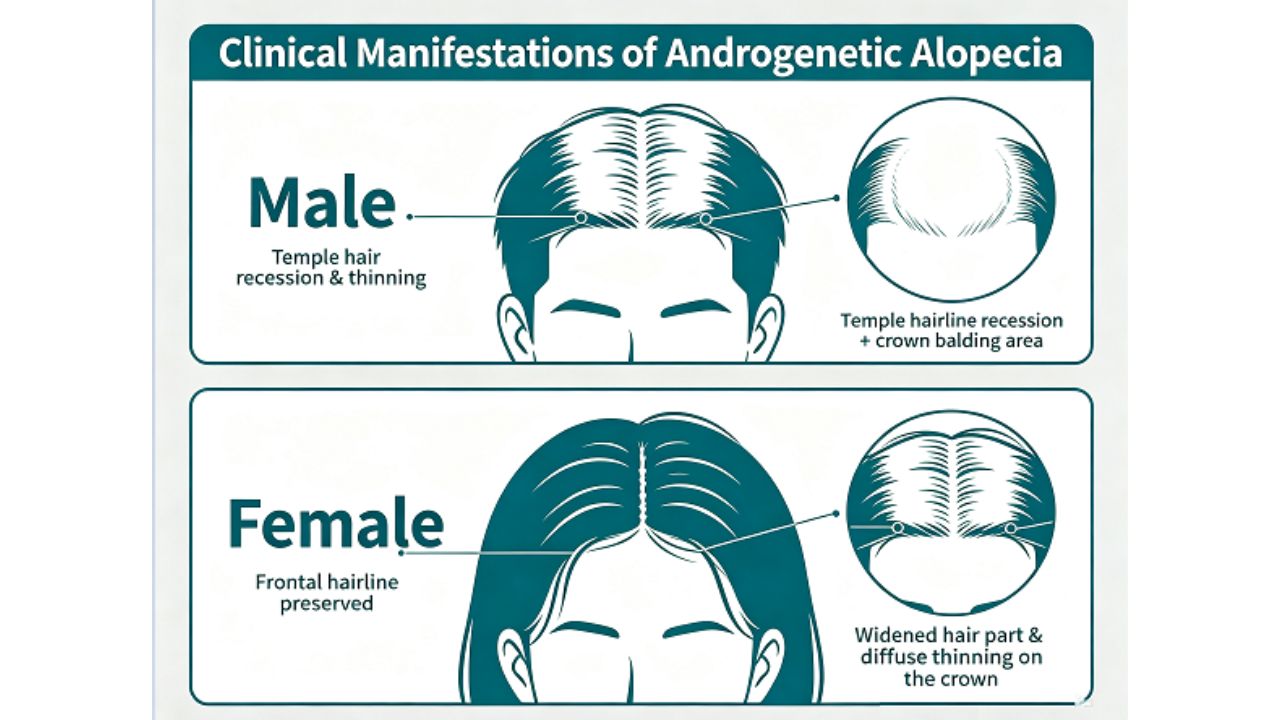
Symptoms of Androgenetic alopecia differ between the sexes.
Men: A receding hairline and a bald patch on the crown.
Women: Overall thinning at the crown and along the center part; in severe cases, the scalp becomes visible.
Function of Dutasteride and Finasteride
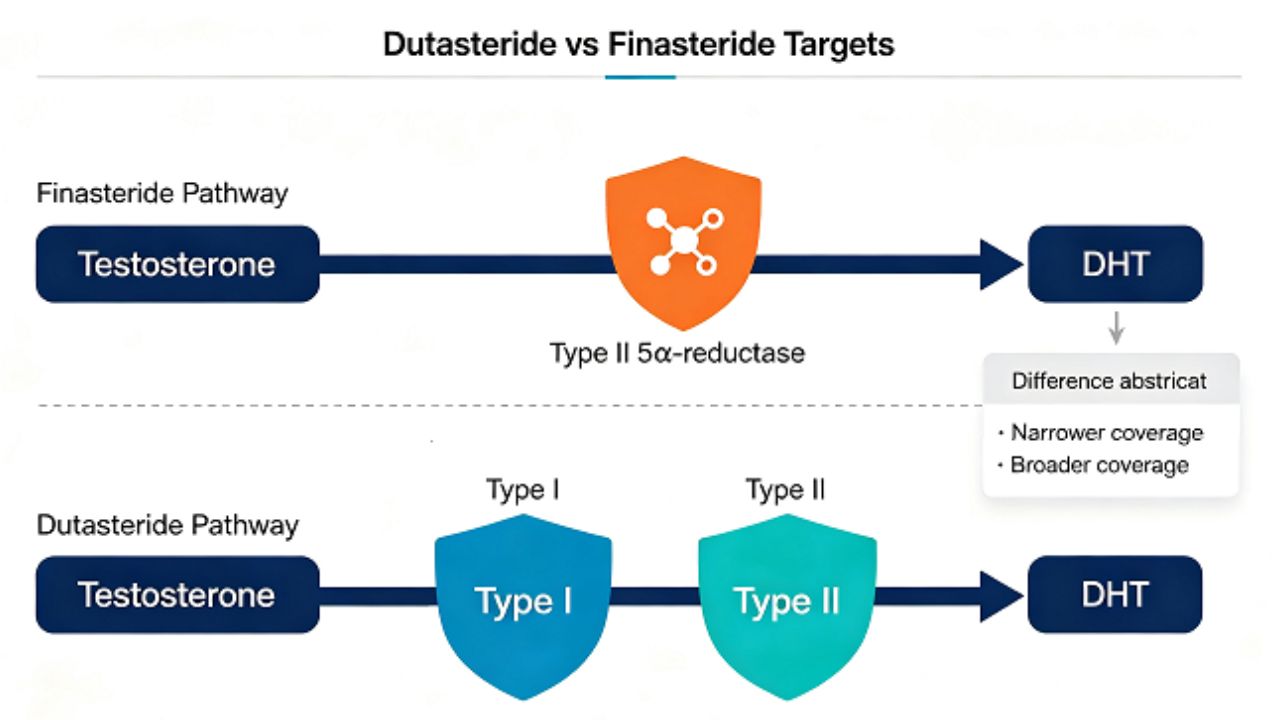
The root cause of androgenetic alopecia is the attack on hair follicles by DHT; 5α-reductase inhibitors currently represent a clinically effective treatment approach. Dutasteride and Finasteride work by lowering DHT levels, thereby slowing or reversing the process of hair follicle miniaturization.
The two most common oral medications on the market are Finasteride (1 mg/day) and Dutasteride (0.5 mg/day).
Differences between Dutasteride and Finasteride
Different Enzyme Targets
Dutasteride: Dual-inhibits both Type I and Type II 5α-reductase (effective across systemic tissues), reducing serum DHT by approximately 90% and scalp DHT even more thoroughly.
Finasteride: Selectively inhibits Type II 5α-reductase (primarily in hair follicles and the prostate), reducing serum DHT by approximately 70% and scalp DHT by about 60%.
Dutasteride has a broader scope of inhibition than finasteride; consequently, its ability to lower DHT levels in the body is stronger.
Efficacy Comparison
Hair Growth Strength: Dutasteride is stronger. Clinical studies show that the hair growth rate of dutasteride is about 20% higher than that of finasteride in a 24-week use cycle.
- Onset of effect: improvement can be seen in 3 months with dutasteride; 3-6 months with finasteride.
- Long-term effect: If taken continuously for more than one year, the final effect of the two will be similar.
It should be noted that both are restricted to adult men, and women and children are strictly prohibited from contacting/using them. Women should not come into direct contact with the drug during pregnancy preparation, pregnancy, and lactation, as it may cause teratogenic risks to the fetus.
Dutasteride side effects
- Commonalities: Both drugs carry a risk of decreased libido, weakened erections, and reduced ejaculate volume; the incidence rate is low (2%–4%), and the effects are reversible upon discontinuation.
- Differences:
Dutasteride has a longer half-life (3–5 weeks), so side effects subside more slowly.
Finasteride has a shorter half-life (6–8 hours), allowing for a faster recovery from side effects.
Some users report persistent sexual dysfunction; this represents a significant variation in individual response.
Price Gap
The price of Dutasteride is significantly higher than that of Finasteride, primarily due to differences in their market launch dates and patent status.
Summary of Differences
Item | Finasteride | Dutasteride |
| Enzyme Inhibition | Type 2 5α-reductase | Type 1 + Type 2 5α-reductase |
| Standard Dosage | 1 mg per day | 0.5 mg per day |
| DHT Reduction | Serum↓70%, Scalp↓60% | Serum↓90%, Scalp↓more significantly |
| Onset of Action | 3–6 months | Around 3 months |
| Half-life | 6–8 hours | 3–5 weeks |
| Side Effect Resolution | Fast (1–4 weeks after stopping) | Slow (several weeks) |
| Price | Low | High |
How to Choose the Right Treatment for You
I suggest making your choice based on the severity of your hair loss, your budget, and your tolerance for side effects.
- If you have mild to moderate androgenetic alopecia and are using medication for the first time—prioritizing safety and a conservative approach—I recommend Finasteride.
- If you suffer from severe androgenetic alopecia and have found finasteride ineffective, you might consider Dutasteride.
FAQ
Q: Topical Dutasteride vs. Topical Finasteride—Which is Better?
A: Topical Dutasteride is more potent; it inhibits both type 1 and type 2 5α-reductase, resulting in a more thorough reduction of DHT levels in the scalp. Topical Finasteride has a milder effect and is more extensively studied, making it suitable for users who prefer a more conservative approach. Systemic absorption is low for both, and both demonstrate a good safety profile for topical use.
Q: What happens after stopping the medication?
A: Within 12 months of discontinuing treatment, the benefits regarding hair growth typically reverse, and hair counts return to pre-treatment baseline levels. Therefore, androgenetic alopecia requires long-term maintenance therapy.
Q: Can women use it?
A: Absolutely not; there is a risk of teratogenicity (birth defects), and contact with broken capsules is strictly prohibited.
Q: Can men who are planning to conceive use it?
A: For Finasteride, discontinue use 3 months in advance. Due to its long half-life, it is recommended to stop using Dutasteride 6 months in advance and consult a doctor.
Q: Can they be used alternately or in combination?
A: Switching or combining medications on your own is not recommended; a medical evaluation is required.
Final Thought
There is no absolute “best” or “worst” option for treating androgenetic alopecia; the key lies in choosing the right approach for your needs and adhering to a standardized treatment regimen.
Whether you choose Dutasteride or Finasteride, selecting the appropriate treatment plan is essential for safely and effectively addressing hair loss.