Prostate cancer is a common malignancy in men, and endocrine anti-androgen therapy is the core treatment strategy for advanced prostate cancer.As classic API in this field, Bicalutamide and Flutamide are widely used in pharmaceutical formulation development and clinical treatment.Do you know the differences between them? This article provides a clear, professional reference to help you select the right raw material supplier.
Similar uses: Both can be used to treat prostate cancer
Bicalutamide and Flutamide are commonly used drugs for the clinical treatment of androgen-sensitive prostate cancer.It is primarily suitable for patients with locally advanced or metastatic advanced prostate cancer.
In clinical practice, Flutamide is primarily used in combination therapy for advanced prostate cancer, often alongside LHRH analogues or surgical castration. Bicalutamide, in addition to combination therapy, can also be used as a monotherapy for adjuvant treatment of locally advanced disease.
Drug Class: Bicalutamide is an upgraded version of Flutamide
Bicalutamide and Flutamide are both non-steroidal anti-androgens and are classic drugs for the treatment of prostate cancer.
Flutamide is a first-generation drug that entered the market relatively early; It has certain limitations in clinical application:Flutamide requires hepatic metabolic activation to exert its therapeutic effect and carries a high risk of hepatotoxicity with long-term use.
As a second-generation drug, Bicalutamide represents an evolution of Flutamide; it incorporates structural optimizations that address the shortcomings of the first-generation product. While maintaining robust anti-tumor efficacy, it achieves comprehensive improvements in pharmacokinetic properties, safety, and ease of administration, gradually securing a dominant position in the market.
Mechanism of action: Similar Pathways, Enhanced Efficacy
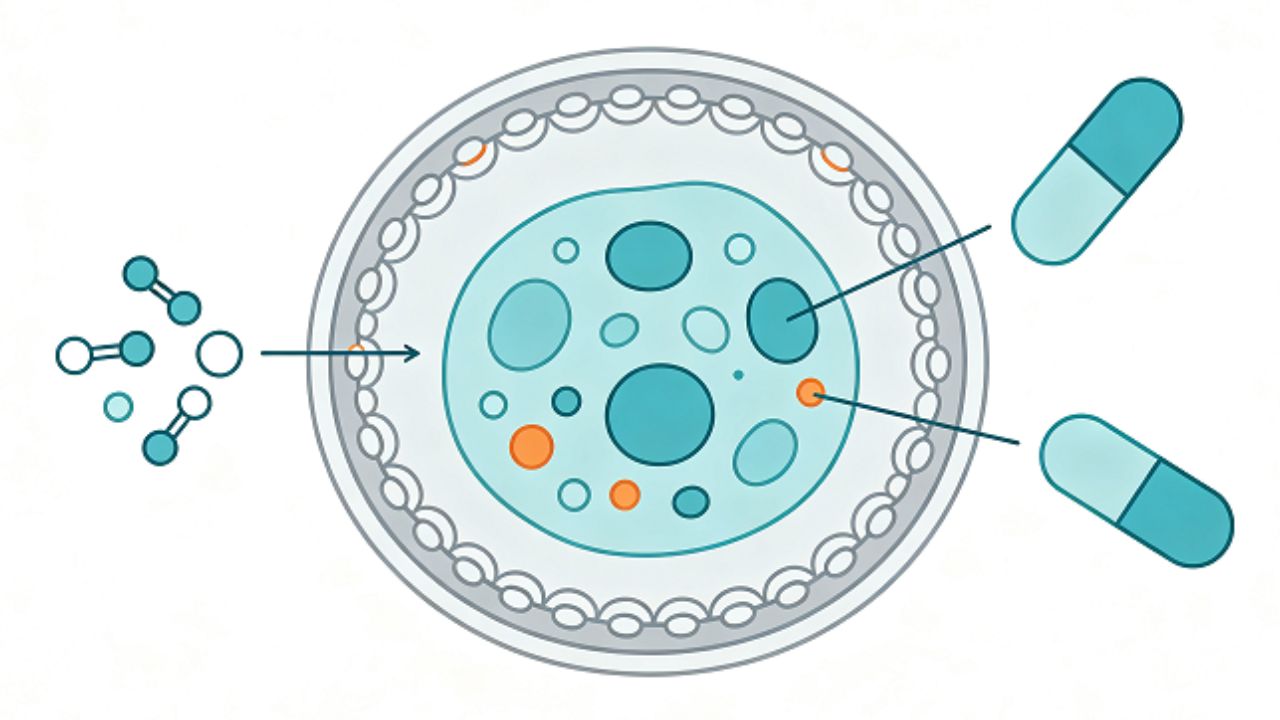
Bicalutamide and Flutamide’s mechanism of action involves competitive binding to androgen receptors on prostate cancer cells, which inhibits tumor cell growth and ultimately achieves disease control and symptom improvement.
The key difference is that bicalutamide possesses a receptor affinity roughly four times greater than that of flutamide, allowing for more stable and sustained androgen blockade, which translates to superior antitumor activity.
Side effects: Bicalutamide has a better safety profile than Flutamide
Key Side Effect Category | Flutamide | Bicalutamide |
| Hepatotoxicity (most critical severe risk) | High risk; monthly liver function monitoring required | Very low risk; only routine monitoring needed |
| Gastrointestinal reactions (most common reason for discontinuation) | High incidence of diarrhea and nausea; may easily lead to treatment interruption | Mild reactions, incidence < 5%; almost no treatment interruption |
| Photosensitivity reactions | High incidence; strict sun protection required | Very rare; no special restrictions |
| Breast-related reactions | Incidence < 10%, mild symptoms | Incidence 36%–47%, mostly mild to moderate |
| Overall discontinuation rate due to adverse reactions | 15%–20% | 3%–5% |
Conclusion:
Overall, as active pharmaceutical ingredients for prostate cancer, both drugs—with the exception of gynecomastia (a mild-to-moderate, non-life-threatening adverse reaction)—exhibit a side-effect profile far more favorable than that of Flutamide.
Notably, while hepatotoxicity is the most prominent and high-risk side effect associated with Flutamide, the incidence of this adverse event with Bicalutamide is extremely low; consequently, Bicalutamide offers a better overall safety profile and superior tolerability for long-term use.
Dosing convenience: Flutamide is far less convenient to take than Bicalutamide
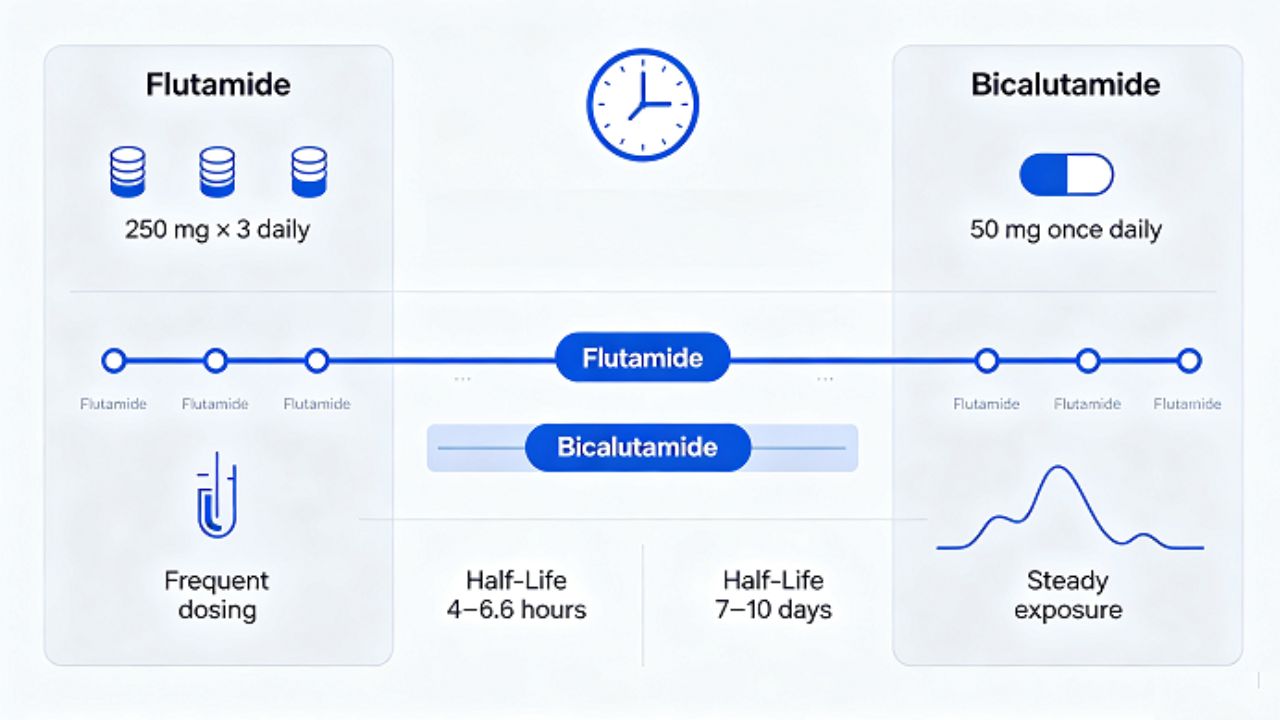
Bicalutamide dosage: It has a long half-life of 7–10 days; the standard dose is 50 mg, taken only once daily.
Dosage of Flutamide: It has a shorter half-life of only 4–6.6 hours, requiring multiple doses to maintain therapeutic effect; the standard dose is 250 mg, taken three times daily.
FAQ
Q:Are Flutamide and Bicalutamide the same?
A:No, they are not the same drug. While they are highly similar in terms of their primary therapeutic use, they differ significantly in other aspects, such as pharmacological properties, methods of administration, and side-effect profiles.
Q:Bicalutamide vs. Flutamide: Which should you choose?
A:Although Bicalutamide is generally considered superior overall, the choice depends on a comprehensive assessment of your specific situation.
Bicalutamide is more suitable for patients with impaired liver function or those requiring long-term monotherapy.
Flutamide may be a suitable choice for patients with limited financial resources or those who are more sensitive to the medication.
Q:Why does Bicalutamide have a better safety profile?
A:Bicalutamide acts directly as the parent drug, and its metabolites are inactive. It has a long half-life, allowing for a gradual release of the drug within the body; this prevents excessive fluctuations in drug concentration and results in minimal gastrointestinal irritation.
Q:What is the cost difference between Bicalutamide and Flutamide API?
A:The price of pharmaceutical-grade Bicalutamide is generally higher than that of pharmaceutical-grade Flutamide. This is due to the greater difficulty and complexity involved in synthesizing Bicalutamide, as well as the distinct clinical advantages it offers as a second-generation non-steroidal anti-androgen.
Final Thought
In summary, although both Bicalutamide and Flutamide are non-steroidal anti-androgens, they differ in their mechanisms of action, safety profiles, and convenience of use. Bicalutamide has become the clinical choice of preference due to its once-daily dosing, lower hepatotoxicity, and superior tolerability.
Highassay offers high-quality Bicalutamide and Flutamide APIs. Need samples or technical data? Contact the Highassay sales team today.