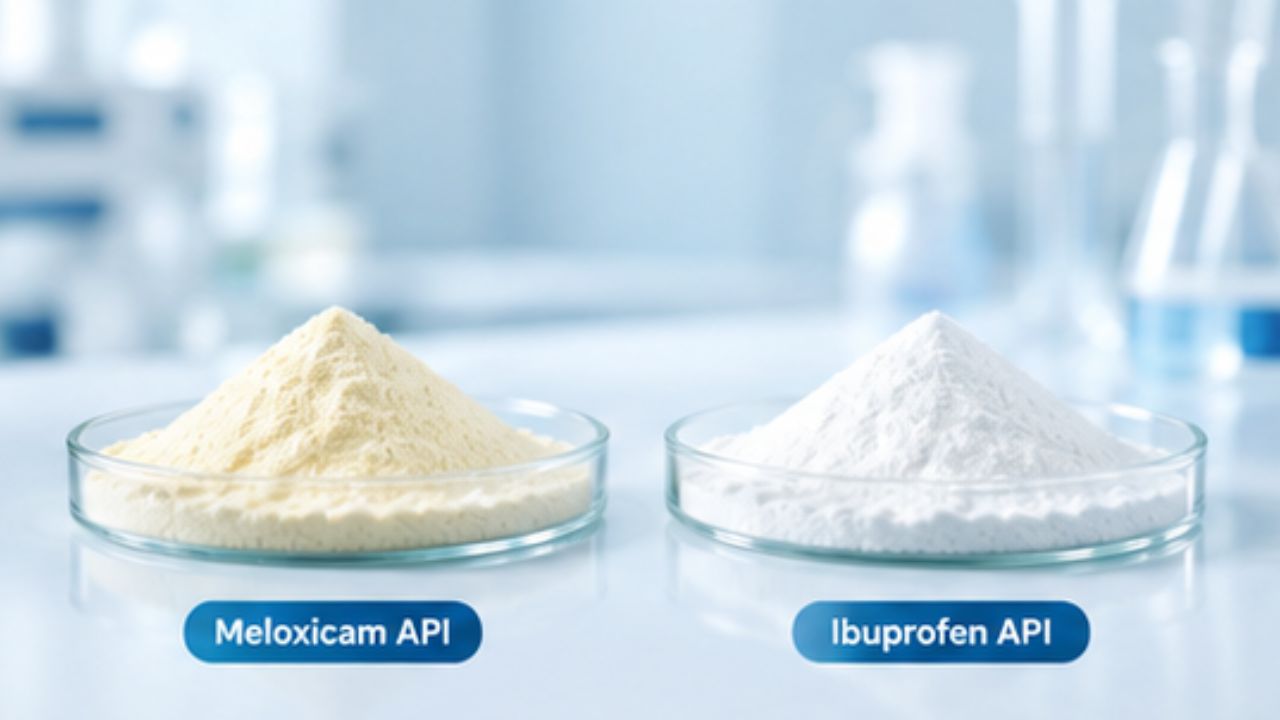
Meloxicam API and ibuprofen API,both belong to the category of nonsteroidal anti-inflammatory drug ingredients.All of them can be used to produce finished analgesic and anti-inflammatory drugs.However, from the perspective of pharmaceutical formulation manufacturers, their product positioning differs.This article provides a comprehensive comparison of these two active pharmaceutical ingredients to help you select the right API.
[Disclaimer] This article discusses the subject solely from the perspective of active pharmaceutical ingredient (API) R&D and procurement; it does not constitute medical advice for patients. The final development and risk assessment of the pharmaceutical formulation must comply with the requirements of relevant pharmacopoeias and local regulations.
Differences in Chemical Structure
Meloxicam,belongs to the oxicam class of non-steroidal anti-inflammatory drugs (NSAIDs); it features a benzothiazine core and is an enolic acid derivative.
It has very low water solubility, necessitating a focus on solubilization strategies during the development of liquid formulations.
Ibuprofen,belongs to the arylpropionic acid class, with the chemical structure 2-(4-isobutylphenyl)propionic acid.
Compared to Meloxicam, Ibuprofen has superior water solubility, which significantly reduces the complexity of developing solid and topical formulations.
These structural differences result in distinct synthetic routes, impurity profiles, and physicochemical properties—including solubility, stability, and crystalline characteristics.
Differences in COX Selectivity
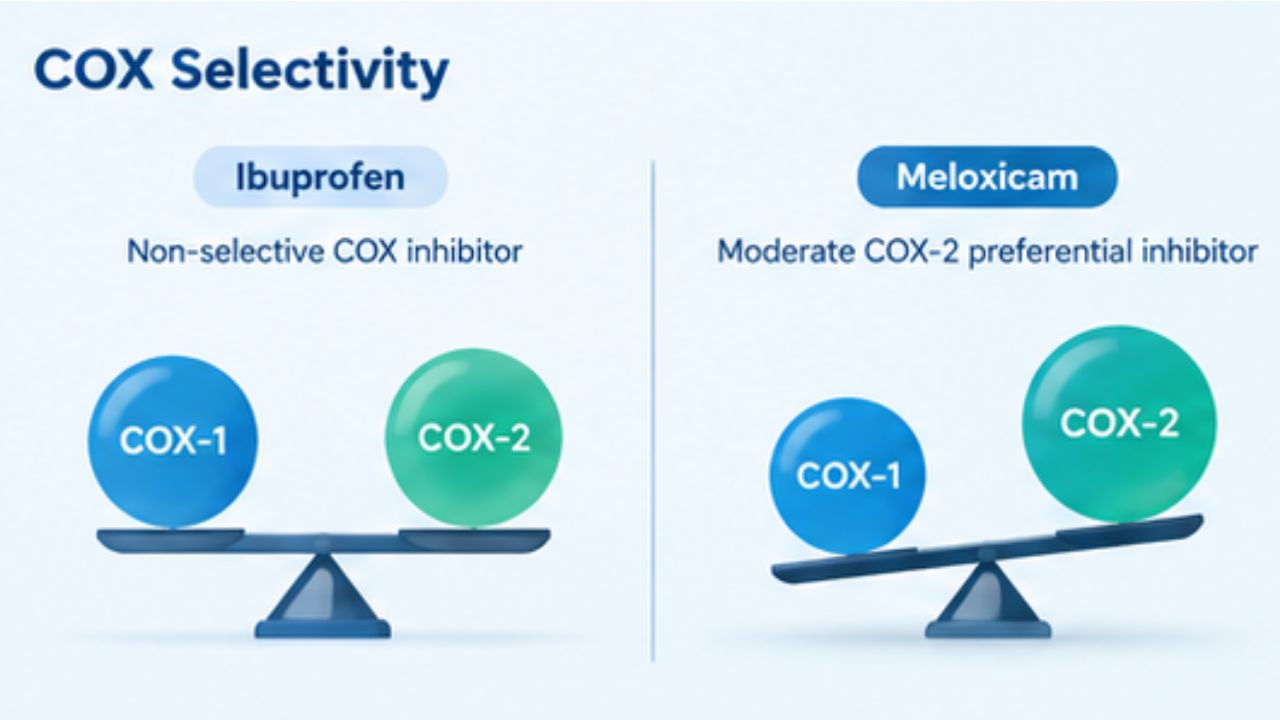
While the anti-inflammatory and analgesic effects of both active pharmaceutical ingredients (APIs) stem from cyclooxygenase (COX) inhibition, there are fundamental differences in their selectivity:
Ibuprofen: A non-selective COX inhibitor that inhibits COX-1 and COX-2 with similar potency.
Meloxicam: A moderate COX-2 preferential inhibitor; it preferentially inhibits COX-2 at low therapeutic doses, but as the dosage increases, its inhibitory effect on COX-1—which protects the gastric mucosa—also intensifies.
Key Note for Formulation Development: It is important to understand that the reduced gastrointestinal risk associated with Meloxicam is due to its lower dosage; consequently, high COX-2 selectivity is not maintained across the entire dosage range.
Differences in Pharmacokinetic Properties
Meloxicam Formulations
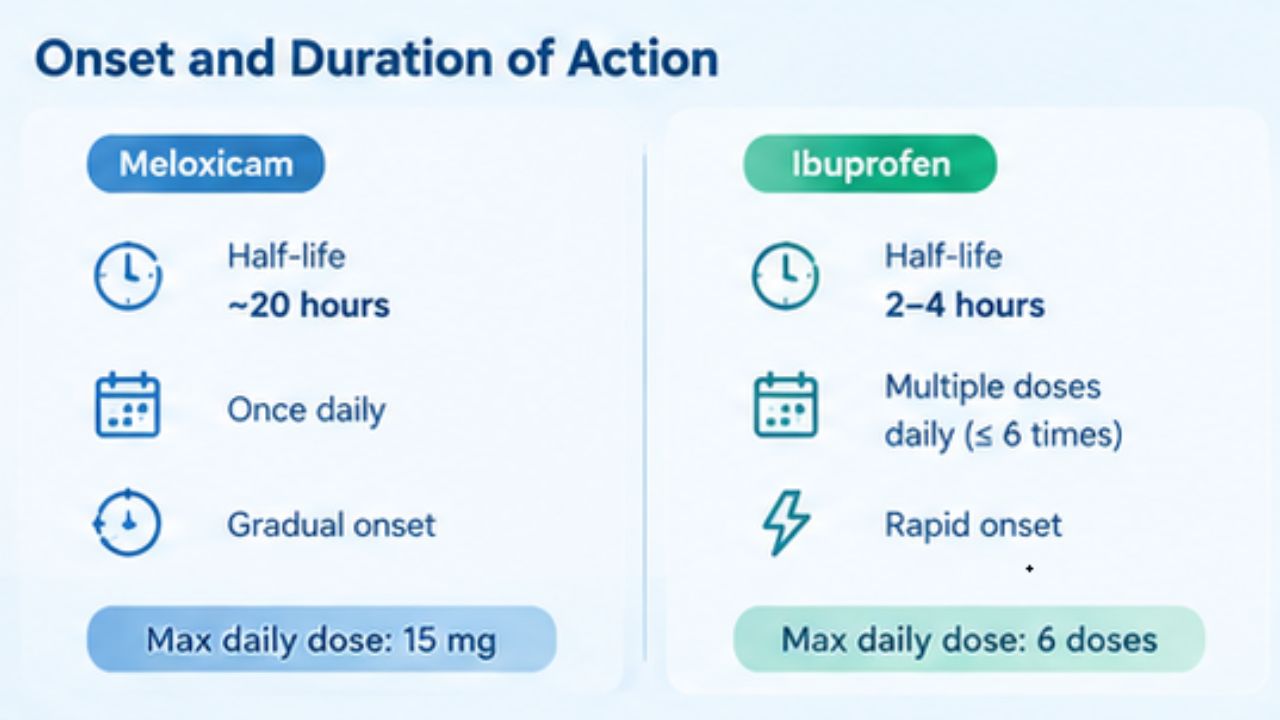
It has a half-life of approximately 20 hours, requiring administration only once daily. With a gradual onset of action, it is suitable for treating chronic inflammation; the drug can be taken long-term, offering a convenient way to manage chronic joint pain.
The maximum recommended daily dose for adults is 15 mg.
Ibuprofen Formulations
Depending on the specific formulation, the half-life ranges from 2 to 4 hours, requiring multiple doses throughout the day. It acts rapidly, making it suitable for treating acute pain and reducing fever.
For adults, the frequency of administration must not exceed 6 doses per day.
Safety Comparison
Both Meloxicam and Ibuprofen active pharmaceutical ingredients (APIs) carry the potential risks common to NSAIDs, such as gastrointestinal irritation, renal effects, cardiovascular warnings, and edema. However, due to differences in COX selectivity, the specific nature and incidence rates of these adverse effects vary.
We do not recommend combining Ibuprofen and Meloxicam APIs into a single finished dosage form during product development; likewise, we advise against the concomitant use of finished products containing Meloxicam and Ibuprofen, as such combination therapy amplifies NSAID-related adverse reactions.
Note: The safety profile of the API depends on the dosage, duration of treatment, and target patient population of the finished product.
Different Application Scenarios
Meloxicam API: Primarily indicated for chronic joint inflammation (osteoarthritis, rheumatoid arthritis, ankylosing spondylitis); also used in veterinary anti-inflammatory formulations and for managing post-operative pain in animals.
Ibuprofen API: Used for acute pain, fever reduction, short-term inflammation, headaches, back pain, etc.; suitable for producing low-dose OTC products, with dosage forms including tablets, capsules, suspensions, and topical gels.
Note: Although both ingredients are effective for osteoarthritis, there are significant differences in dosing frequency and treatment duration; selection should be based on specific needs.
FAQ
Q:Can Meloxicam be taken with Tylenol?
A:Concomitant use is not recommended; although studies indicate a synergistic analgesic effect, there are clear safety risks, and use requires medical assessment and guidance.
There are no chemical incompatibilities between the active pharmaceutical ingredients (APIs) of Meloxicam and Tylenol (acetaminophen).
Q:Is Meloxicam safer than Ibuprofen?
A:There is no universal conclusion that Meloxicam is safer than Ibuprofen overall.
When used in low-dose formulations for chronic arthritis, Meloxicam carries a relatively lower risk of gastrointestinal issues but entails cardiovascular risks. Low-dose, short-term use of Ibuprofen carries a lower cardiovascular risk, whereas high-dose Ibuprofen increases the risk of gastrointestinal issues. This information is intended for reference in pharmaceutical formulation development and does not constitute medical advice.
Q:What are the side effects of Meloxicam?
A:The most common side effects include gastrointestinal and neurological reactions.
Additionally, symptoms such as drowsiness, weight gain (associated with edema), and constipation may occur.
Q:How does alcohol affect Meloxicam drug products?
A:Alcohol amplifies the risk of gastrointestinal bleeding associated with NSAID drug products; this risk is a matter for product labeling warnings rather than an inherent chemical property of the API itself.
Final Thought
When choosing between Meloxicam API and Ibuprofen API, the decision hinges on the positioning of your finished product:
If you are developing a prescription-grade product for chronic arthritis intended for once-daily dosing, Meloxicam API is the preferred choice.
If the project targets acute pain relief and fever reduction for the OTC multi-purpose analgesic market, Ibuprofen API is more suitable.
To learn more about Meloxicam API or Ibuprofen API, or to request a COA, samples, or a quote, please contact our sales and technical teams.