Ozenoxacin is a non-fluorinated quinolone antibacterial active pharmaceutical ingredient (API) that exhibits potent activity against pathogens causing impetigo (such as Staphylococcus aureus, MRSA, and Streptococcus pyogenes). If you are engaged in the R&D of novel anti-infective dermatological drugs or topical formulations, this article will introduce you to the mechanism of action of Ozenoxacin, relevant research data, and its value in non-clinical studies for impetigo.
Ozenoxacin and Impetigo
If you are researching antibacterial agents, you are likely aware that impetigo is one of the most common superficial bacterial skin infections.
This condition is prevalent among children and highly contagious; it is primarily caused by Staphylococcus aureus (including MRSA) and Streptococcus pyogenes.
As resistance to traditional topical antibiotics (such as mupirocin) continues to rise, there is an urgent need to develop novel antibacterial agents; Ozenoxacin, a non-fluorinated quinolone, represents a new option for the treatment of impetigo.
Ozenoxacin Mechanism of Action Against Impetigo
Understanding Ozenoxacin’s true mechanism of action reveals why it offers a lower risk of resistance and achieves more thorough bactericidal activity compared to traditional antibiotics.
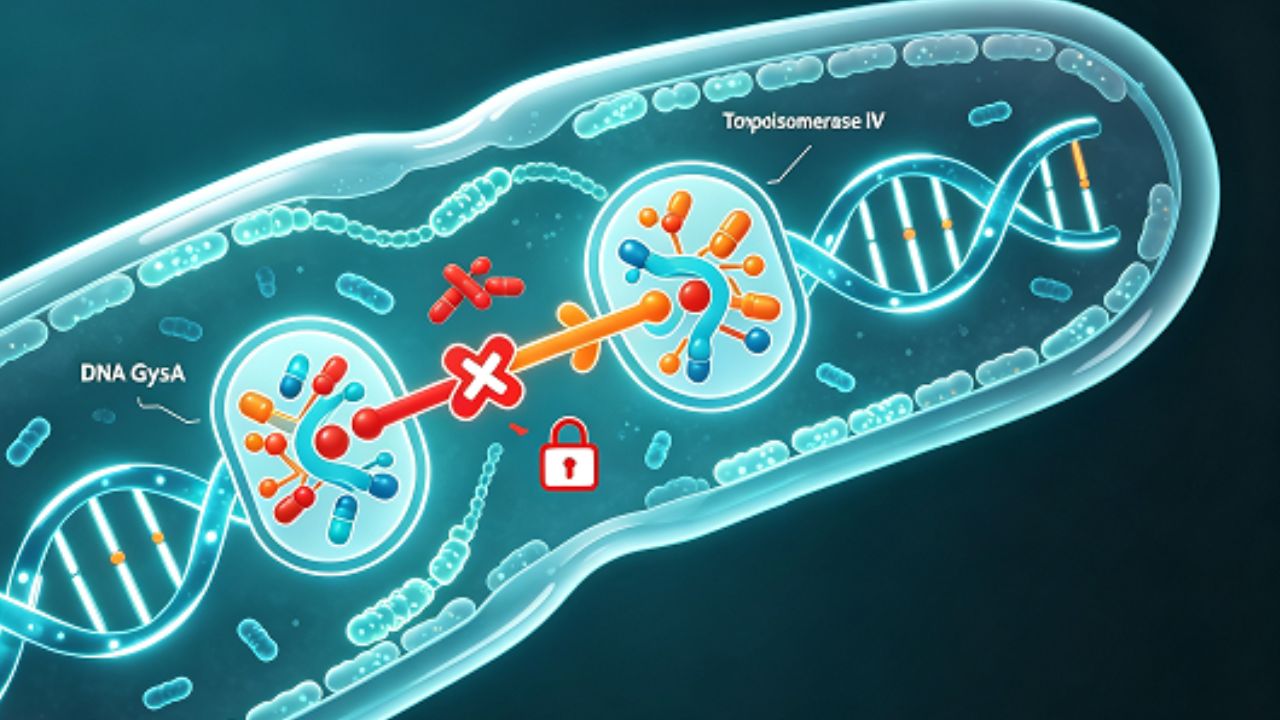
Ozenoxacin exerts its bactericidal effect by simultaneously inhibiting two bacterial targets: DNA gyrase and topoisomerase IV.
GyrA, the catalytic core of DNA gyrase, is responsible for the cleavage and rejoining of DNA double strands—a process critical for bacterial survival;
Topo IV handles DNA decatenation and the relaxation of supercoiling during bacterial division, ensuring proper chromosome segregation.
It is this dual inhibition of GyrA and Topo IV that comprehensively disrupts bacterial life processes—spanning DNA replication, transcription, and chromosome segregation—thereby delivering potent, rapid bactericidal action while significantly reducing the likelihood of developing bacterial resistance.
Scientific Research Applications of Ozenoxacin
Ozenoxacin has demonstrated potent antibacterial activity in in vitro studies; it is capable of killing the pathogens responsible for impetigo at extremely low concentrations, showing significantly superior efficacy compared to some traditional antibiotics.
Data from clinical studies show:
- After 5 days of treatment with topical 1% Ozenoxacin cream, the clinical cure rate for impetigo was 88.8%, significantly higher than that of the placebo;
- Ozenoxacin is safe and effective for patients aged 2 months and older, exhibiting low systemic absorption and a favorable safety profile;
- Compared with mupirocin, it demonstrates similar therapeutic efficacy but is associated with a lower risk of resistance and a faster onset of action.
Ozenoxacin vs. Conventional Topical Antibiotics
A review of the treatment history for impetigo reveals that the classic early-stage drug neomycin, as well as mupirocin and fusidic acid—long-standing first-line choices—have all demonstrated excellent therapeutic efficacy. However, widespread antibiotic use has led to a gradual rise in bacterial resistance; herein lies the unique value of Ozenoxacin. The following table compares these four medications.
Ozenoxacin VS Mupirocin VS Fusidic Acid VS Neomycin
| Comparison Dimension | Ozenoxacin | Mupirocin | Fusidic Acid | Neomycin |
| Antimicrobial Spectrum (Pathogens of Impetigo) | Staphylococcus aureus,MRSA, Streptococcus pyogenes(highly potent) | Staphylococcus aureus, Streptococci (targeted) | Staphylococcus aureus(strong), Streptococci (moderate) | Strong against Gram-negative bacteria, weak against Gram-positive bacteria |
| Risk of Antibiotic Resistance | Extremely low (dual targets, hard to induce resistance) | High (widespread global resistance) | Moderate to high (cross-resistance) | Extremely high (common resistance already) |
| MIC Level (In Vitro Activity) | Lowest | Moderate | Moderate | High (against Gram-positive bacteria) |
| Systemic Absorption | Negligible (safe) | Very low | Very low | Absorbed (risk of toxicity) |
| Approved Age | 2 months and above | 2 months and above | Suitable for children | Caution in infants and young children |
| R&D & Clinical Value | Addresses antibiotic resistance; preferred new-generation agent | Classic comparator but limited by resistance | Second-line comparator | Only for special indications |
FAQ
Q:What is the application scenario of Ozenoxacin in preclinical studies?
A:Ozenoxacin is widely used in preclinical research including in vitro antibacterial activity testing, antibiotic resistance mechanism studies, skin infection pharmacodynamic models (such as impetigo), and safety evaluation of topical formulations.
Q:Can Ozenoxacin be used in topical gel or ointment formulation development?
A:Yes. Due to its low systemic absorption, good stability, and potent topical antibacterial activity, Ozenoxacin is highly suitable for the development of topical gels, ointments, creams, and other dermatological formulations.
Q:What advantages does Ozenoxacin have over Mupirocin in drug resistance studies?
A:Compared with Mupirocin, Ozenoxacin acts on two bacterial targets simultaneously, making it more difficult for bacteria to develop resistance. Furthermore, it demonstrates stronger activity against mupirocin-resistant strains (such as MRSA).
Q:What purity grade of Ozenoxacin is suitable for in vitro pharmacology studies?
A:For in vitro pharmacological, antimicrobial, and formulation screening tests, the use of research-grade Ozenoxacin with a purity of >99% (HPLC) is recommended to ensure accurate and reliable experimental data.
Final Thought
With its extremely low potential for inducing drug resistance, highly targeted action against pathogens, and non-fluorinated structure, Ozenoxacin has become a premium raw material for the development of next-generation topical antibacterial agents. For laboratories and R&D teams engaged in bacteriostatic assays for impetigo, research into drug resistance mechanisms, or preclinical formulation development, selecting high-purity, high-quality Ozenoxacin active pharmaceutical ingredient (API) is fundamental.
The content of this article is intended solely for reference in non-clinical scientific research.