

Basic Information of Potassium Iodate
- English aliases: Potassium iodate(V), Iodic acid potassium salt
- Industry Abbreviations: KIO3
- Other language names: Iodate de potassium (French), Kaliumiodat (German),Йодат калия(V)(Russian), 요오드산칼륨(V)(Korean),يودат البوتاسيوم (V)(Arabic)
- CAS number: 7758-05-6
- EINECS number: 231-831-9
- UN number: 1479
- Hazard class: 5.1 (Oxidizing substances)
- Molecular formula: KIO3
- Molecular weight: 214.00 g/mol
- Product Grade: Food grade, Feed grade, Industrial grade, Analytical reagent (AR)
- Main uses: Iodine supplement in food (especially table salt), oxidizing agent in chemical reactions, analytical reagent, bread improver, feed additive
Physicochemical Properties of Potassium Iodate
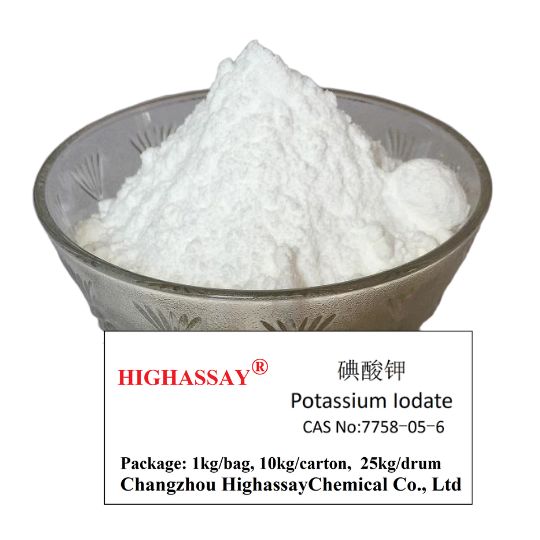
- Appearance and smell: White crystalline powder or colorless crystals, odorless
- Solubility: Soluble in water (slowly in cold water, more soluble in hot water), insoluble in ethanol, acetone, ether
- Boiling point: Decomposes at 560 °C (releases oxygen)
- Melting point: 560 °C (decomposes)
- Density: 3.93 g/cm³
- Moisture absorption: Non-hygroscopic, stable in air
- Purity: 98% min (industrial grade), 99.5% min (food/feed grade), 99.8% min (analytical grade)
- Toxicity: Low toxicity; excessive intake may cause iodine poisoning
- Stability: Stable in air and water; strong oxidizing agent; decomposes at high temperature
- Particle size: 80-120 mesh (powder)
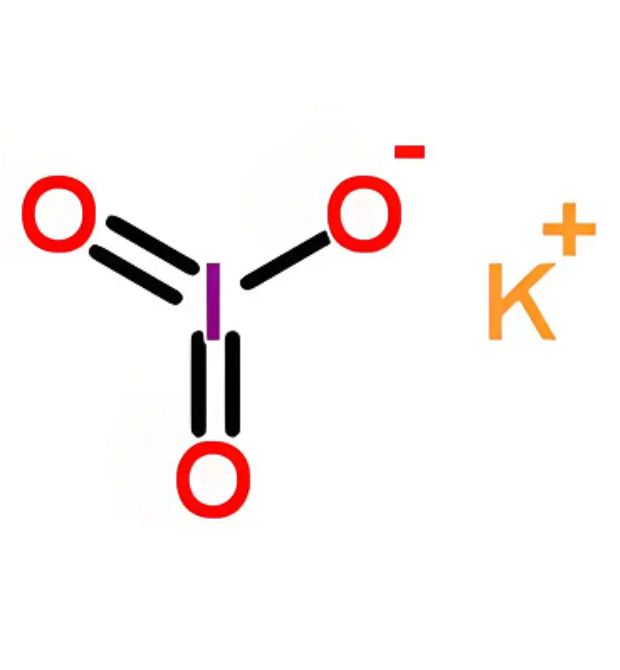
Supplementary Technical Details for Potassium Iodate
- Production methods: Electrolysis method (electrolysis of potassium iodide solution), chemical oxidation method (potassium iodide + chlorine gas or hydrogen peroxide)
- Acute toxicity (LD50): 108 mg/kg (oral, rat)
- Chronic toxicity: Long-term excessive intake may cause thyroid dysfunction and iodine poisoning symptoms
- Upstream and downstream products (raw materials): Potassium iodide, chlorine gas, hydrogen peroxide, potassium hydroxide
- Upstream and downstream products (downstream): Iodized salt, food additives, analytical reagents, feed additives, organic synthesis products
- Quality Standards: GB 1886.22-2016 (China), FCC (USA), EU food additive regulations (E917)
- Detection methods: Titration analysis (iodometric method), atomic absorption spectrometry, HPLC
- Transportation methods: Road transport, sea transport (non-dangerous goods; separated from reducing agents and combustible materials)
- Payment methods: T/T, L/C, Western Union
Packaging and Storage of Potassium Iodate
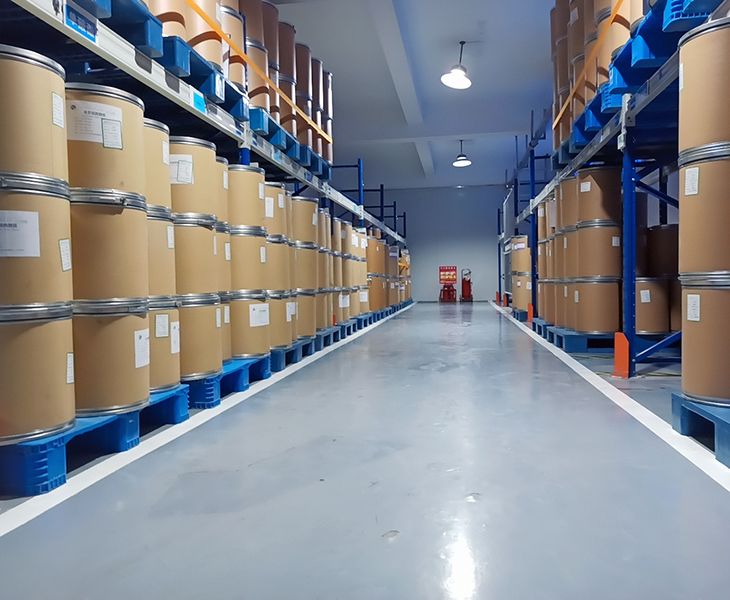
- Packaging: 100 g, 500 g, 1 kg plastic bottles or paper boxes (small quantities); 25 kg fiber drums with double plastic liners (large quantities)
- Storage: Store in cool, dry, well-ventilated warehouse; avoid heat, open flame and direct sunlight
- Shelf Life: 36 months when stored properly in original packaging
- CAS number: 7758-05-6
- Molecular formula: KIO3
- Molecular weight: 214.00 g/mol
- Implementation Standards: GB 1886.22-2016, FCC VI, EU E917, ISO standards
- Precautions: Avoid contact with reducing agents and combustible materials; do not mix with organic matter; wear basic protective equipment
- After-sales service: Food grade certification (FCC, EU E917), technical consultation, quality testing report, safety data sheet (SDS)
Applications of Potassium Iodate
Food Sector
- Food-grade potassium iodate can be added to table salt, flour and its products, and infant formula as an iodine nutrient fortifier.The purpose is to prevent iodine deficiency disorders. It is important to note that iodine, as an essential trace element for the human body, should not be consumed in excessive amounts.
- Feed-grade potassium iodate is added to animal feed in appropriate amounts, adjusted according to factors such as the animal’s growth stage, feed composition, and market demand.It can improve animal health and production efficiency while also increasing the economic benefits of feed.
Industrial Sector
- Industrial-grade potassium iodate can be used as a strong oxidizing agent in some inorganic or organic synthesis processes, serving as a specific raw material or intermediate.
- Industrial-grade potassium iodate can be used as a raw material for the preparation of industrial iodates such as potassium iodide and calcium iodate.
- Industrial-grade potassium iodate can be used as a combustion enhancer in special formulations for fireworks, firecrackers, and safety match heads.
Laboratory Field
Reagent-grade potassium iodate is a primary standard reagent that can be used directly to prepare standard solutions without the need for complicated standardization procedures:
On the one hand, it can be used as a reference reagent in redox titrations and serves as the standard for quantitative “indirect iodometric titration”;
On the other hand, it can be used as a functional reagent to quantitatively generate elemental iodine.
Medical Field
Pharmaceutical-grade potassium iodate has been approved by the World Health Organization for radiation protection – in the form of potassium iodate tablets.It is taken before or very shortly after exposure to protect the thyroid gland from the harmful effects of radioactive iodine.