What is Endo A?
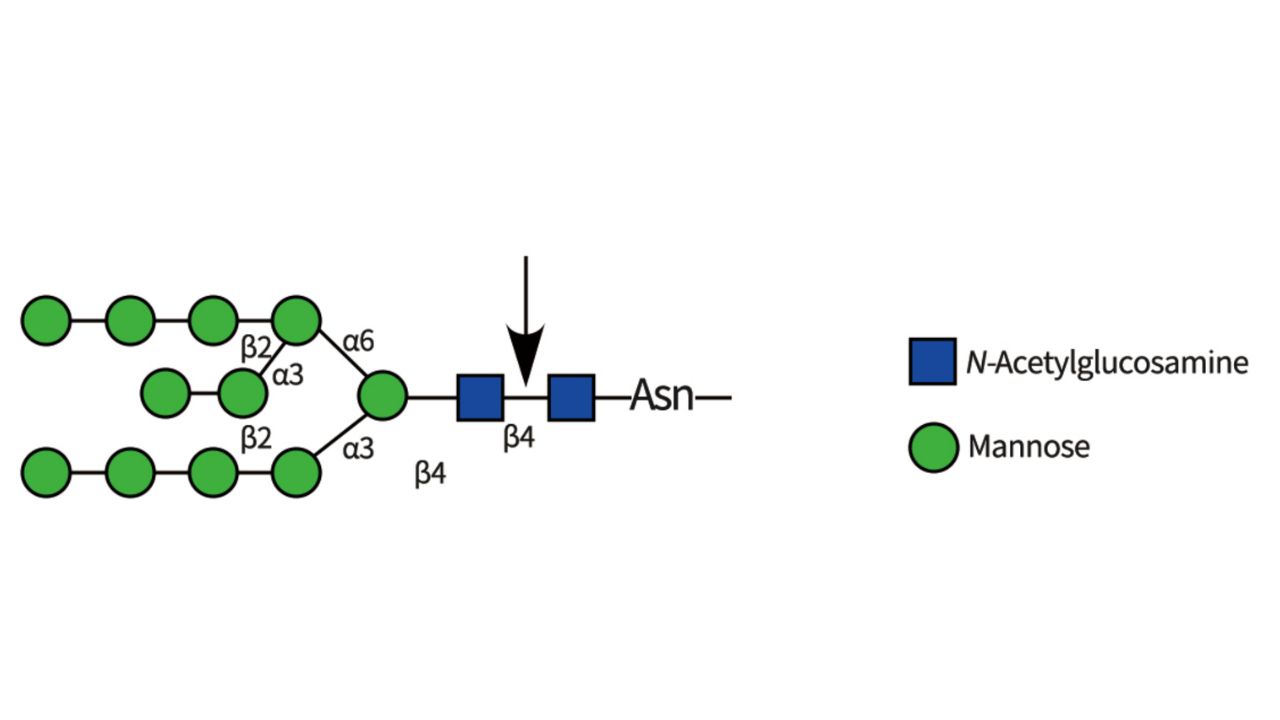
EndoA (Endoglycosidase A) is derived from the bacterium *Arthrobacter protophormiae*. It is a highly specific endoglycosidase that releases N-linked oligosaccharides from glycoproteins and is capable of recognizing high-mannose-type glycan chains.
Endo A Recognition Site
Applications Of Endo A
Used for the removal of N-glycan chains from glycoproteins or glycopeptides.
Definition of Enzyme Activity
One unit of enzyme activity is defined as the amount of enzyme required to remove more than 95% of the carbohydrates from 5 µg of RNase B within a 10 µL reaction system, incubated at 37°C for 1 hour.
Enzymatic Properties Of Endo A
Source:Microorganism
Classification:EC3.2.1.96
Molecular Weight:67 kDa (SDS-PAGE)
Optimal pH:8.0
Optimal Temperature:37°C
Substrate Specificity:Recognizes high-mannose-type N-linked glycoproteins or glycopeptides.
Glycoprotein Hydrolysis Site:Releases N-linked oligosaccharides from glycoproteins.
Storage Temperature:-20°C
Inactivation Conditions:Inactivated by incubating the reaction mixture at 85°C for 10 minutes.
What is Endo S?
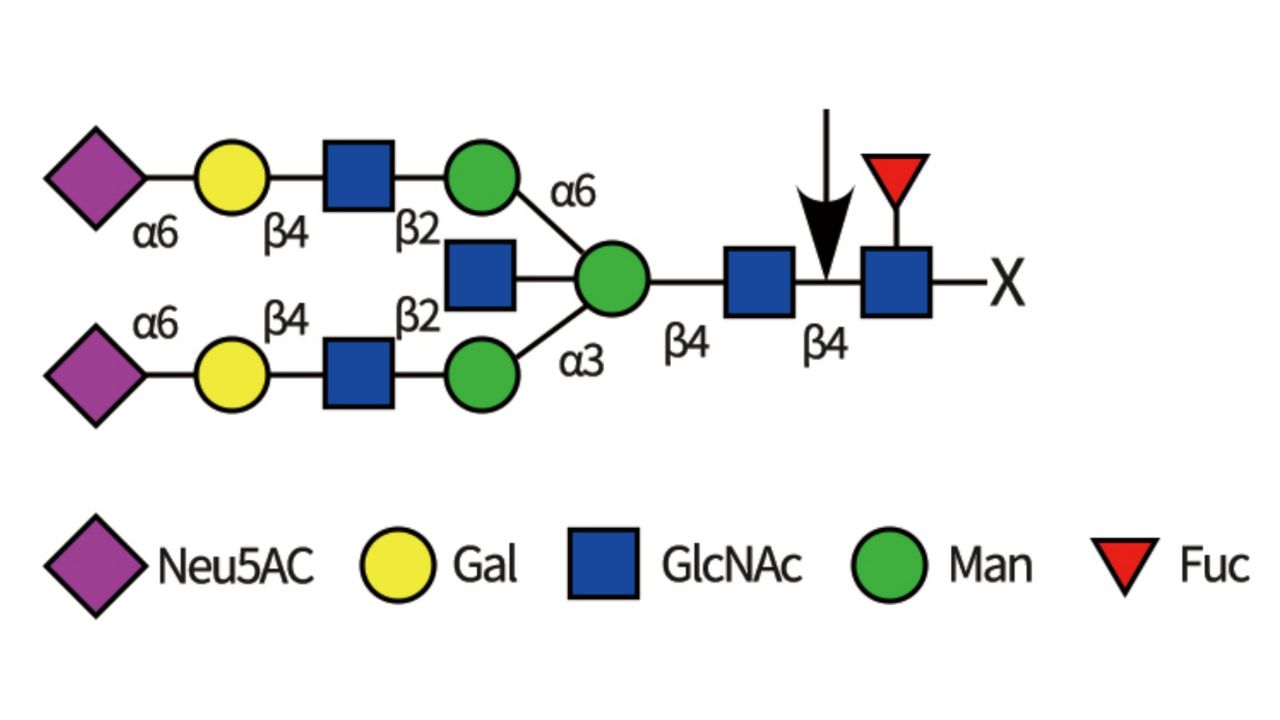
EndoS (Endoglycosidase S) is derived from *Streptococcus pyogenes*. It is a highly specific endoglycosidase capable of cleaving N-linked glycans within the chitobiose core structure of the heavy chains of native IgG. EndoS is tagged with a Chitin-Binding Domain (CBD) to facilitate its removal from the reaction system. This product boasts a purity of over 95%, high enzymatic activity, excellent stability, and is free from contamination by exoglycosidases or proteolytic enzymes.
Endo S Recognition Site
Applications Of Endo S
Used for the removal of N-glycan chains from glycoproteins.
Enzymatic Properties Of Endo S
Source:Microorganism
Classification:EC3.2.1.96
Molecular Weight:136 kDa (SDS-PAGE)
Optimal pH:5.5
Optimal Temperature:37°C
Substrate Specificity:Recognizes biantennary complex-type N-linked glycoproteins or glycopeptides.
Glycoprotein Hydrolysis Site:Cleaves N-linked glycans from the core structures of glycoproteins.
Activators:CaCl2
Storage Temperature:-20°C
Inactivation Conditions:Inactivated by incubating the reaction mixture at 85°C for 10 minutes.
Substrate Specificity:Recognizes high-mannose-type N-linked glycoproteins or glycopeptides.
Glycoprotein Hydrolysis Site:Releases N-linked oligosaccharides from glycoproteins.
Storage Temperature:-20°C
Inactivation Conditions:Inactivated by incubating the reaction mixture at 85°C for 10 minutes.