

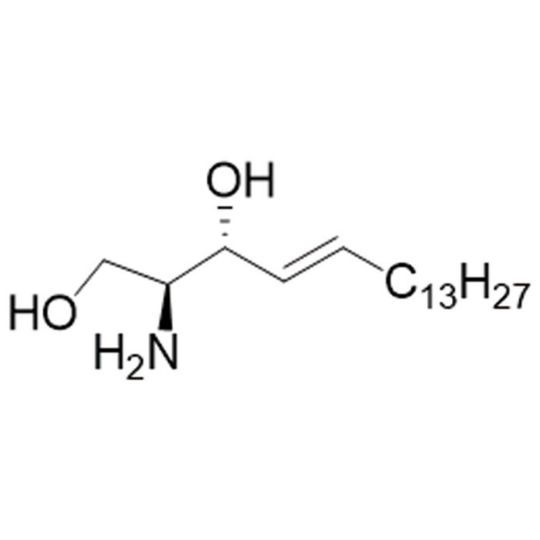
Introduction to D-erythro-Sphingosine
Sphingosine serves as the characteristic structural subunit for numerous sphingolipids—such as ceramides, gangliosides, globosides, sulfatides, and sphingomyelins—and is found in highest abundance within nervous tissues and cell membranes. The 18-carbon-chain sphingosine featuring a double bond at the C-4 position is the most abundant form of sphingosine found in animal tissues. Lysosphingolipids are known to inhibit Protein Kinase C activity, thereby contributing to the pathogenesis of sphingolipid storage disorders such as Krabbe disease and Gaucher disease.
Function of D erythro Sphingosine
Sphingosine can be phosphorylated by two specific kinases to form Sphingosine-1-phosphate (S1P), a molecule with critical signaling functions. While sphingosine and ceramides are known to induce apoptosis (programmed cell death), S1P promotes cell survival or proliferation. Furthermore, sphingosine has been demonstrated to induce an increase in intracellular calcium levels within cells.
Technical Advantages

Product purity exceeds 98%, with a chiral purity greater than 99%.

Manufactured under GMP standards, meeting Active Pharmaceutical Ingredient (API) quality specifications.

Produced via chemical synthesis using serine as the starting material; features low production costs, large batch yields, and a stable supply chain.