

Basic Information of Bisbentiamine
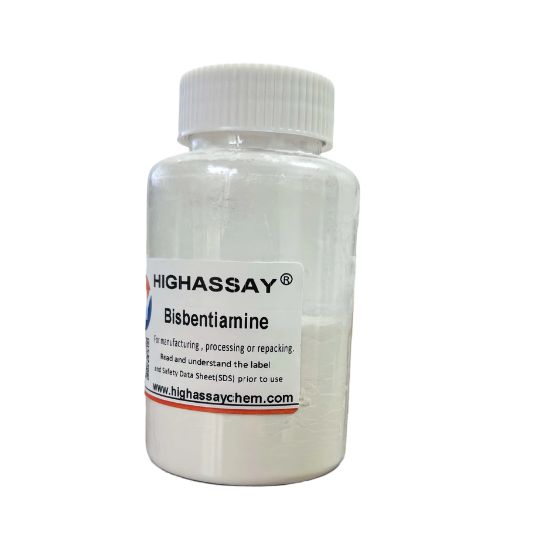
- Product Name: Bisbentiamine
- English aliases: Bisbenzoylthiamine, Thiamine dibenzoate, N-Benzoylthiamine benzoyl ester, Bisbentiamine, Bisbentiamin, Vitamin B1 derivative, Thiamine derivative
- Industry Abbreviations: BBT, bisbenzoyl B1
- Other language names: German: Bisbentiamin; French: Bisbentiamine; Spanish: Bisbentiamina
- CAS number: 2667-89-2
- Molecular Formula:C38H42N8O6S2
- Molecular Weight:770.92 g/mol
- Product Grade: Pharmaceutical grade, Food grade, Reagent-grade
- Main uses: Nutritional supplements, Food additives, Pharmaceutical intermediates,Analytical reagents
Physicochemical Properties of Bisbentiamine
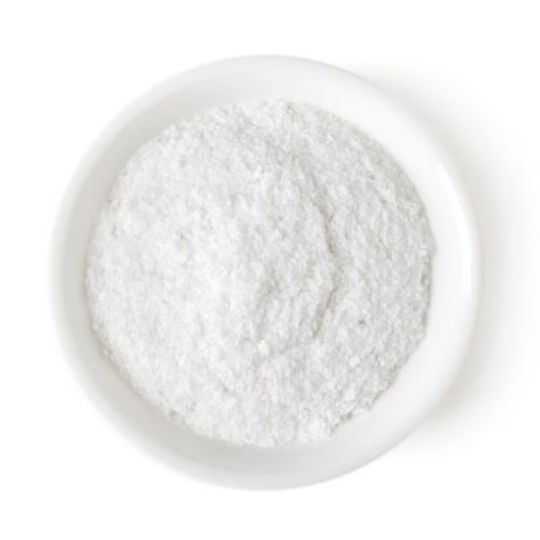
- Appearance and smell: White to off-white crystalline powder, odorless or with a slight special odor.
- Solubility: Easily soluble in chloroform and benzene, soluble in ethanol and methanol, slightly soluble in water, and insoluble in ether.
- Boiling Point: Decomposition (decomposition above 230℃)
- Melting Point: 145-149℃
- Density: 1.28-1.32 g/cm³ (solid crystal density)
- Purity: ≥98% (Pharmaceutical Grade)
- Stability: Store in a cool, dry place where it is stable, avoiding high temperatures, humidity, and light.
- Danger: Low toxicity or practically non-toxic; some products may cause slight irritation.
- Emergency Response: Skin contact: Rinse immediately with plenty of water; Ingestion: Seek immediate medical attention.
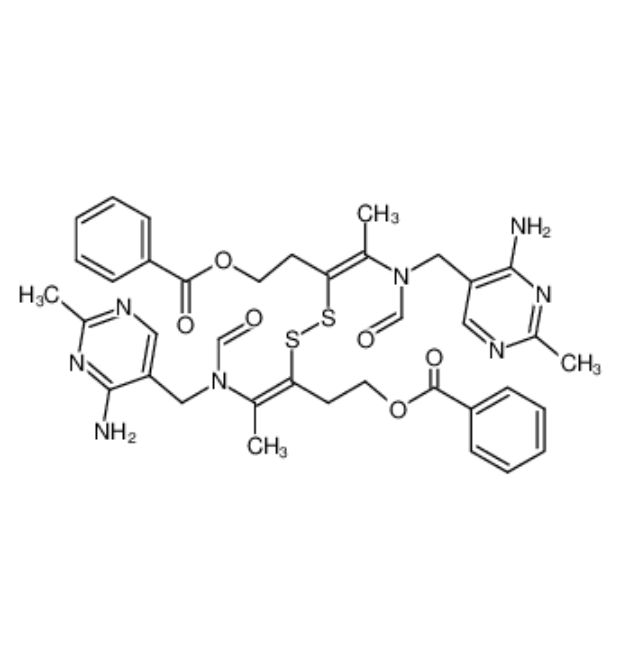
Supplementary Technical Details for Bisbentiamine
- Production Methods: The product is obtained by dibenzoylation of thiamine (vitamin B1) with benzoyl chloride, followed by crystallization and purification.
- Acute Toxicity (LD50): Oral LD50 in rats: >5000 mg/kg (practically non-toxic); Intraperitoneal LD50 in mice: 2500-3000 mg/kg
- Chronic Toxicity: Long-term use shows no significant cumulative toxicity, has high bioavailability, and meets pharmaceutical-grade JP and USP standards.
- Upstream and downstream products (raw materials): Thiamine hydrochloride, benzoyl chloride, alkalis (such as sodium carbonate)
- Upstream and downstream products (downstream): Vitamin B1 supplements, health products, cosmetic ingredients, pharmaceutical preparations
- Quality Standards: Compliant with USP, EP, and GB
- Detection Methods: HPLC, UV, IR, etc.
- Transportation Methods: Sea freight, air freight, and express delivery
- Payment Methods: T/T, L/C, Western Union, etc.
- Certification Status: ISO9001, GMP, kosher halal etc.
- Technical Support: Provide product application technical guidance and solutions
Packaging and Storage of Bisbentiamine
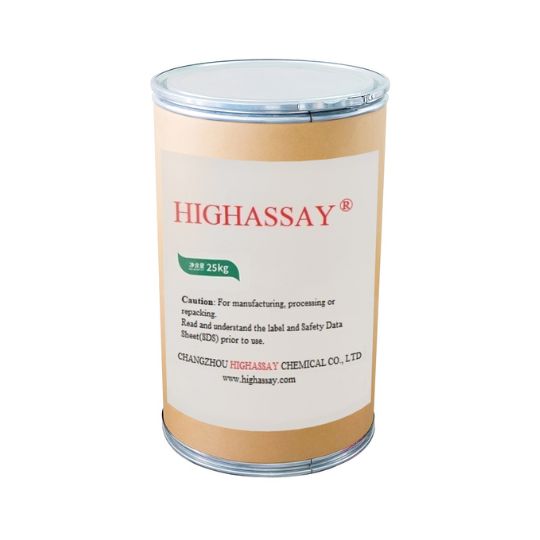
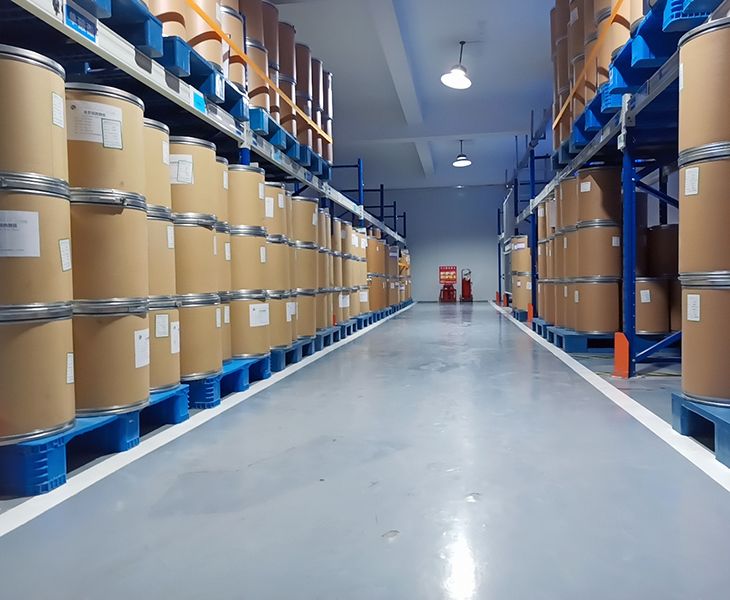
- Packaging: 25kg/fiber drum (lined with polyethylene bag), or according to customer requirements
- Storage: Store in a cool, dry, and well-ventilated warehouse; avoid direct sunlight and moisture
- Shelf Life: 24 months from the production date under proper storage conditions
- CAS number: 2667-89-2
- Molecular Formula: C38H42N8O6S2
- Molecular Weight: 770.92 g/mol
- Implementation Standards: Enterprise standards or USP/BP/EP/CP
- Precautions: Avoid storing with strong oxidizers, strong acids, or strong alkalis; wear protective equipment during operation.
- After-sales Service: Provides COA and MSDS; free returns and exchanges for quality issues; technical support.
Applications of Bisbentiamine
- Pharmaceutical-grade Bisbentiamineraw material can be used to produce lyophilized powder for injection, a chemically synthesized neuroprotective agent used as an adjuvant drug for the early treatment of acute ischemic stroke.
- Pharmaceutical-grade Bisbentiaminecan be used as an active ingredient in oral preparations such as prescription drugs or medical supplements. It is a highly bioavailable thiamine derivative primarily used to treat diabetic neuropathy and related metabolic diseases.
- Pharmaceutical-grade Bisbentiaminecan be used as an ingredient in veterinary medicine. Under the diagnosis and prescription of a veterinarian, it can be mixed into animal feed at the prescribed dosage and duration, but it should not be administered indiscriminately or for prolonged periods.
- Food-grade Bisbentiaminecan be used as an auxiliary ingredient in food fortification, primarily to fortify or supplement the body’s need for vitamin B1.
- Food-grade Bisbentiaminecan be widely added as a food additive to foods such as rice, wheat flour, bread, instant noodles, dairy products, and soy sauce. It can be used to increase thiamine content through fortification processes (such as soaking rice grains in an acetic acid solution) and reduce losses during processing.
- Reagent-grade Bisbentiaminecan be used as a tool for scientific research and experimental analysis.
Get an Instant Quote Now