
Product Overview
- Product Name: Inosine
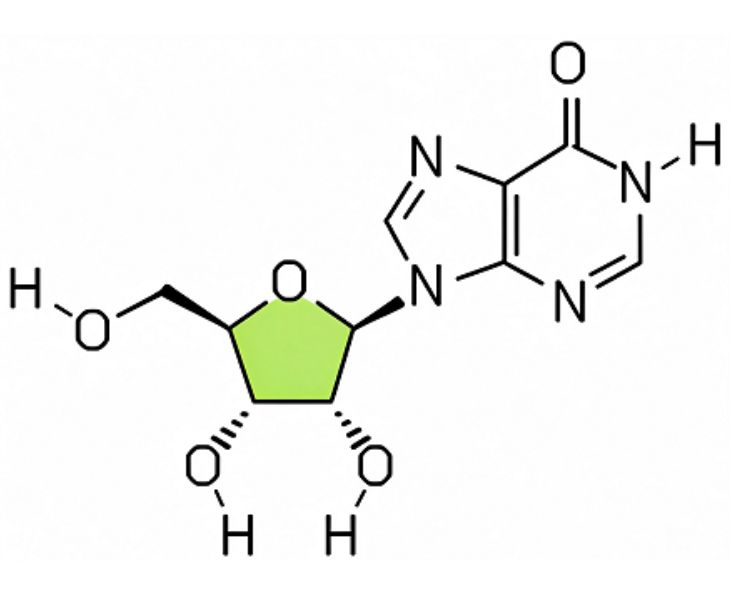
- Chemical Name: 9-β-D-ribofuranosylhypoxanthine
- Synonyms: Hypoxanthine riboside
- CAS No.: 58-63-9
- Molecular Formula: C10H12N4O5
- Molecular Weight: 268.23 g/mol
What is Inosine?
Inosine (CAS: 58-63-9) is a nucleoside compound formed by the combination of hypoxanthine and ribose. Classified as a coenzyme-type drug, it plays a positive role in improving cellular energy metabolism and promoting tissue repair.
Why choose Highassay?
As a reliable supplier of Inosine raw materials from China, Highassay provides premium-grade Inosine powder with an HPLC purity of ≥98.0%. We offer customization options for particle size, impurity profiles, internal quality control parameters, and specific limits—tailored precisely to the requirements of your industry, whether in pharmaceuticals, food, or animal nutrition.
Our Inosine is produced via a mature, controllable microbial deep-fermentation process. Each batch comes with a Certificate of Analysis (COA) and a Material Safety Data Sheet (MSDS), ensuring consistent quality across every shipment. Buy Inosine raw materials, choose Highassay.
Specification of Inosine
- Specification of Inosine
Test Item | Specification |
| Appearance | White to almost white powder |
| Assay (HPLC) | ≥98.0% |
| Melting Point | 222 – 226 °C |
| Specific Optical Rotation | -49.0° ~ -53.0° (c=1, H2O) |
| Solubility | Slightly soluble in water, practically insoluble in ethanol |
| Loss on Drying | ≤1.0% |
| Residue on Ignition | ≤0.2% |
| Heavy Metals | ≤10 ppm |
| Single Impurity | ≤0.2% |
| Packaging | 25kg/drum or bag |
| Storage | Sealed, dry, room temperature, protected from light |
Applications of Inosine
Highassay provides high-quality Inosine raw materials and offers customization of Inosine powder tailored to your specific application requirements.
Our Inosine is primarily used as an intermediate in organic synthesis or as a substrate for industrial fermentation; it is generally not intended for use as a finished end product.
- Pharmaceutical raw materials:As an active pharmaceutical ingredient (API), inosine can be used directly in the production of finished pharmaceutical preparations—such as inosine tablets, oral solutions, and injections—which serve as adjunctive treatments for conditions involving leukopenia, thrombocytopenia, and the support/maintenance of liver and myocardial health.
- Pharmaceutical intermediates: Inosine can serve as a raw material for the synthesis—via chemical or enzymatic reactions—of other active substances, such as inosine pranobex, hypoxanthine, inosine 5′-monophosphate (IMP), and their respective derivatives.
- Food industry: Used as a fermentation substrate for the industrial production of disodium 5’-inosinate (a flavor enhancer);
It also used in the production of inosine supplements (for sports nutrition), most commonly in the form of inosine capsules.
- Animal Nutrition:Inosine powder can be used as an additive in animal feed, helping to boost immunity and alleviate stress in animals.
Looking for a reliable Inosine (CAS 58-63-9) supplier? Highassay offers high-purity Inosine powder for pharma, sports nutrition & feed. Custom specs, COA, and free samples available. Get a quote today!
Inosine is the starting raw material for Disodium 5′-inosinate.
Adenosine (CAS: 58-61-7) and inosine (CAS: 58-63-9) are both purine ribonucleosides; they share the same ribose backbone but differ in their purine base. Adenosine = adenine + ribose; inosine = hypoxanthine + ribose.
No. Adenine first combines with ribose to form adenosine. Only adenosine can be deaminated into inosine. Adenine cannot directly become inosine.
Inosine phosphate commonly refers to Inosine 5′-monophosphate (5′-IMP, Inosinic acid). It is a nucleotide formed by adding one phosphate group to I
nosine.