PQQ (Pyrroloquinoline Quinone) is a mitochondrially targeted dietary supplement ingredient;Its primary mechanism is to promote mitochondrial biogenesis and offer antioxidant defense. This article systematically reviews the scientific background, clinical evidence, and application recommendations regarding PQQ, for the reference of formulators, brand owners, and professional consumers.
What are mitochondria?
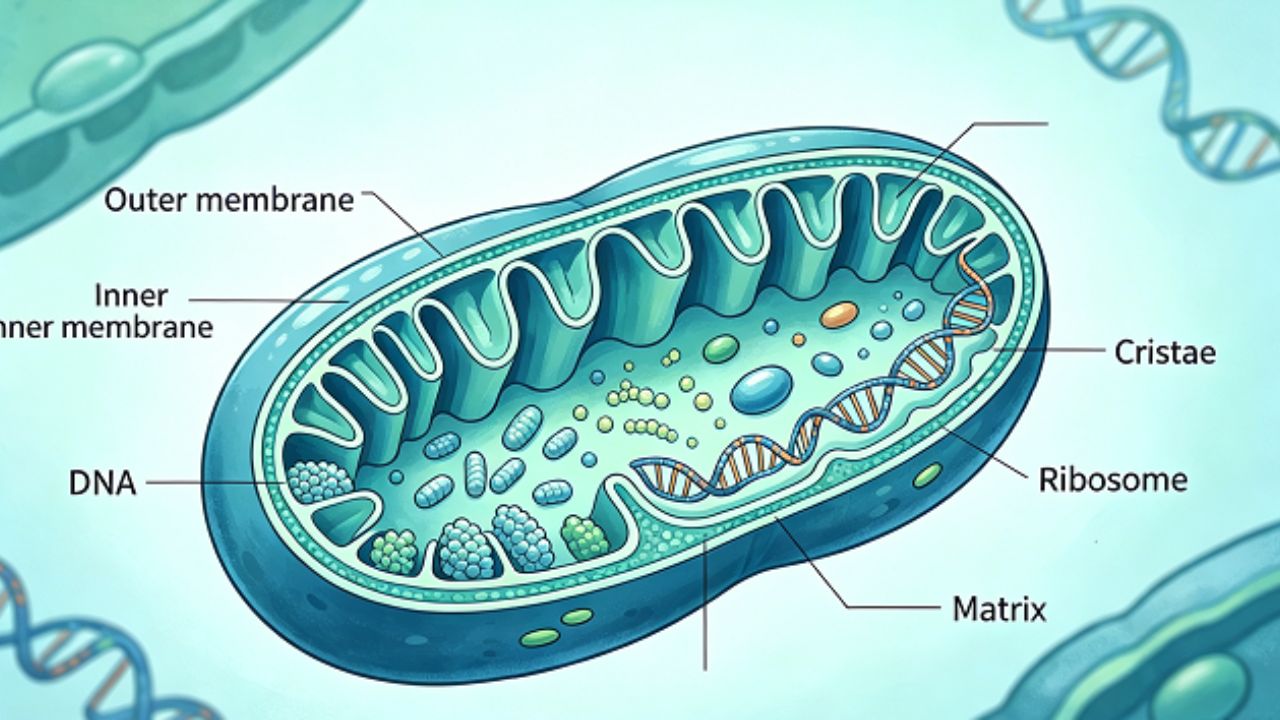
Mitochondria, as the “energy factories” of the cells within us.It possesses a double membrane, cristae structure, a semi-autonomous genetic system, and a highly plastic morphology.It is the central site for cellular aerobic respiration and ATP synthesis.Its functional state is directly affects the health and longevity of cells—and even of the entire organism.
According to research statistics, each cell contains hundreds to thousands of mitochondria; in the energy-intensive heart, specifically, mitochondria occupy as much as 40% of the cytoplasmic volume. It is precisely this widespread yet variable distribution ratio that determines the importance of mitochondria to the function of the various human organs.
The Importance of Mitochondria
- Mitochondria power the body by turning food into ATP, which allows us to walk, think, exercise, and sustain our daily functions.
- Declining mitochondrial function is a sign of aging, whereas promoting mitochondrial biogenesis and protection can slow down aging.
- Mitochondria help regulate cell metabolism and remove damaged cells, which effectively reduces inflammation and oxidative injury.
- Immune cells depend on mitochondrial energy to combat germs. The weaker the mitochondria, the weaker the immune defense.
What are PQQ Nutritional Supplements?
PQQ nutritional supplements feature a potent, vitamin-like coenzyme that is currently a popular oral dietary supplement targeting mitochondrial health. The core function of PQQ is to stimulate mitochondrial biogenesis and provide potent antioxidant effects, thereby boosting energy at its source, combating aging, and protecting the brain and heart.
PQQ Supplements’ active ingredient is pyrroloquinoline quinone disodium salt (PQQ-Na₂), which offers superior stability and bioavailability. It is even more effective when taken in combination with Coenzyme Q10.
The Impact of PQQ on Mitochondria
The effects of PQQ on mitochondria goes way beyond simple, surface-level nourishment;What makes it so valuable is that it can both repair damaged mitochondria with precision and, even better, encourage the growth of brand-new mitochondria.It provides lasting power for cellular energy metabolism in two dimensions: quantity and quality.
This is precisely why an increasing number of people are turning to PQQ supplements to fight tiredness, brain fog, and declining energy levels. Indeed, only by addressing the root source — the mitochondria — can the problem be fundamentally solved.
Sources of PQQ: Why can’t you rely solely on food?
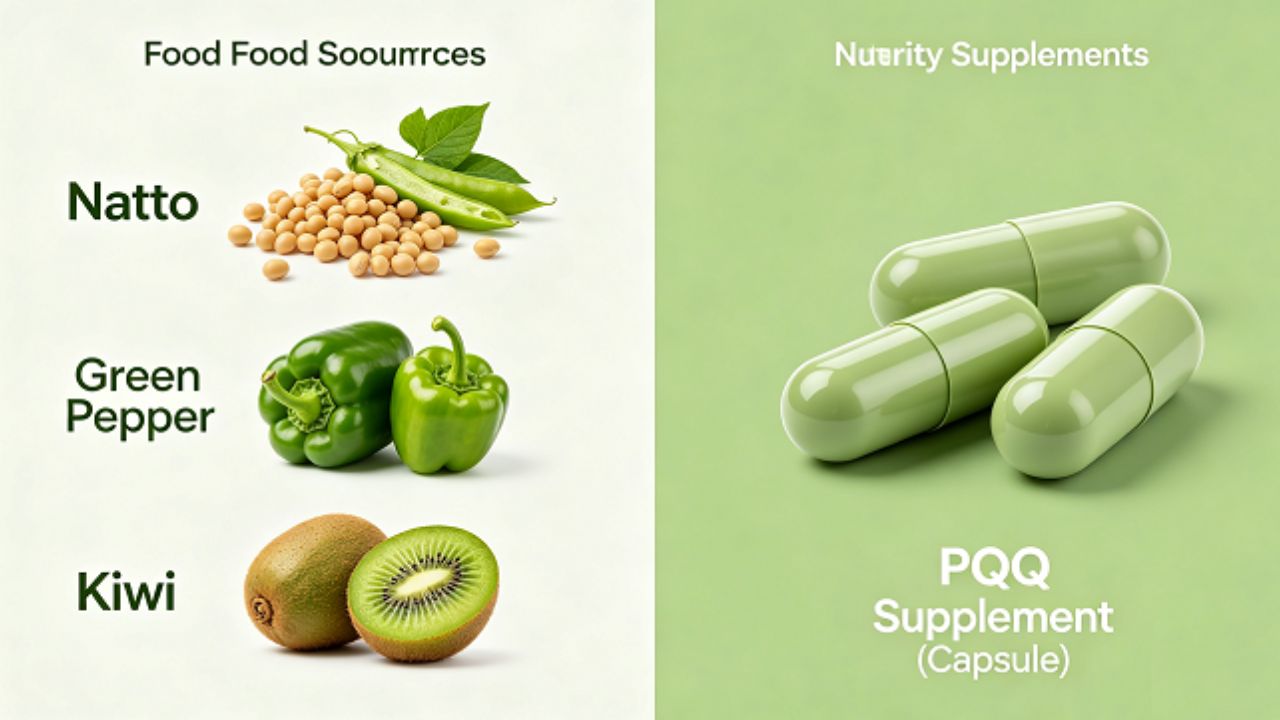
Although foods (natto, green peppers, and kiwis) contain small amounts of PQQ, you would need to consume tens of kilograms of them daily to reach a dosage effective enough to alleviate brain fog and boost energy levels. Therefore, scientific supplementation remains the only viable solution.
Common Forms of PQQ Supplements: Capsules, tablets, and powders; individual doses typically range from 10 mg to 20 mg.
Given the wide variety of PQQ supplements available on the market, consider the following points to help you select a high-quality product:
- Raw Material Form:Prioritize PQQ (Pyrroloquinoline Quinone Disodium Salt). High-quality PQQ raw materials should possess high purity (≥99%) and be accompanied by a complete Certificate of Analysis (COA).
- Formula Ingredients:Opt for minimalist formulas.PQQ + capsule shell + a small amount of filler (such as microcrystalline cellulose).
- Third-Party Testing:Choose brands that display GMP certification, indicate third-party testing, or provide batch-specific test reports that are available for verification.
Attention:PQQ itself is a relatively expensive ingredient. If a product appears unusually cheap, it is highly likely that it contains an insufficient dosage or utilizes raw materials from dubious sources; therefore, purchasing such products is not recommended.
How does PQQ work?
Let’s take an analogy: Think of it — each one of your cells holds tens to hundreds of “energy generators”—mitochondria.Coenzyme Q10 likes a “conveyor belt” within the mitochondria(the cell’s energy factories),helping to transport electrons and sustain energy output;PQQ act the “factory’s quality inspector and expansion team leader”.It simultaneously protects mitochondria from oxidative damage and activates mitochondrial biogenesis, directly generating new mitochondria.
This is the reason why many people, after supplementing with PQQ, experience not just a “brief mental boost,” but rather a more enduring reserve of energy.
Recommended Dosage and Administration Guidelines for PQQ
For general daily maintenance, the typical dosage is 10–20 mg per day. The specific dosage you take should be determined based on your individual needs.
Population | Recommended Dosage | Notes |
| General adults (for energy & brain fog support) | 10–20 mg per day | Take with breakfast or lunch |
| Severe fatigue / anti-aging purposes | 20–40 mg per day | Suggest taking in two divided doses |
| Maintenance dosage | 10 mg per day | For long-term daily use |
Which groups should exercise caution or avoid use?
- Pregnant and breastfeeding women (insufficient safety data)
- Individuals currently taking chemotherapy drugs or immunosuppressants (consultation with a physician is recommended).
- Children (unless advised by a doctor)
PQQ vs. CoQ10 vs. NMN: Which Should You Choose?
Item | CoQ10 | NMN | PQQ |
| Main Function | Supports existing mitochondrial energy production | Boosts NAD+ and activates metabolism | Promotes mitochondrial biogenesis & provides protection |
| Onset Speed | Relatively fast (1–2 weeks) | Moderate (2–4 weeks) | Moderate (4–8 weeks) |
| Most Suitable For | Heart health, statin users | Anti-aging, DNA repair | Brain fog, fatigue, poor sleep |
| Compatibility | ✅ Can be combined | ✅ Can be combined | ✅ Can be combined (highly recommended) |
Note:
If on a limited budget and choosing only one supplement: If your primary concerns are brain fog or fatigue, PQQ is the preferred choice; if your primary concerns relate to heart health or the side effects of statins, prioritize CoQ10.
If you have a generous budget: PQQ + CoQ10 constitutes the classic mitochondrial support combination; adding NMN ,it will be the most comprehensive anti-aging pathway.
FAQ
Q:How long does it take to see results from taking PQQ?
A:Clinical studies typically employ an intervention period of 8 to 12 weeks. Improvements in energy levels may begin to be felt within 2 to 4 weeks, while improvements in cognitive function typically take longer (6 to 8 weeks or more).
Q:Does PQQ have side effects?
A:At the recommended dosage (10–20 mg per day), PQQ is considered safe. A small number of sensitive individuals may experience mild headaches, fatigue, or digestive discomfort during the initial stages of use; these symptoms typically resolve on their own with continued use.
Q:Can vegetarians take PQQ supplements?
A:Yes. Most PQQ supplements use plant-based capsules (hydroxypropyl methylcellulose) and do not contain gelatin. However, it is recommended to check the product label before purchasing to confirm.
Q:Can PQQ be taken together with other supplements?
A:Yes. The combination of PQQ and Coenzyme Q10 is considered the classic mitochondrial duo, as their mechanisms of action are complementary. The combination of PQQ and NMN is also garnering increasing attention in research.
Q:What is the best time of day to take PQQ?
A:It is recommended to take it with meals, either at breakfast or lunch. PQQ has mild stimulating effects, and taking it in the evening may affect sleep for some people. Taking it with a fat-containing meal can help with absorption.
Q:What is the difference between PQQ and coenzyme Q10?
A:In simple terms: Coenzyme Q10 helps existing mitochondria maintain energy production, while PQQ can repair damaged mitochondria and promote the generation of new mitochondria. The two mechanisms are complementary and can be used together.
Q:Is PQQ a vitamin?
A:No. PQQ shares structural and functional similarities with B vitamins (serving as a coenzyme involved in redox reactions), but does not meet all the criteria for a vitamin. The scientific community currently classifies it as a ‘vitamin-like substance’ or a ‘novel cofactor.’
Final Thought
For end consumers, choosing a good PQQ supplement is something worth taking seriously. For brands and formulators, the quality of a PQQ supplement starts with the raw ingredients.
The PQQ used in the clinical studies cited in this article is in the form of pyrroloquinoline quinone disodium salt. Highassay focuses on the R&D and supply of high-purity PQQ raw materials. For more technical specifications, testing standards, or supply chain information, please contact their team.
Disclaimer
This article is for educational and informational purposes only and does not constitute medical advice. PQQ supplements are not medicines and cannot be used to diagnose, treat, or prevent any disease.