



Basic information of Carbidopa
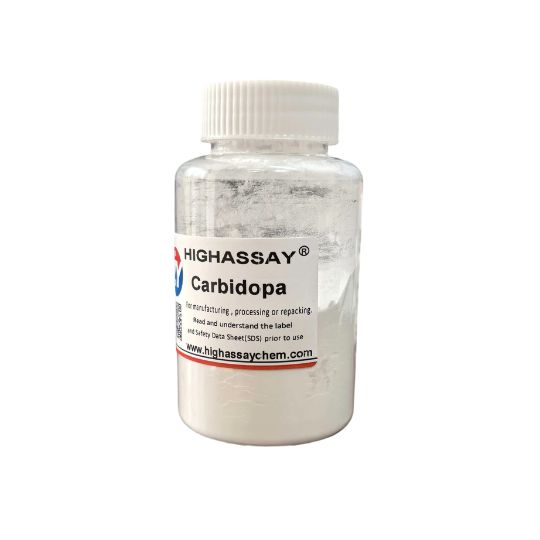
- Product Name: Carbidopa
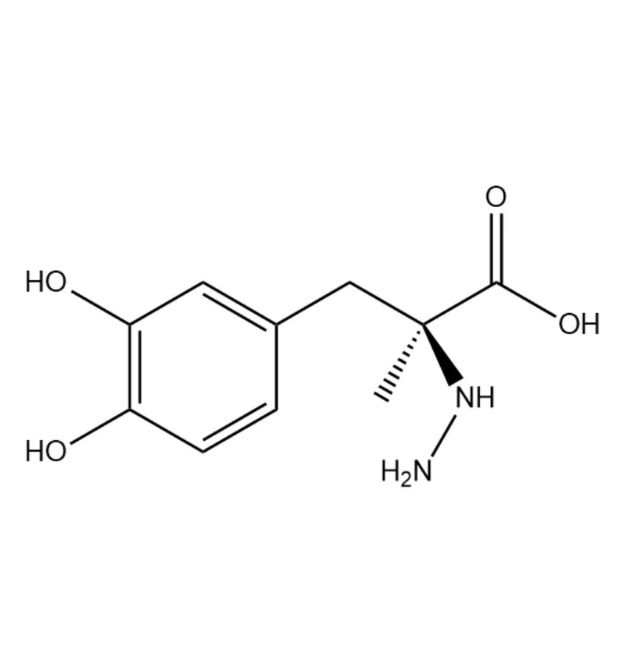
- Chemical Name: (2S)-3-(3,4-Dihydroxyphenyl)-2-hydrazino-2-methyl-propanoic acid monohydrate
- CAS No.: 38821-49-7
- Molecular Formula: C10H14N2O4
- Molecular Weight: 226.229
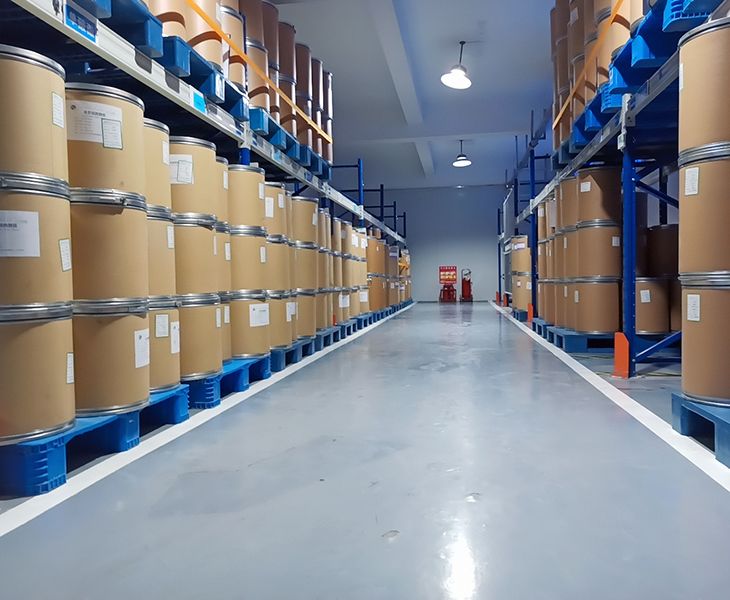
- Packaging Specifications: For example, 25kg/drum, or customized according to customer requirements.
- Production Facilities: Modern production line compliant with GMP standards.
Physicochemical Properties of Carbidopa
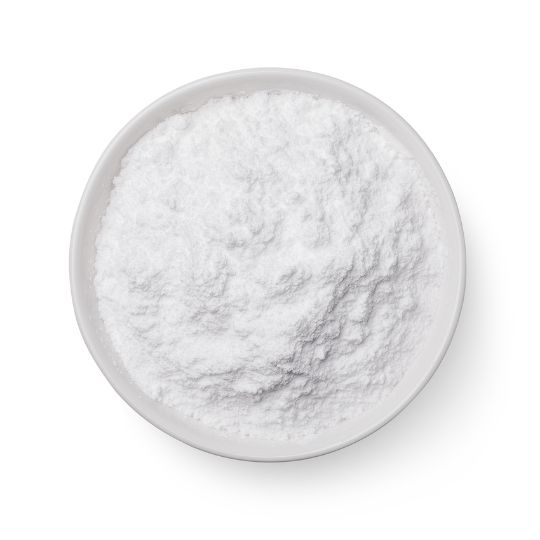
- Appearance: White or off-white villous crystals/powder, almost odorless
- Solubility: Water/methanol: slightly soluble; almost insoluble in ethanol, chloroform, and ether; readily soluble in dilute hydrochloric acid and dilute mineral acids; slightly soluble in DMSO
- Melting point: 203–205 °C (with decomposition); some literature reports 206–208 °C
- LogP: Approximately -0.19 (strong hydrophilicity, does not easily cross the blood-brain barrier, which is key to its role as a peripheral decarboxylase inhibitor)
- PSA (polar surface area): 115.81 Ų
- Chemical properties: Phenolic hydroxyl groups are easily oxidized to form quinones; hydrazine groups can undergo acylation and condensation reactions; carboxyl groups exhibit salt-forming and esterification properties typical of carboxylic acids
- Stability: The solid is stable under dry and light-protected conditions; easily oxidized and discolored in aqueous solutions/neutral environments; sensitive to heat and light
- Storage: Store in a sealed, cool, dry, and light-protected place; long-term storage can be refrigerated at 2–8 °C.
What is Carbidopa?
- Carbidopa is a decarboxylase inhibitor.It has no therapeutic effect on its own; it is an adjunct to levodopa.
- Carbidopa works by inhibiting peripheral dopa decarboxylase in the brain.It can inhibit the conversion of levodopa outside the brain.This allows more levodopa to enter the brain.It can also reduce the dosage of levodopa.
- The presence of carbidopa can significantly reduce the production of peripheral dopamine.It significantly reduces peripheral side effects such as nausea.
- Carbidopa can prevent vitamin B6 from interfering with levodopa..Taking vitamins containing B6 will not affect the therapeutic effect of levodopa.
- Carbidopa is rarely taken alone; it is usually combined with levodopa in a fixed ratio to form a formulation.This is also one of the most basic and effective treatment options for Parkinson’s disease.
- The typical mixing ratio of carbidopa and levodopa is 1:4 or 1:10.For example, a 25 mg dose of carbidopa can be mixed with 100 mg of levodopa.
- Carbidopa side effects: It is generally not used alone.When used in combination with levodopa, common side effects mainly include nausea, involuntary movements, and orthostatic hypotension.At the same time, we must be vigilant for mental symptoms such as depression and hallucinations.
Highassay’s Carbidopa
- Highassay is a supplier of Carbidopa raw materials from China.We provide you with high-purity Carbidopa raw materials and supply them globally.
- Highassay’s carbidopa raw materials comply with multiple pharmacopoeias, including USP/BP/EP/CHP/JP/IP.We can also provide a complete set of quality inspection reports and data.
- Highassay also provides levodopa raw material for use in combination with Carbidopa.It saves you time and logistics costs in purchasing.
- Carbidopa is an indispensable potentiator in combination preparations for the treatment of Parkinson’s disease and Parkinson’s syndrome.Highassay has stable production capacity and a global logistics network, making choosing Highassay the right decision.
Certificate of Carbidopa’s Analysis
- Certificate of Carbidopa’s Analysis
| Items | Standards |
| Description | A white or creamy-white powder |
| Solubility | Slightly soluble in water, freely soluble in 3N hydrochloric acid; slightly soluble in methanol; practically insoluble in alcohol, in acetone, in chloroform, and in ether. |
| IR | IR spectrum is consistent with carbidopa CRS |
| HPLC | Conform with the retention time of the major peak in the chromatogram |
| Specific rotation | -21.0°~-23.5° |
| Loss on drying | 6.9% ~ 7.9% |
| Residue on ignition | 0.1% max |
| Heavy metal | 0.001% max |
| -Methyldopa | 0.5% max |
| -Carbidopa related components A | 0.5% max |
| -Any unknown impurity | 0.10% max |
| -Total impurities | 1.0%max |
| Residual solvents | Meet the requirement |
| Assay | 98.0%~102.0% |
| Conclusion | Complying with USP32 |
Carbidopa-Levodopa Dosage Recommendations
- Carbidopa-Levodopa: Drug Type and Onset Time
Regular tablets/orally disintegrating tablets (taken within half an hour to one hour, the most commonly used acute medication, with relatively fast onset of action and best effect when taken on an empty stomach).
Sustained-release/controlled-release tablets (take one and a half to two hours to take effect; the onset of action is relatively slow, but the slow release of the drug helps to stabilize the blood drug concentration, making them more suitable for patients who need to reduce the frequency of medication)
- If you miss the scheduled dose of carbidopa-levodopa, you can decide on the next scheduled dose time.
- The dosage of carbidopa-levodopa should be determined based on the patient’s specific condition and the doctor’s advice.However, never double your medication dosage on your own, as this could lead to a sharp increase in drug concentration and cause serious adverse reactions.
- How to take carbidopa-levodopa:Take on an empty stomach or with meals;Take with plenty of water;Sustained-release tablets can be taken in half-tablet form.It should be noted that carbidopa-levodopa preparations should not be crushed or chewed before consumption.
- Contraindications of Carbidopa-L-dopa:
Absolute contraindications: Currently using or having used non-selective MAO inhibitors within the past 2 weeks, narrow-angle glaucoma, history of melanoma, severe liver/kidney dysfunction, allergy to the ingredients.
Use with caution in the following groups: those with cardiovascular disease, peptic ulcers, a history of mental illness, mild to moderate liver or kidney damage, pregnant women, and breastfeeding women (weigh the risks and benefits).