
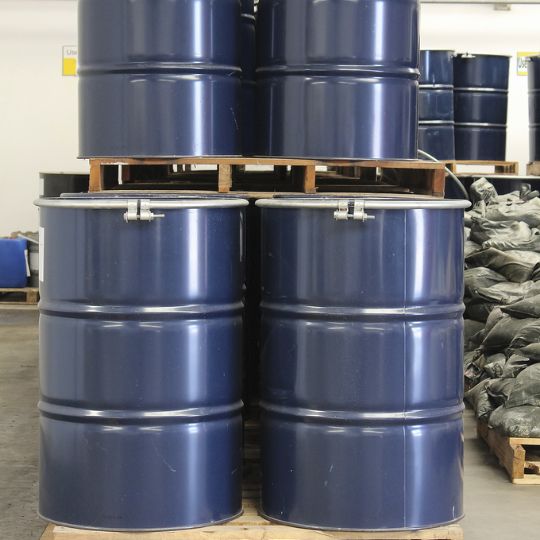
Basic information of Hydroxypropyl-β-Cyclodextrin
- Product name: Hydroxypropyl-β-Cyclodextrin
- English aliases: HP-β-CD, Hydroxypropyl beta-cyclodextrin, (2-Hydroxypropyl)-β-cyclodextrin, 2-Hydroxypropyl-beta-cyclodextrin, beta-Cyclodextrin, 2-hydroxypropyl ether, Hydroxypropyl betadex (2-Hydroxypropyl)-β-cyclodextrin
- Industry Abbreviation: HP-β-CD
- Other Language Names: German: Hydroxypropyl-β-Cyclodextrin; French: Hydroxypropyl-β-cyclodextrine; Japanese: ヒドロキシプロピル-β-シクロデキストリン
- CAS Number: 128446-35-5
- Molecular Formula: (C₆H₁₀O₅)₇·(C₃H₆O)n
- Molecular Weight: Approximately 1390-1420 g/mol (depending on degree of substitution)
- Product Grades: Pharmaceutical Grade (USP/EP), Food Grade (FCC), Cosmetic Grade, Industrial Grade
- Main Uses: Pharmaceutical solubilizer, stabilizer, food/cosmetic additive, emerging biomedical reagent
Physicochemical Properties of Hydroxypropyl-β-Cyclodextrin
- Appearance and Odor: White to off-white amorphous powder, odorless or slightly sweet.
- Solubility: Easily soluble in water (>50% w/v), soluble in methanol and ethanol, insoluble in ether and chloroform.
- Boiling Point: Decomposes (decomposes above 200℃).
- Melting Point: No definite melting point, softens at approximately 140-160℃.
- Density: 1.20-1.30 g/cm³ (25℃)
- pH (1% aqueous solution): 5.0-8.0 (25℃, 1% aqueous solution)
- Degree of Substitution (DS): 0.5-1.5 (average number of hydroxypropyl substitutions per glucose unit)
- Optical Rotation: +140° to +160° (c=10, water)
- Water Content: ≤10.0% (Karl Fischer method)
- Heavy Metal Content: ≤10 ppm (Pb)
- Microbial Limit: Total bacterial count ≤100 CFU/g; Mold and yeast ≤10 CFU/g; No pathogenic bacteria
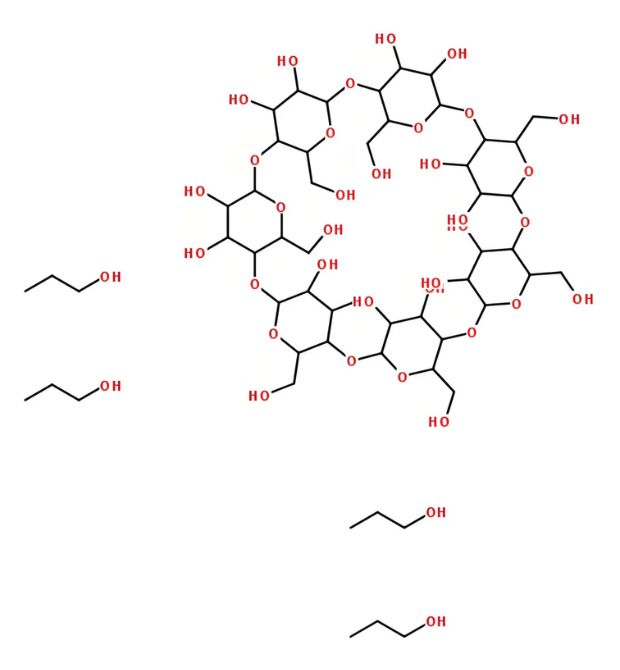
Supplementary Technical Details for Hydroxypropyl-β-Cyclodextrin
- Production Method: β-Cyclodextrin is used as a raw material, and etherification reaction is carried out with propylene oxide under alkaline conditions. The product is then purified and dried.
- Acute Toxicity (LD50): Oral LD50 in rats: >20000 mg/kg (practically non-toxic)
- Chronic Toxicity: Long-term toxicity tests show no cumulative toxicity; safety meets FDA GRAS standards.
- Upstream and Downstream Products (Raw Materials): β-Cyclodextrin, propylene oxide, sodium hydroxide, hydrochloric acid, purified water
- Upstream and Downstream Products (Downstream): Pharmaceutical preparations, food additives, cosmetic raw materials, environmental protection materials
- Quality Standards: Complies with USP 43-NF 38, EP 10.0, BP 2020, FCC VIII, and GB standards.
- Detection Methods: HPLC (purity), GC (residual solvent), Karl Fischer titration. Fischer (Moisture), ICP-MS (Heavy Metals)
- Transportation: Transport at ambient temperature (<30℃), avoid direct sunlight; bulk shipments can be by sea, air, or land.
- Payment Terms: T/T (Telegraphic Transfer), L/C (Letter of Credit), Western Union, PayPal (Samples)
- Certifications: ISO9001, GMP, FDA Registration, CE Certification, REACH Compliance
- Environmental Requirements: Complies with national environmental standards; no waste discharge during production; biodegradable.
- Safety Data Sheet: Provides a complete MSDS (Material Safety Data Sheet), including safe handling and emergency response guidelines.
Highassay’s Hydroxypropyl-β-Cyclodextrin
- Hydroxypropyl-β-cyclodextrin, abbreviated as HP-β-CD, is also known as 2-Hydroxypropyl β-Cyclodextrin.
- Hydroxypropyl-β-cyclodextrin is a derivative of β-cyclodextrin, introduced by the functional group hydroxypropyl.
- The core characteristics of hydroxypropyl-β-cyclodextrin are: high water solubility, low toxicity, and it is a versatile solubilizer.
- Highassay offers a variety of hydroxypropyl-β-cyclodextrin raw materials, including technical grade, aqueous solution (at a much lower price than powdered hydroxypropyl-β-cyclodextrin), injection grade, and oral grade.
Packaging and Storage of Hydroxypropyl-β-Cyclodextrin
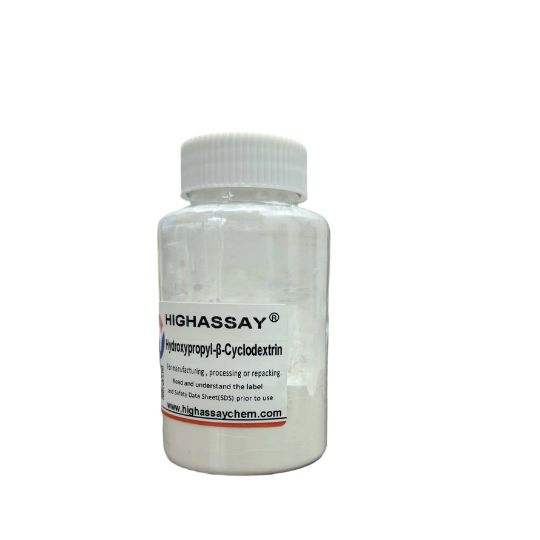
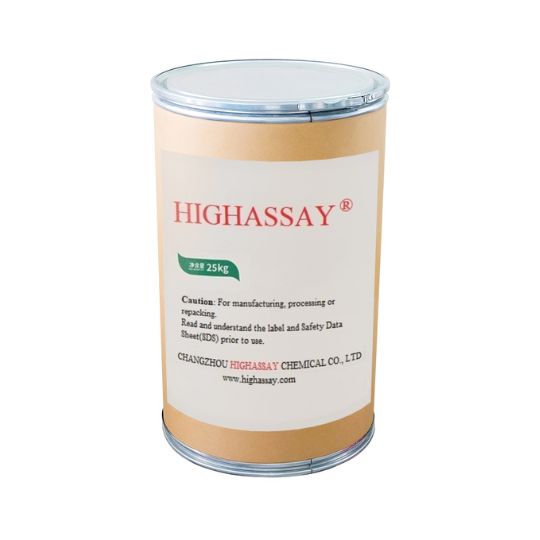
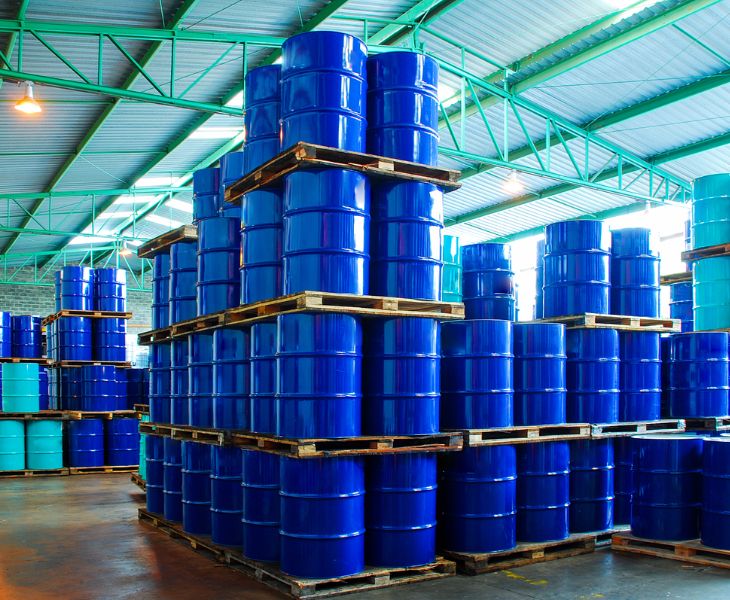
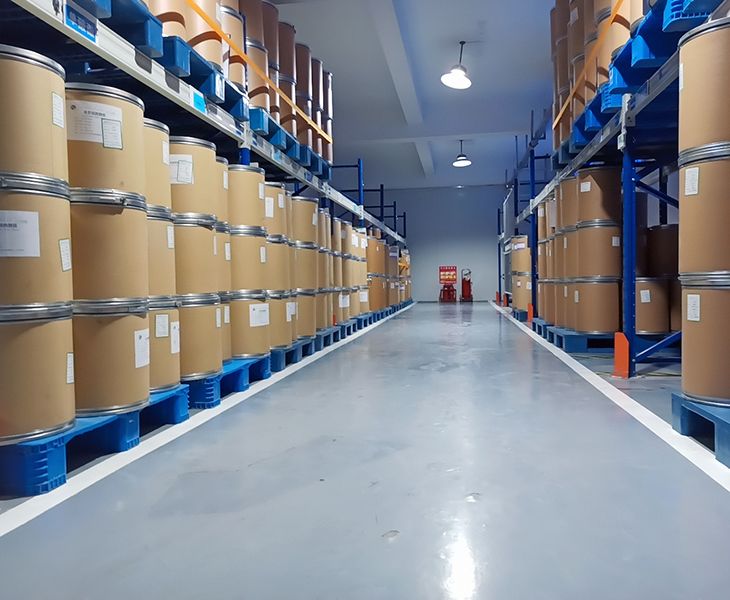
- Packaging: 100g/bottle (brown glass bottle), 1kg/bag (aluminum-plastic composite bag), 25kg/drum (cardboard drum lined with polyethylene bag)
- Storage: Sealed, store in a cool, dry place (temperature 15-25℃, relative humidity ≤60%), avoid high temperature, humidity, and direct sunlight.
- Shelf Life: Unopened product has a shelf life of 36 months under specified storage conditions.
- Packaging Specifications: Customized packaging is available (e.g., 500g/bottle, 5kg/bag, etc.)
- Storage Conditions: Do not store with toxic or harmful substances. Keep away from fire and oxidizers.
- Shelf Life: Use as soon as possible after opening; recommended to use within 3 months.
- Precautions: Wear a dust mask and gloves during handling; if contact with eyes occurs, rinse immediately with plenty of water.
- After-sales Service: Provides COA (Certificate of Analysis); free returns and exchanges for quality issues; technical support and application guidance.
- Packaging Materials: Food-grade polyethylene, pharmaceutical-grade brown glass, environmentally friendly cardboard.
- Storage Humidity: Maintain relative humidity at 40-60% to prevent moisture absorption and clumping.
- Expiration Disposal: Expired products should be disposed of in accordance with local environmental regulations; do not discard arbitrarily.
Applications of Hydroxypropyl-β-Cyclodextrin
- The largest application of 2-hydroxypropyl-β-cyclodextrin is in the pharmaceutical industry. Pharmaceutical-grade 2-hydroxypropyl-β-cyclodextrin is mainly used as a solubilizer and excipient in injections, oral liquids, and eye drops. It helps improve drug bioavailability and reduce toxic side effects.
- Food-grade 2-hydroxypropyl-β-cyclodextrin can be used as a masking agent and improver in the food and flavor industries. It helps to improve the long-term stability of nutrients in food while masking unpleasant odors or tastes.
- Cosmetic-grade 2-hydroxypropyl-β-cyclodextrin is used as an emulsifier, deodorizer, and stabilizer in cosmetics. It helps to stabilize the active ingredient while reducing the skin irritation caused by other ingredients in cosmetics.
- Industrial-grade 2-hydroxypropyl-β-cyclodextrin can be used as a synergist and detoxifier for pesticides or as a processing aid for chemical raw materials (e.g., wastewater treatment agents, textile fiber modifiers, coating stabilizers, etc.).
Get an Instant Quote Now