
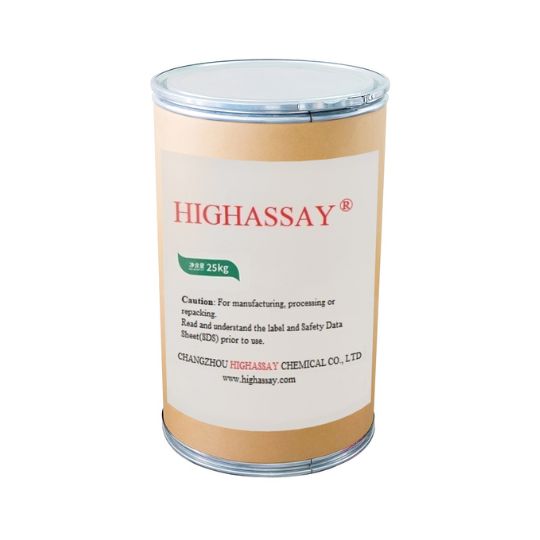
Basic Information of Vitamin E Succinate
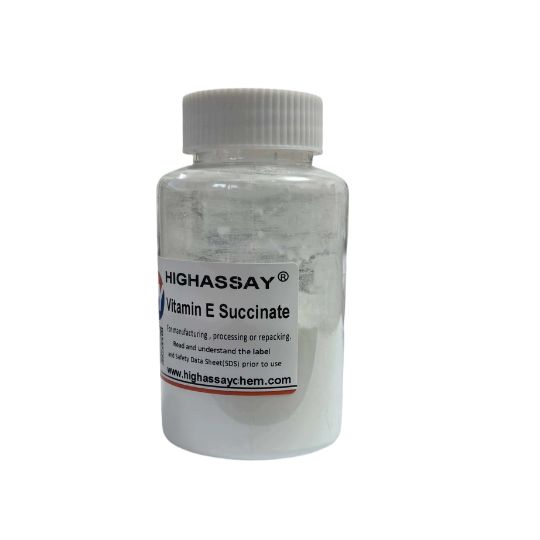
- Product Name: Vitamin E Succinate
- English aliases: D-alpha-Tocopheryl succinate, Vitamin E monosuccinate, alpha-Tocopherol succinate,Vitamin E Succinate, Tocopheryl succinate, Alpha-tocopherol succinate, Vitamin E derivative
- Industry Abbreviations: VES, Vitamin E
- Other language names:German: Vitamin E – Succinat; French: Succinate de vitamine E; Spanish: Succinato de vitamina E
- CAS number: 4345-03-3
- Molecular Formula: C₃₃H₅₄O₅
- Molecular Weight: 530.78 g/mol
- Product Grade: Pharmaceutical grade, Food grade, Industrial grade, Cosmetic grade
- Main uses: Nutritional supplements, Food additives, Pharmaceutical intermediates, Cosmetic raw materials
- Supplier : Changzhou Highassay Chemical Co., Ltd.
Physicochemical Properties of Vitamin E Succinate
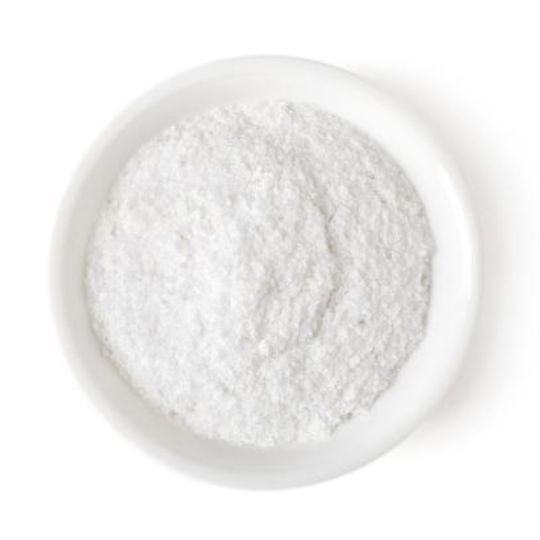
- Appearance and smell: White to pale yellow crystalline powder, almost odorless
- Solubility: Easily soluble in chloroform, ether, and acetone; soluble in ethanol; slightly soluble in vegetable oils; insoluble in water.
- Boiling Point: Decomposition (gradual decomposition above 250℃)
- Melting Point: 76-78℃
- Density: 0.98-1.02 g/cm³ (solid crystal density)
- Purity: ≥96% (food grade), ≥98% (pharmaceutical grade)
- Stability: Store in a cool, dry place where it is stable, avoiding high temperatures, humidity, and light.
- Danger: Low toxicity or practically non-toxic; some products may cause slight irritation.
- Emergency Response: Skin contact: Rinse immediately with plenty of water; Ingestion: Seek immediate medical attention.
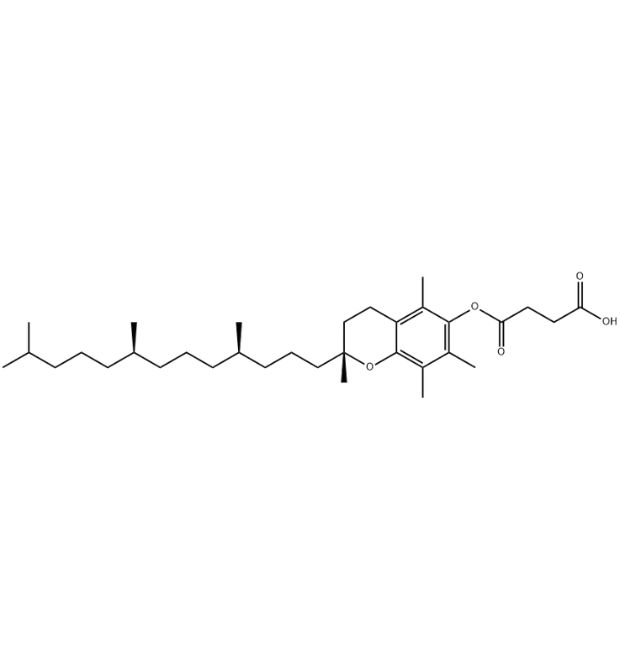
Supplementary Technical Details for Vitamin E Succinate
- Production Methods: The product is obtained by esterification of D-α-tocopherol with succinic anhydride in the presence of a catalyst, followed by crystallization and purification.
- Acute Toxicity (LD50): Oral LD50 in rats: >5000 mg/kg (practically non-toxic); Oral LD50 in mice: >10000 mg/kg
- Chronic Toxicity: Long-term use shows no significant cumulative toxicity and meets the standards of food additives GB 14880 and pharmaceutical grade USP.
- Upstream and downstream products (raw materials): D-α-tocopherol (vitamin E), succinic anhydride, catalysts (such as pyridine)
- Upstream and downstream products (downstream): Vitamin E supplements, food additives, cosmetic raw materials, pharmaceutical intermediates
- Quality Standards: Compliant with USP, EP, and GB (subject to adjustment based on product level).
- Detection Methods: HPLC, UV, IR, etc.
- Transportation Methods: Sea freight, air freight, and express delivery
- Payment Methods: T/T, L/C, Western Union, etc.
- Certification Status: ISO9001, GMP, kosher halal etc.
- Technical Support: Provide product application technical guidance and solutions
Packaging and Storage of Vitamin E succinate
- Packaging: 25kg/fiber drum (lined with polyethylene bag), or according to customer requirements
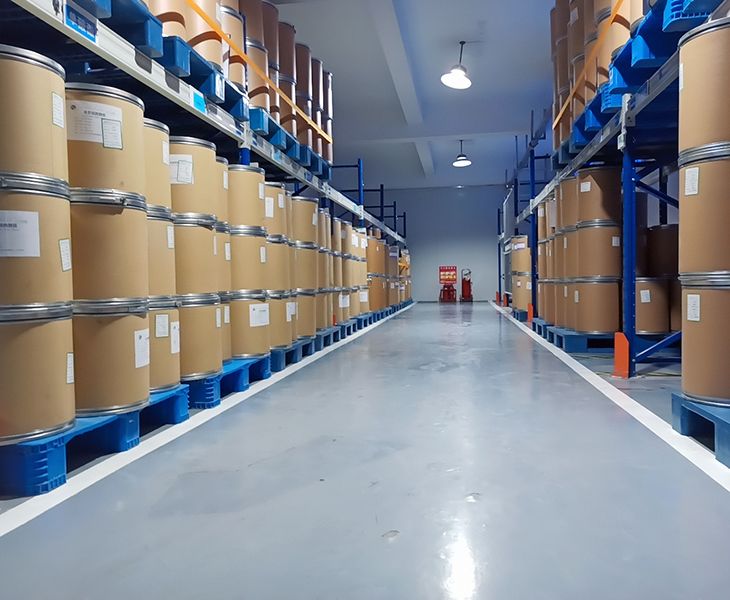
- Storage: Store in a cool, dry, and well-ventilated warehouse; avoid direct sunlight and moisture
- Shelf Life: 24 months from the production date under proper storage conditions
- CAS number: 4345-03-3
- Molecular Formula: C₃₃H₅₄O₅
- Molecular Weight: 530.78 g/mol
- Implementation Standards: Enterprise standards or USP/BP/EP/CP
- Precautions: Avoid storing with strong oxidizers, strong acids, or strong alkalis; wear protective equipment during operation.
- After-sales Service: Provides COA and MSDS; free returns and exchanges for quality issues; technical support.
Applications of Vitamin E Succinate
Pharmaceutical Field
- Pharmaceutical-grade Vitamin E Succinate (VES) can be used to prepare VSE oral capsules/tablets, enteral nutrition solutions, or powders.It is primarily used to treat confirmed Vitamin E deficiency and as an adjunct therapy for other conditions (such as neurological and cardiovascular diseases).
- Pharmaceutical-grade Vitamin E Succinate (VES) can be used in the production of topical preparations such as VES ointments, gels, sprays, and scar patches.It is primarily used for wound healing, scar management, and skin barrier repair.
Food Sector
- Food-grade Vitamin E Succinate (VES) can be made into nutritional supplements in forms such as capsules and tablets.It has multiple benefits, including antioxidant effects, delaying aging, protecting cardiovascular health, and improving skin condition.
- Food-grade Vitamin E Succinate (VES) can be added to oils or fat-based products as a food additive.It prevents food discoloration and rancidity caused by oxidation.
- Food-grade Vitamin E Succinate (VES) can be added in small amounts as a food additive to products such as dairy products, candies, and beverages.Enhance the nutritional value of food.
Cosmetics Industry
Cosmetic-grade Vitamin E Succinate (VES) can be added as a functional active ingredient to skincare, makeup, and personal care products.These products possess comprehensive functions including antioxidant, moisturizing, repairing, and anti-aging properties.
Animal Feed Industry
Feed-grade Vitamin E Succinate (VES) is an essential raw material for livestock and aquaculture.It possesses the dual functions of both a feed antioxidant and a nutritional additive.It effectively solves two major problems: feed oxidation and spoilage, and Vitamin E deficiency in livestock and aquatic animals.
Get an Instant Quote Now