

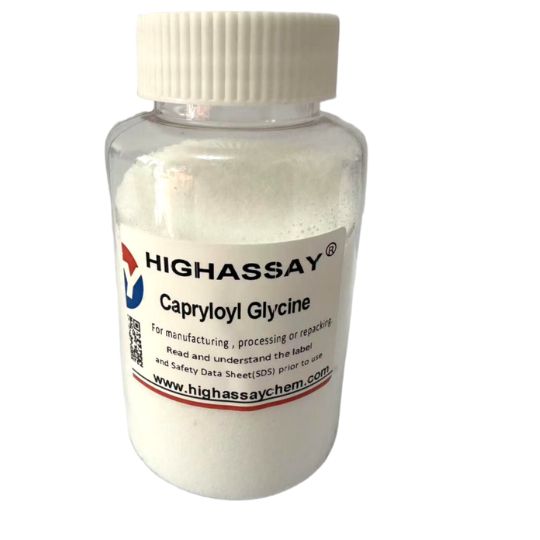
Basic Information of Capryloyl Glycine
- Product Name: Capryloyl Glycine
- English Aliases: N-Octanoyl glycine, Caprylylglycine
- Industry Abbreviation: CG, Capryloyl Glycine
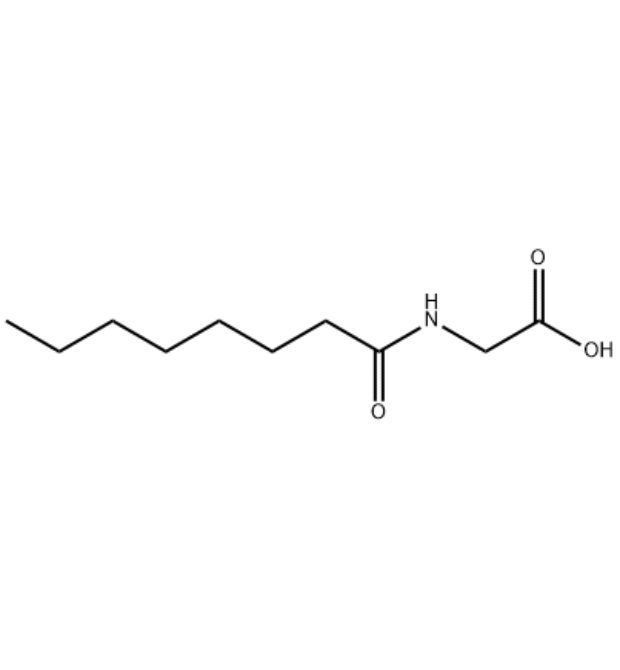
- Molecular Formula: C10H19NO3
- Molecular Weight: 201.26 g/mol
- CAS Number: 14246-53-8
- Product Grade: Cosmetic Grade (Mainstream), Pharmaceutical Grade (Topical Preparations), Industrial Grade (Antibacterial Adjuvant)
- Main Uses: Cosmetic active ingredient (oil control and acne treatment), pharmaceutical topical antibacterial agent, oral care antibacterial agent, industrial antibacterial adjuvant
Physicochemical Properties of Capryloyl Glycine
- Appearance and Odor: White to off-white crystalline powder, odorless or with a slight fatty acid odor.
- Solubility: Slightly soluble in water (approximately 0.1 g/L at 25°C), readily soluble in ethanol, propylene glycol, and glycerol; soluble in oils and fats.
- Boiling Point: 355.6°C at 760°C mmHg (theoretical calculation value), decomposition begins upon heating above 200℃.
- Melting point: 104-108℃ (differential scanning calorimetry, DSC peak temperature)
- pH value (1% propylene glycol solution): 5.5-6.5 (weakly acidic, suitable for the skin’s surface pH environment)
- logP (oil-water partition coefficient): 2.1 (octanol/water system, 25℃), exhibiting both hydrophilic and lipophilic properties, easily penetrating the stratum corneum.
- Antibacterial activity: MIC = 0.125 mg/mL against Propionibacterium acnes, MIC = 0.25 mg/mL against Staphylococcus aureus.
- Other properties: Excellent compatibility with other active ingredients (nicotinamide, panthenol, asiaticoside), with no antagonistic effects.
- Stability: Stable within the pH range of 4.0-8.0; may undergo oxidative degradation upon contact with strong oxidants (such as sodium hypochlorite).
- Hazards: Non-hazardous chemical (GB (12268-2012); Dust precautions are necessary in dusty conditions; there are no other safety risks.
- Emergency Treatment: Skin contact: Rinse with water; Ingestion: Drink plenty of warm water to induce vomiting and seek medical attention; Dust inhalation: Move to a well-ventilated area.
Supplementary Technical Details for Capryloyl Glycine
- Production Method: Octanoyl chloride is acylated with glycine in an alkaline aqueous solution, followed by acidification, crystallization, and recrystallization purification.
- Acute Toxicity (LD50): Oral LD50 in rats: >20000 mg/kg (practically non-toxic); Skin Irritation: Non-irritating (negative human patch test).
- Chronic Toxicity: High safety for long-term skin contact, complies with EU EC 1223/2009 regulations, with no reports of sensitization or mutagenicity.
- Upstream and Downstream Products (Raw Materials): Upstream: Octanoyl chloride (industrial grade ≥98%), glycine (food grade ≥99%), sodium hydroxide (reagent grade).
- Main Impurities: Unreacted glycine ≤0.2%, octanoate ≤0.3%, heavy metals ≤1ppm (ICP-MS detection).
- Environmental Characteristics: Biodegradability ≥95% (OECD). Conforms to 301A standard, with no environmental accumulation, and is classified as an environmentally friendly raw material.
- Shipping Method: Samples: Express (SF Express/EMS); Bulk: Land/Air freight (selected according to customer’s location)
- Payment Method: Samples: Payment in advance; Bulk: 30% deposit in advance, balance due before shipment (negotiable for long-term cooperation)
- Certifications: ISO9001 Quality Management System Certification, GMP Cosmetic Production Standards, EU ECOCERT Natural Certification
- Technical Support: Providing formulation dissolution advice, stability testing solutions, and product efficacy verification guidance (24-hour response)
Packaging and Storage of Capryloyl Glycine
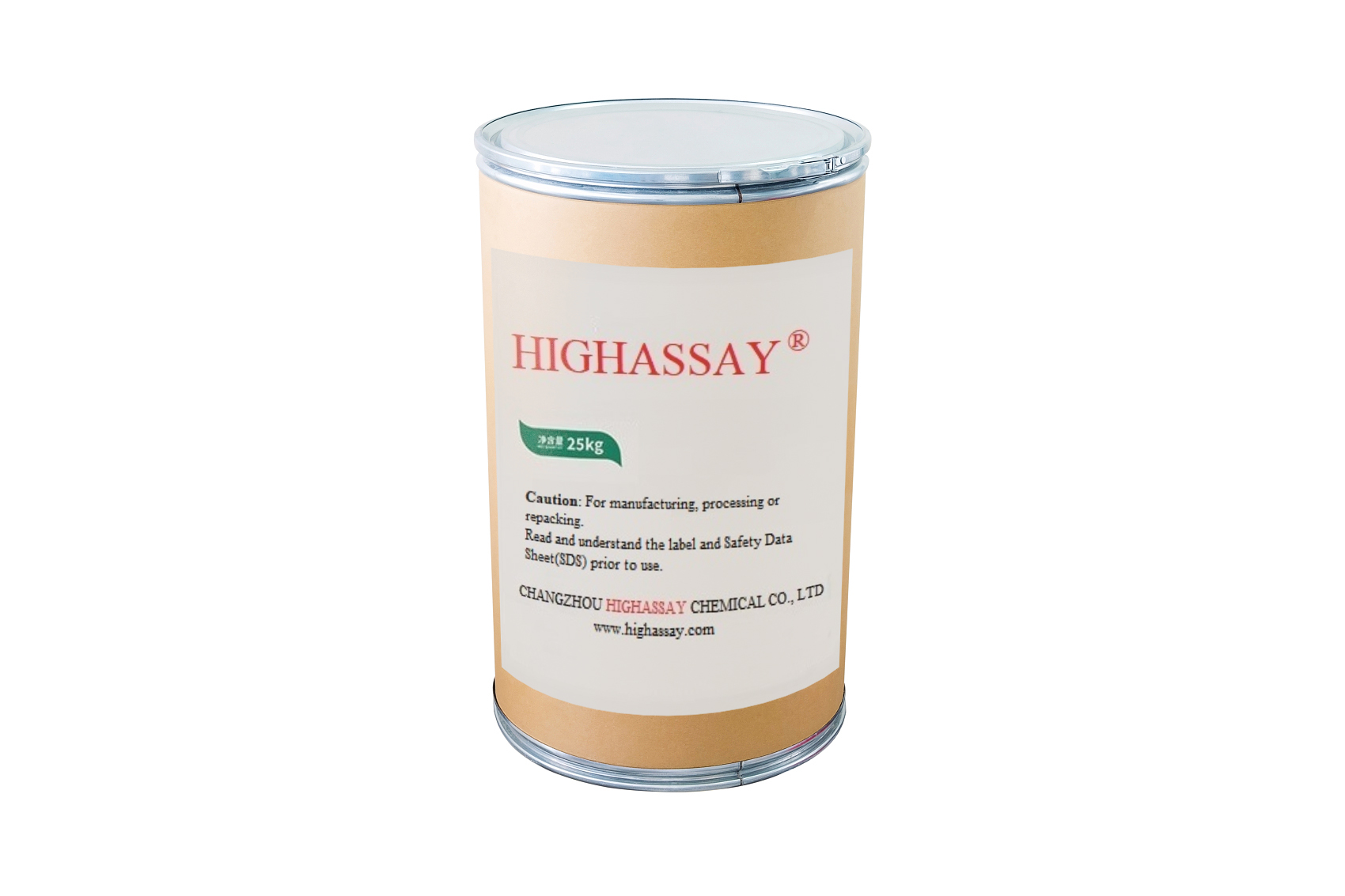
- Packaging: 100g/glass bottle, 1kg/aluminum foil bag, 25kg/paper drum (lined with food-grade polyethylene film), customization available.
- Storage: Store in a cool, dry place (temperature ≤25℃, relative humidity ≤60%), sealed, protected from light and heat.
- Shelf Life: 36 months unopened; recommended to use within 6 months of opening.
- Molecular Formula: C10H19NO3
- Molecular Weight: 201.26 g/mol
- CAS No.: 14246-53-8
- Product Characteristics: Oil control and acne treatment, regulates skin microecology, moisturizes and repairs, low irritation, excellent biocompatibility
- Usage Restrictions: Recommended addition amount in cosmetics: 0.1%-2.0% (excessive amount may cause slight dryness of the skin); avoid mixing with strongly alkaline substances
- Precautions: Wear a dust mask during operation; avoid inhaling dust; if accidentally splashed into eyes, immediately rinse with plenty of saline solution
- After-sales Service: Provides COA analysis report, MSDS safety instructions, and antibacterial activity test report
Applications of Capryloyl Glycine
- Cosmetic-grade Capryloyl Glycine as a shampoo ingredient.It can inhibit the secretion of scalp oil.In some cases, it can help prevent hair loss.
- Cosmetic-grade Capryloyl Glycine is used as an ingredient in facial cleansers, body washes.It has the effect of reducing excessive sebum secretion from the skin,and it can effectively reduce the occurrence of skin problems such as acne, inflammation, and clogged pores.
- Cosmetic-grade Capryloyl Glycine is used as an ingredient in serums, lotions, and other products.It can gently regulate the skin’s flora.It effectively relieves skin problems caused by a damaged skin barrier and improves the stratum corneum’s ability to retain moisture.
- Pharmaceutical-grade Capryloyl Glycine can be used in the preparation of pharmaceutical formulations such as ointments or gels.Its important role in the treatment and management of dermatological diseases.Especially in the treatment of sebaceous gland-related diseases such as acne and seborrheic dermatitis.
- Pharmaceutical-grade Capryloyl Glycine is used in high-end toothpaste, medical mouthwash, and other oral care products.It has more than just a simple bactericidal effect.It can also precisely inhibit cariogenic bacteria, periodontal bacteria, and odor-producing bacteria, and interfere with the formation of dental plaque biofilm.
- Industrial-grade Capryloyl Glycine is functional and economical.Major industrial production sectors, bulk daily chemical product manufacturing, agricultural breeding, and other fields.Examples include industrial preservatives and mildew inhibitors, feed additives, functional daily chemical raw materials, and textile finishing agents.
Get an Instant Quote Now