

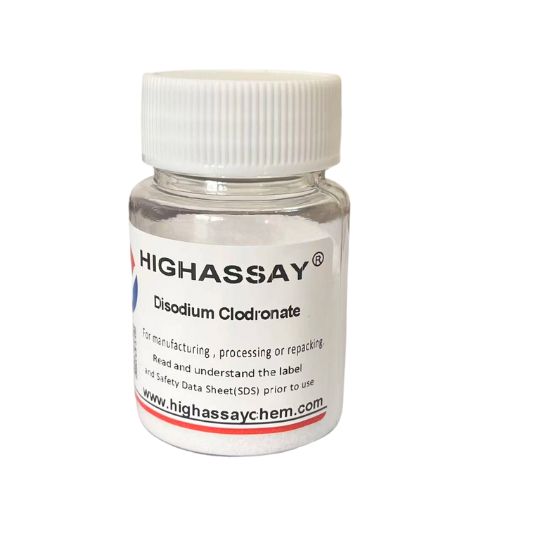

A Brief Introduction to Disodium Clodronate
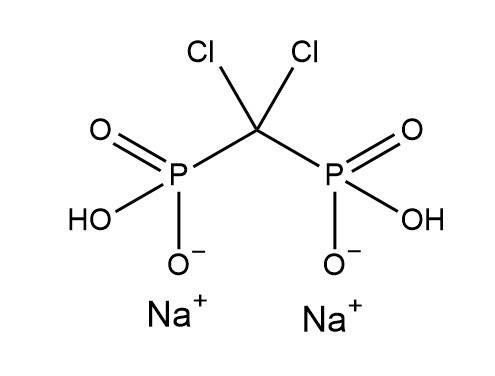
Molecular Formula:CH2Cl2Na2O6P2
Molecular Weight:288.86
CAS No.:22560-50-5
Odor:Odorless
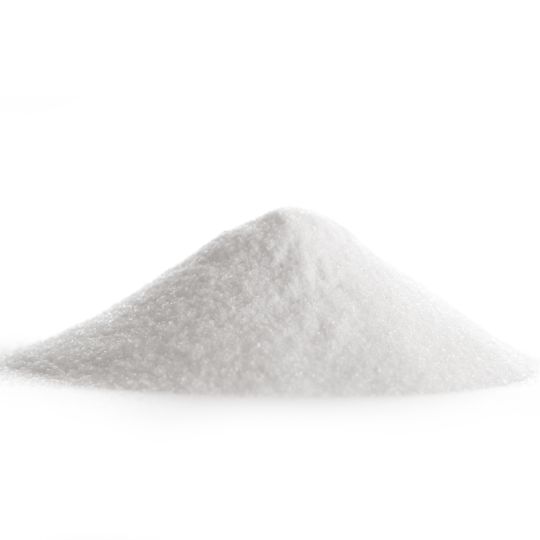
Appearance:White crystals or crystalline powder
Solubility:Easily soluble in water,slightly soluble in methanol,insoluble in ethanol and DMSO.
Storage:Store in a light-proof and airtight container
Regular commercial package: 25kg/drum
What is Disodium Clodronate?
Clodronate Disodium is a bisphosphonate drug used for the prevention and treatment of bone diseases. Clodronate Disodium itself has low toxicity and rarely affects other organs. Due to its high safety profile, it is used in the treatment of bone metastases, bone pain, osteoporosis, and other bone problems.
Why choose Highassay?
Highassay, as a trading intermediary for Disodium Clodronate from China, provides you with high-purity Disodium Clodronate in white powder form. Highassay has long-term, high-quality partners; our raw material suppliers’ factories have passed national GMP certification, and our Disodium Clodronate raw materials comply with multiple pharmacopoeias such as CP/BP/USP. They also possess advanced testing instruments and equipment, and a large number of excellent personnel. If you have any purchasing needs, please contact us as soon as possible!
Mechanism of Action of Clodronate Disodium
After administration of Clodronate Disodium orally or by injection, it adheres to the surface of the bone with the aid of blood circulation. It waits for the malignant tumor virus cells to erode the bone, absorbing the Clodronate Disodium as they do so. At this point, the Clodronate Disodium is metabolized within the virus cells, generating ATP analogs, which reduce or kill the virus cells, thus minimizing damage to normal bone. Furthermore, besides being absorbed by the bone to exert its effects, Clodronate Disodium is not absorbed or utilized by other organs and is excreted through the kidneys. This is a unique characteristic of Clodronate Disodium.
What is Osteolytic Bone Metastasis?
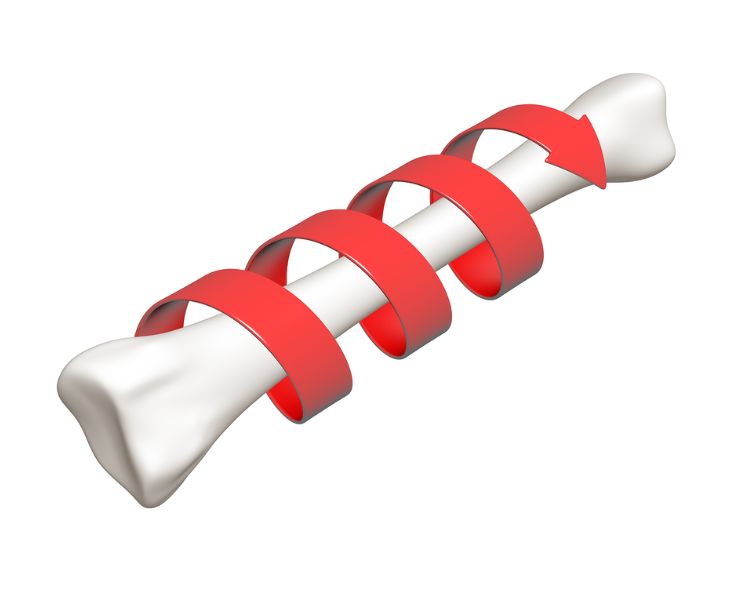
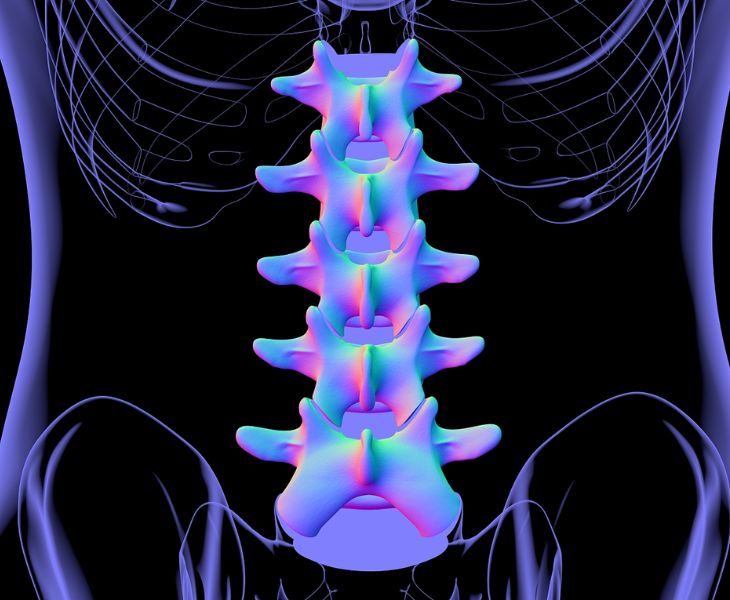
Osteolytic Bone Metastases are caused by viral cells from malignant tumors attaching to and eroding the bone, rather than a disease originating in the bone itself. However, not all malignant tumors cause osteolytic bone metastases; it is commonly seen in the following types: lung cancer, breast cancer, and prostate cancer. Osteolytic Bone Metastases lead to bone structure destruction, resulting in a series of adverse physical reactions, including bone pain, easy fractures, and skeletal deformities, severely impacting the patient’s quality of life. Disodium Clodronate can inhibit viral cell damage to the bone, relieve bone pain, and effectively prevent bone destruction.
What is Hypercalcemia?
When normal, healthy bones are destroyed by malignant tumor cells, calcium from the damaged bones is released into the bloodstream, causing a rapid increase in blood calcium levels. Initially, patients may experience nausea and loss of appetite. In severe cases, this can increase the burden on the kidneys, leading to mental abnormalities, abnormal heart rates, and ultimately death. Clodronate Disodium injection can control blood calcium levels in a short period. Clodronate Disodium works by inhibiting bone resorption, reducing calcium loss from bones.

It should not be taken concurrently with other bisphosphonate medications because they belong to the same class of drugs. Taking them together will not only fail to improve efficacy but may also increase the risks.
Children and adolescents; pregnant or breastfeeding women; patients with renal insufficiency.
For pricing inquiries, please contact customer service.
Specification of Disodium Clodronate
| Items | Standards |
| Appearance | A white crystal or crystalline powder |
| Identification | (1),(2),(4): Positive reactions |
| (3)IR: The spectrum of sample conforms with that of reference standard | |
| Acidity | PH 3.5~4.5 |
| Clarity and color of solution | the solution of sample should be clear and not be more intense than that of reference solution No.1 |
| Chloride | 0.05%max |
| Phosphite | 1.0%max |
| Phosphate | 0.5%max |
| Loss on drying | 19.0-20.5% |
| Heavy metals | 20ppm max |
| Microbial contamination bacteria, yeasts & molds | Total count: 10cfu/g max |
| Clostridium sp. | None |
| Enterobacteriaceae | None |
| E.coli | None |
| Salmonella | None |
| P.aeruginosa | None |
| S.aureus | None |
| Endotoxin | None |
| Assay(on dried basis) | 98.5%min |
Drug Status of Disodium Clodronate
Highassay’s clodronate disodium raw material has CAS No. 22560-50-5, molecular formula CH2Cl2Na2O6P2, molecular weight 288.86, and appears as white crystals or white crystalline powder. It is odorless and readily soluble in water. You can use clodronate disodium raw material to manufacture the following finished pharmaceutical products, such as:
- Clodronate disodium tablets: White or off-white tablets.
- Clodronate disodium capsules: Capsules containing white or off-white granules.
- Clodronate disodium for injection: White lyophilized block, administered via intravenous drip.
- Clodronate disodium injection solution: Colorless, clear liquid.
Choosing Highassay means choosing quality. The entire Highassay team looks forward to cooperating with you!
Precautions for using Clodronate Disodium
- Clodronate Disodium is a prescription drug and should not be used without medical advice.
- To reduce the burden on the kidneys from Clodronate Disodium, ensure adequate fluid intake.
- Clodronate Disodium tablets or capsules should not be taken with beverages; they should be taken with plain water on an empty stomach.
- Common side effects of Clodronate Disodium include nausea, vomiting, and abdominal pain.